
 简体中文
 Русский
 Français
 Português
 Español
 لالعربية

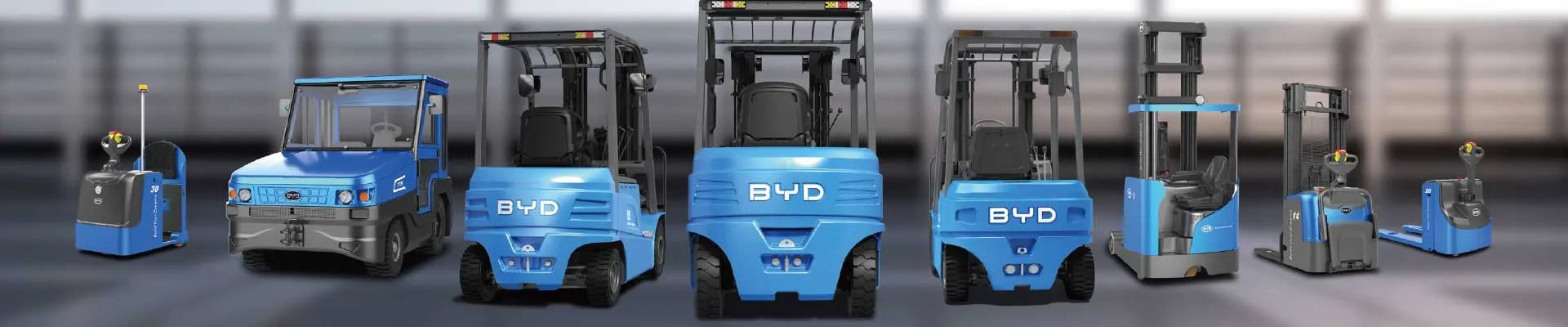

Every quarter and year during the fixed inventory stage, many local photovoltaic plants in Qingxi will face temporary capacity gaps. Most of the materials stored in the photovoltaic plant are precision photovoltaic components, and high shelves are generally set up in storage scenes. The width of the reserved operation channel is narrow, and it is difficult for ordinary handling equipment to take into account the pickup height, traffic flexibility and operation stability at the same time. Many factory leaders will give priority to temporarily leasing a reach electric forklift with strong adaptability to support the high-frequency material transfer needs during the inventory period.
The pure electric-driven BYD reach forklift runs with low noise and no exhaust. It is suitable for the clean operation requirements of the photovoltaic factory. It will not discharge harmful exhaust gases in the closed storage space to affect the cleanliness of materials. It is a popular choice for short-term leases during the inventory period in many local factories. Before the factory starts the leasing process, it is first necessary to sort out the total scale of materials covered by this inventory, count the maximum lifting height of the shelves involved, and the minimum width of the operation channel. At the same time, the number of forklifts required during the peak operation period should be measured to avoid the problem of cost waste caused by redundant leases, or the problem of insufficient capacity slowing down the overall inventory progress.
In the equipment adaptation verification process, it is necessary to confirm in advance the matching degree between the parameters of the forward-moving forklift truck to be leased and the actual operation scene in the factory area. During the inventory process of the photoelectric factory area, it is often necessary to smoothly remove the whole support photoelectric material on the high shelf to complete the point verification, and then return it to its original position. This requires that the control accuracy of the forklift is high enough, and the braking response is smooth, which will not cause the shaking and bumping of precision materials. The body design of the BYD forward-moving forklift is compact, with a small steering radius. It can also pass smoothly in the narrow working channel reserved for the photoelectric factory area, without scratching the surrounding shelves or scattered stacked precision materials, and can fully adapt to the complex operation requirements of the inventory stage.
After confirming the rental intention, it is necessary to confirm the door-to-door delivery time with the rental service team. It is best to arrange for half a day to one day before the official start of the inventory operation, and arrange for the plant operators to familiarize themselves with the basic control logic of the forklift in advance. Synchronously check whether the various operating states of the vehicle are normal, and confirm that the supporting charging equipment is adapted to the power supply interface of the plant to avoid equipment adaptation problems that slow down the progress after the operation starts.
At present, most of the forward forklift leasing services for temporary scenarios support setting the lease cycle on demand. The length of the inventory operation varies from 3 to 7 days. There are also some factory sub-regional inventory cycles that will be lengthened to about two weeks. BYD's temporary leasing solution for forward-moving forklifts supports the calculation of the service cycle according to the actual number of working days, without the need to sign a long-term contract, which can help the factory control the operating costs of non-fixed periods to the greatest extent. The core of the temporary forklift leasing during the inventory period is to match the actual operating scene requirements of the factory. By doing a good job of pre-demand mapping and equipment trial operation confirmation in advance, we can ensure the stability of the handling capacity during the entire inventory stage, successfully complete the inventory and verification of all materials, and will not bring unnecessary additional cost burden to the factory.


