
 简体中文
简体中文 Русский
 Français
 Português
 Español
 لالعربية
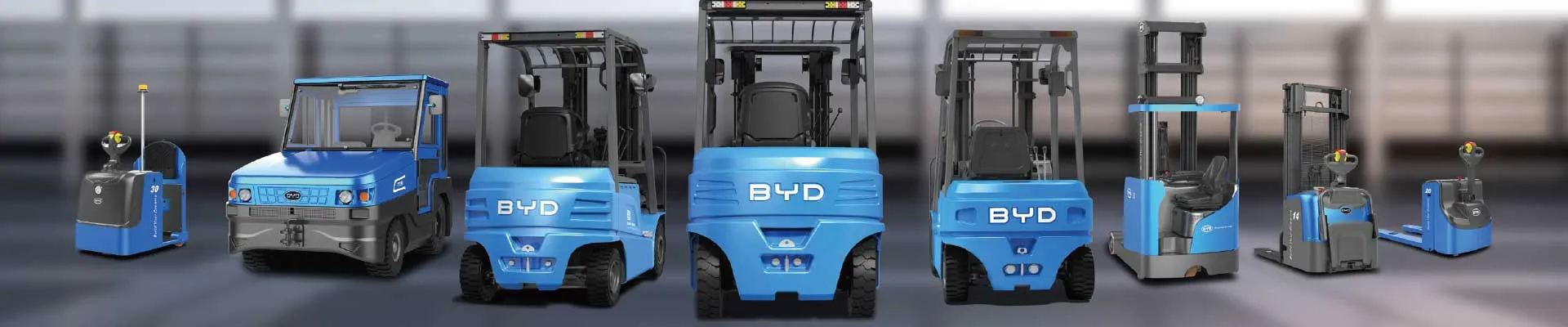

For the new material production enterprises in Shijiao area, there are many special operating scenarios in the factory area, such as the transfer of fine chemical raw materials, material handling in low-temperature storage areas, loading and unloading of heavy-duty and large-volume finished products, and the passage of narrow-channel warehouses. Different scenarios have differentiated requirements for the performance, protective properties, and battery life of handling equipment. Conventional electric handling equipment is often difficult to meet all usage requirements.
In response to the pain points of such special operation scenarios, we, Guangdong Jianshu New Energy, as a professional service provider of BYD forklift after-sales services, combined with the product characteristics of blade battery electric forklifts, launched a customized adaptation reference scheme exclusive to Shijiao New Material Scenario to help enterprises obtain a more suitable material handling solution without significantly adjusting the existing plant layout.
In the early stage of adaptation, our technical service team will enter the factory one by one to carry out the full working condition mapping work, covering all the working points in the factory area, recording the minimum width of the channel, the annual temperature and humidity range of the working area, the rated weight of the conventional transshipment goods, the duration of the operation shift, the distribution of the existing charging points, and the special protection requirements such as anti-corrosion and anti-static in the operation scene to form a complete working condition requirements file, which will serve as the core basis for subsequent adaptation and adjustment.
In the implementation stage of the plan, we will make targeted adjustments to the relevant configuration of the forklift in combination with the working condition files of the previous model, such as customized forks suitable for ultra-long and ultra-wide goods, body protective coatings suitable for humid corrosion scenes, and battery temperature control strategies suitable for low-temperature operation. At the same time, it matches the power supply parameters of the existing charging points in the factory area, and the delivery of the vehicle can be completed without the need for enterprises to invest a lot of additional cost in site modification.
In the follow-up use stage, we will also provide a full-cycle after-sales services system, providing free equipment operation and daily maintenance basic training for the enterprise operation team, and arranging exclusive operation and maintenance personnel to regularly visit the vehicle for inspection of working conditions and battery health. If you encounter any use problems, you can quickly respond to on-site disposal, and minimize the impact of equipment downtime on the normal production rhythm.
The entire adaptation process does not involve redundant adjustment links, which can better match the actual use requirements of the special operation scenarios of new material enterprises, reduce long-term use costs, and improve the operating efficiency of the material transfer process.


