
 简体中文
简体中文 Русский
 Français
 Português
 Español
 لالعربية
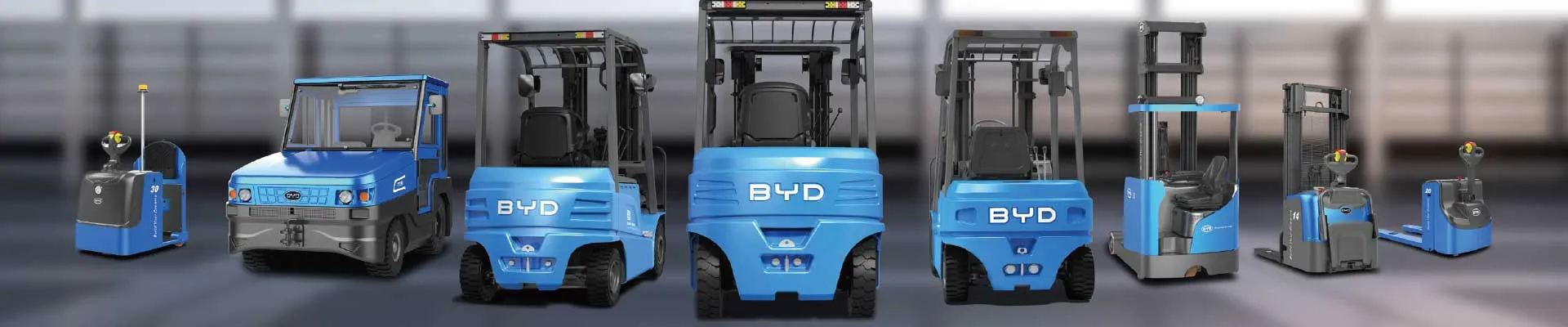
.jpg "Shijie electronic components warehouse, BYD stacker small storage operation reference(figure1)")
Shijie is home to a large number of small and medium-sized electronic component warehousing sites. Such warehouses generally exhibit the characteristics of a large number of SKUs in stock, small size of individual goods, and high precision requirements. The width of the operation channel reserved inside most warehouses is generally in the range of 1.8 meters to 2.5 meters. The height of shelf storage is mostly concentrated in the range of 3 meters to 5 meters. Daily operations are mainly based on high-frequency component turnover box selection, the relocation of entire pallets of materials, and the connection of goods in and out of the warehouse. This requires high flexibility and smooth operation of handling equipment.
Combined with the actual operation requirements of such scenarios, BYD stacker trucks can smoothly complete various handling actions in narrow passages due to their compact body size and small turning radius. The cushioning and deceleration settings that come with their lifting links can also greatly reduce the shaking amplitude of goods during high-level lifting, reduce the loss of precision electronic components due to bumping and falling, and are very suitable for the operation attributes of such small warehouses.
In the actual operation landing process, the following types of specifications can be referred to to further optimize the operation efficiency: First, the preparation process before the operation, the operator needs to check the inventory of the day's entry and exit operations in advance, check the remaining power of the stacker in advance, the flexibility of the control handle, and the tightness of the lifting chain. At the same time, remove the obstacles such as packaging scraps and idle turnover boxes scattered in the operation channel. Since most of the electronic component warehouses are laid with anti-static floor mats, it is necessary to control the running speed of the stacker truck within 3 kilometers per hour during daily driving to avoid the displacement of the floor mat due to high-speed driving, which will affect the safety of the operation.
Secondly, the daily operation specification for picking on the shelves, in the face of components turnover trays with anti-static logos, it is necessary to confirm that the fork is fully inserted into the bottom of the tray before starting the lifting operation. During the lifting process, the balance of the forks on both sides should be observed at any time. For component cartons with many stacks, it is necessary to confirm the placement stability of the upper goods in advance, and then slowly rise to the corresponding shelf level at a uniform speed. When placing the goods, gently push to adjust the position of the tray to avoid the outer packaging damage caused by the tray bumping into the edge of the shelf.
Finally, the operation and maintenance precautions during leisure time. The temperature in Shijie area is high in summer. After the operation on the same day, the stacker should be parked in the designated ventilated charging area. Do not place it at the storage entrance and exit in direct sunlight for a long time. Regularly clean up the small packaging debris and dust left at the fork gap to avoid long-term accumulation affecting the sliding smoothness of the fork.
The whole operation process has been verified by the actual landing of multiple local small electronic warehouses, which can effectively reduce the operation error rate, improve the warehousing turnover efficiency, and also provide a reference implementation plan for the warehousing of small-area precision goods of the same type.


