
 简体中文
简体中文 Русский
 Français
 Português
 Español
 لالعربية
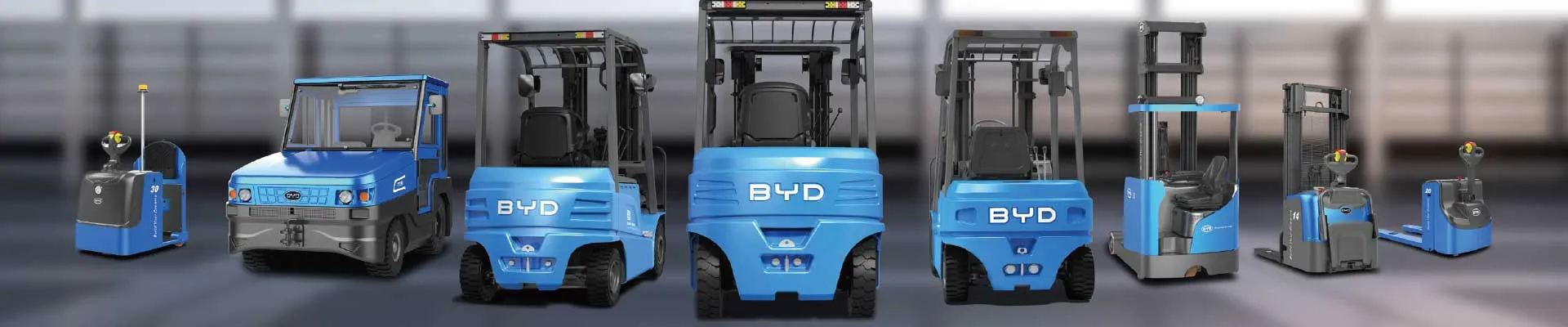
.jpg "Shiqi BYD heavy-duty forklift after-sales, heavy-duty maintenance instructions for large-tonnage models(figure1)")
Many large-tonnage heavy-duty electric forklifts operating in port yards, large heavy industry manufacturing plants, and building materials batch transfer sites have been in high-frequency and heavy-duty operation for a long time. The loss rate of core components is much higher than that of models under ordinary conventional working conditions. Doing a good job of standardized after-sales maintenance is the core premise to ensure the long-term stable operation of vehicles. The after-sales team of BYD heavy-duty forklifts in Shiqi area has sorted out the whole process of floor-to-ceiling maintenance instructions for the reference and implementation of vehicle operation and maintenance personnel.
The pre-inspection and maintenance before daily operation is the first pass for heavy-duty protection. Before starting the vehicle for heavy-duty operation, it is necessary to complete the inspection around the vehicle for one week to confirm whether there is any obvious cracking deformation in the heavy-load bearing attachments and fork joints, whether the tire pressure is in the rated standard range, and whether the fastening bolts in the heavy-load connection part of the body are displaced and loose. After completing the appearance inspection, start the vehicle, test the response speed of the door frame lifting, steering, and braking systems under no-load conditions, and confirm that all functions are normal. After confirming that there is no abnormality, connect to the rated load for operation to avoid overload damage to the core components caused by faulty operation.
The inspection and maintenance of heavy-duty operation gaps cannot be ignored. After more than two hours of continuous heavy-duty operation, the vehicle should be stopped in a timely manner for simple inspection to check whether the surface temperature of the drive motor and hydraulic system is within the rated allowable range. Check whether there is any oil leakage in each section of the hydraulic pipeline. Whether the temperature control system of the power battery pack is operating normally to avoid overheating of the components due to long-term continuous high-load operation and unnecessary additional losses. If small abnormal signs are found during the inspection process, you can contact the after-sales staff in advance to investigate and avoid small problems from evolving into large-scale failures.
Vehicle regular special project maintenance can be flexibly adjusted in combination with heavy-duty usage scenarios, according to the standard maintenance cycle marked in the official after-sales manual, the maintenance interval is appropriately shortened for high-frequency heavy-duty usage scenarios, and after each accumulated operation is full of the corresponding time, contact the local heavy-duty forklift after-sales engineer to come to the door, do special project detailed inspection of the heavy-duty high-frequency loss components such as the load-bearing support structure of the vehicle, hydraulic valve group, brake pads, power battery connection terminals, etc., and replace the parts that have reached the threshold for compliance. Do not wait for the parts to fail completely before dealing with them, so as to avoid unnecessary operation safety hazards.
If you encounter unknown faults such as abnormal noise and abnormal power output of the vehicle during the daily maintenance process, you should stop the heavy-duty operation as soon as possible, contact the corresponding after-sales team in the Shiqi area for door-to-door investigation, and do not dismantle the core components of the vehicle without permission to avoid damaging the original protective structure of the vehicle and affecting the subsequent normal use. Standardizing the implementation of the heavy-duty maintenance requirements of the whole process can not only ensure the operation stability of large-tonnage heavy-duty forklifts, but also effectively prolong the overall service life of the vehicle and reduce the comprehensive cost of long-term use.


