
 简体中文
 Русский
 Français
 Português
 Español
 لالعربية


Dalang is a well-known wool industry gathering place in China. There are a large number of wool production plants of different scales distributed in the region. In the daily production and operation process, many enterprises that have been building factories for a long time are faced with the need for iterative updates of old-fashioned handling equipment. After the traditional old handling equipment has been in use for a long time, there are generally problems of large operating noise and substandard exhaust emissions. For the wool weaving industry with high requirements for the cleanliness of the production environment, it is easy to have oil pollution and dust falling on the yarn and finished fabrics, which in turn affects the product quality. At the same time, the daily failure probability of old equipment is high, and maintenance is time-consuming and expensive. It is easy to disrupt the normal production and handling rhythm.
The handling scenarios of many wool weaving factories have distinct industry characteristics. Most of the goods that need to be turned around on a daily basis are yarn balls, ready-to-wear, and packaging consumables. The overall weight is relatively low. Most of the handling routes in the factory area are short-distance routes from the production workshop to the finished product warehouse. The width of the passage in many workshops is limited, and the adaptability of small-tonnage lithium-ion forklifts under such working conditions is very high.
As a localization organization focusing on forklift-related services, Guangdong Jianshu New Energy can provide BYD forklift sales after-sales services. For the update needs of the old forklifts of Dalang Textile Factory, we can door-to-door connect the whole process of replacement services. In the early stage, staff will be arranged to go to the factory for on-site survey, count the average weight of goods handled daily, the average daily handling frequency, the width of the channel, the height of the loading and unloading platform and other actual working condition data, and recommend suitable model plans for the enterprise. The replacement process will evaluate the old forklifts of the enterprise according to the compliance evaluation standards, and assist in handling the disposal process related to the old vehicles throughout the process. No additional effort is required for the enterprise to connect with the relevant links.
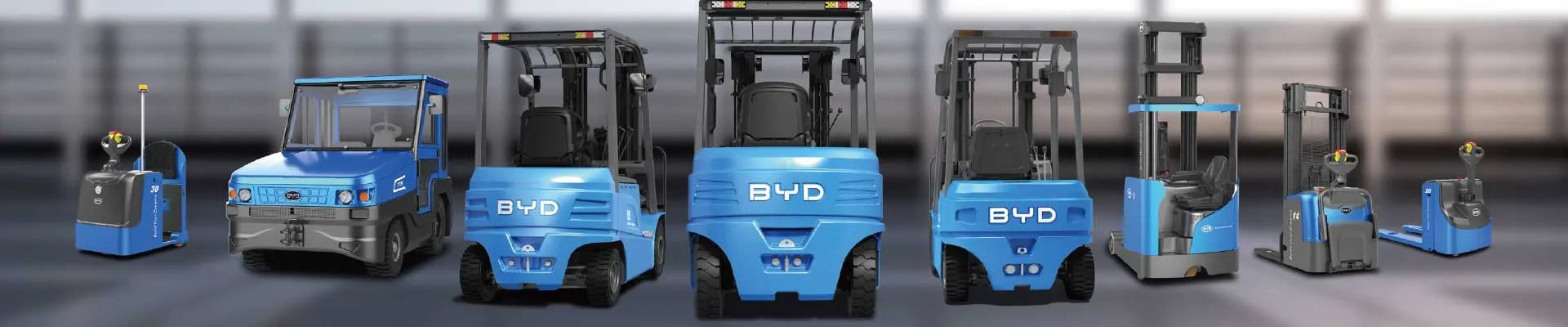
BYD's small-tonnage lithium-ion forklift has no exhaust emissions, low operating noise, and is fully adapted to the clean production requirements of the wool weaving workshop. It will not bring additional pollution risks to yarn and ready-to-wear. The battery life can meet the single-day handling needs of the conventional wool weaving factory. The power replenishment operation is convenient, and the comprehensive operating cost for long-term use is considerable. Our localized after-sales team will continue to provide corresponding maintenance services, regularly conduct on-site vehicle condition inspections, and arrange staff to deal with problems as soon as possible to fully ensure the stable operation of the handling equipment when the wool weaving factory is in peak season to catch up with orders.
A wool weaving factory with an old forklift update plan can connect with a regular service organization with perfect after-sales capabilities, screen suitable replacement plans, and smoothly complete the iterative upgrade of handling equipment according to its actual working conditions.


