
 简体中文
简体中文 Русский
 Français
 Português
 Español
 لالعربية
.jpg "2026 BYD Electric Forklift Market Price Range Reference(figure1)")
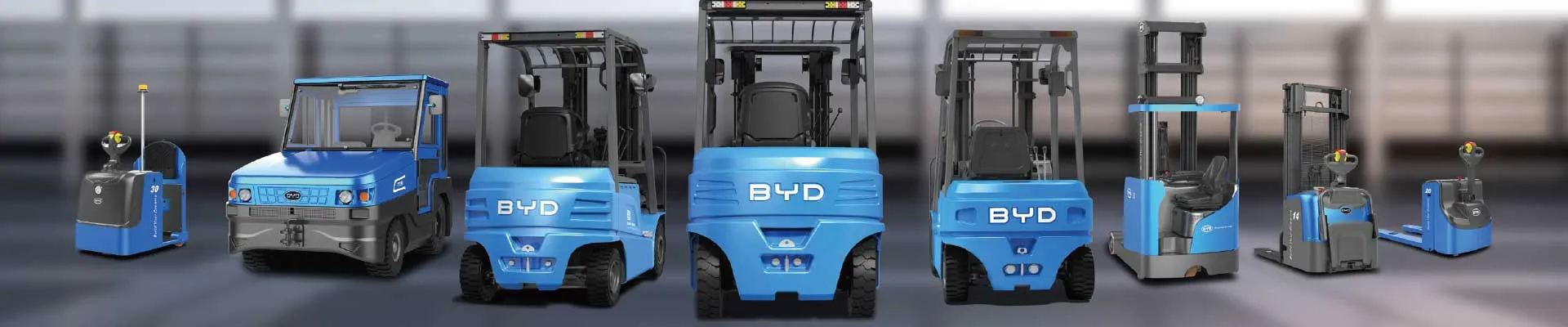
With the continuous advancement of domestic industrial green and low-carbon transformation, the application of electric forklifts in warehousing turnover, production plant transshipment, logistics loading and unloading and other scenarios continues to increase. Many business entities with procurement plans are very concerned about the market price trend and reasonable range of BYD electric forklifts in 2026. This reference content is entirely based on the regular configuration pricing of the open market. There is no absolute fixed price, and the actual transaction price will fluctuate reasonably with various variables.
First of all, it is necessary to clarify the core logic that affects the pricing of BYD electric forklifts. Products with different positioning are designed around the operating requirements of the corresponding scene. The differences in load weight, battery capacity, additional functional attachments, and driving structure are directly reflected in the price range. Users cannot simply compare the price without their actual use needs. The configuration of the suitable scene is the core evaluation criterion for cost performance.
Lightweight entry-level products are mainly aimed at narrow-space operations and low-frequency short-distance transshipment scenarios, mainly walking and standing 1-ton to 1.5-ton small electric forklifts. These products have a compact structure and a small turning radius. They do not need to reserve exclusive driving space. They are suitable for the handling needs of community fresh warehouses, small retail stores, and micro-production workshops. The regular market reference price in 2026 is concentrated in the range of tens of thousands of yuan, which can fully meet the requirements of small and micro scenarios with an average daily operating time of no more than 4 hours.
The mainstream commercial model is the most widely used category in the current market, that is, a conventional ride-on counterweight electric forklift with a load of 1.5 tons to 3 tons, suitable for the vast majority of ordinary warehousing stacking, factory cargo transshipment, and supermarket logistics loading and unloading. The battery capacity under the standard configuration can support the full load operation demand of about 8 hours a day. The conventional market reference price in 2026 is concentrated in the range of more than 100,000 yuan. If users have low-temperature area operations and long daily battery life requirements, they can also choose a high-capacity battery pack with a temperature control system. The price will rise moderately according to the selected content.
Large-tonnage heavy-duty operation products generally carry loads of more than 3 tons, mainly serving the special scenarios of port transshipment, heavy building materials handling, and bulk cargo transfer in heavy industrial plants. The body structure of such products is stronger, and the power output stability is stronger. Some products with exclusive custom attachments will reach a market reference price of hundreds of thousands of yuan, fully adapting to the rigorous requirements of long-term continuous operation with large loads.
Finally, it is necessary to remind users who have procurement needs that the actual transaction price in 2026 will also be affected by factors such as the scale of bulk procurement, local supporting after-sales policies, and market preferential activities at different times. Floating space is a normal market phenomenon. In the procurement process, we should not only focus on the initial procurement cost, but also comprehensively consider the long-term operation and maintenance costs, after-sales network coverage, battery cycle life, and choose the appropriate configuration in combination with our own use plan for the next 3 to 5 years in order to obtain a better input-output ratio.


