
 简体中文
简体中文 Русский
 Français
 Português
 Español
 لالعربية
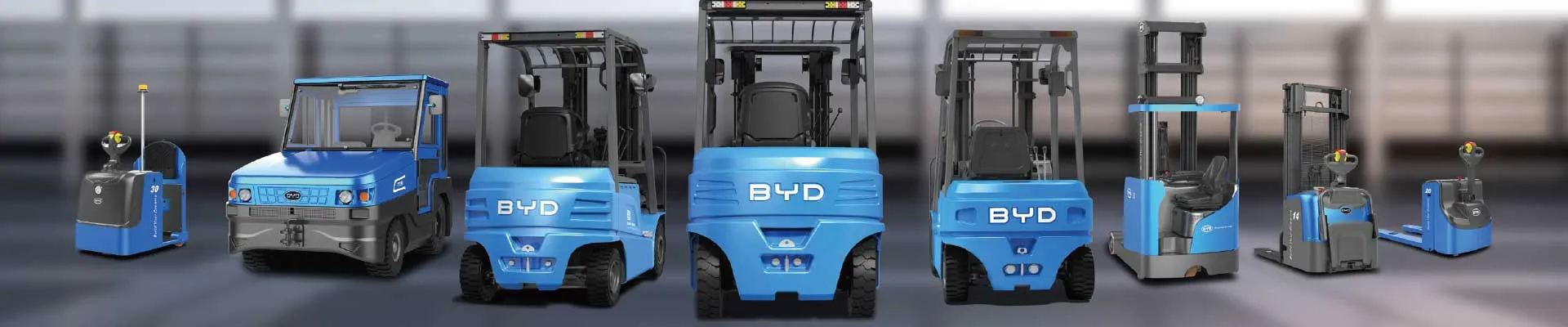
.jpg "8 Practical Ways to Improve the Operation Efficiency of Warehouse Forklifts(figure1)")
In various warehousing operation scenarios, forklifts are the core equipment for handling and turnover of goods, and their operation efficiency is directly related to the speed of the entire warehouse. Many warehousing operation managers are looking for low-cost, high-feasibility optimization solutions. The following 8 practical methods have been validated in a large number of actual scenarios and can be directly combined with their own situation.
The first is to optimize the exclusive operation route of the warehouse, delineate the exclusive path of the forklift's driving channel, pick-up area, and unloading area in advance, clarify the traffic priority of each channel, and timely clean up the debris stacked in the channel to avoid irrelevant personnel from passing through at will. This greatly reduces the time-consuming detours and avoidance during forklift driving.
The second is to do a good job in the pre-ordering of work tasks. The dispatchers sort out the inbound and outbound warehousing and warehouse transfer orders to be executed on the same day in advance, classify and integrate them according to the distribution law of the warehouse area, and follow the principle of proximity when dispatching orders to forklift drivers. This allows the tasks in the same area to be completed centrally, avoiding drivers from repeatedly running orders across regions and compressing invalid mileage.
The third is to implement normalized operation skills training, regularly organize forklift drivers to carry out compliance operation training, familiarize themselves with the operation points of the corresponding models, the standard process of cargo pick and place, reduce errors and bumps in the operation process, and guide drivers to develop smooth start and accurate alignment operation habits, reducing the time-consuming operation of single pick and place.
The fourth is to establish a daily inspection and maintenance system for forklifts, requiring operators to conduct regular inspections of the vehicle's appearance, battery status, braking system, and lifting system before and after each shift, and regularly arrange special personnel to carry out in-depth maintenance to avoid sudden malfunctions during operation and reduce unnecessary standby time.
The fifth is the matching of storage auxiliary marking facilities, with clear positioning signs and electronic guidance signs installed around each cargo space, allowing drivers to quickly locate the corresponding cargo space without repeatedly checking the documents. At the same time, a limit device is installed on the loading and unloading platform to fix the parking position of the forklift, reducing the alignment adjustment time before loading and unloading.
The sixth is to implement a peak-staggered operation scheduling mechanism, rationally allocate on-duty forklift resources during peak hours of inbound and outbound warehousing, and arrange forklift charging, daily cleaning, and minor fault investigation to be carried out during the low peak period of operation to avoid the shortage of available vehicles during peak hours and ensure the smooth flow of operations.
The seventh is to dynamically optimize the layout of inventory space, arranging high-frequency goods in and out of the warehouse in low-level cargo spaces close to the entrance and exit of the warehouse area, which is convenient for forklifts to pick and place. Low-frequency goods in and out of the warehouse are arranged in deep or high-level cargo spaces in the warehouse area, reducing the operating burden of forklifts for long-distance handling and frequent large-height lifting from the source.
The eighth is to improve the operation data review mechanism, daily record the forklift's operation mileage, task completion time, waiting reasons and other data, regularly organize the operation team to review and analyze, identify hidden blocking points in the operation process, and adjust the operation rules in a targeted manner to achieve continuous optimization of operation efficiency.
These methods do not require a large amount of additional investment, and can be combined with the actual size of the warehouse and the characteristics of the goods to flexibly adjust the landing details. Long-term adherence can gradually achieve a steady improvement in operating efficiency and simultaneously reduce the safety hazards of forklift operations.


