
 简体中文
简体中文 Русский
 Français
 Português
 Español
 لالعربية
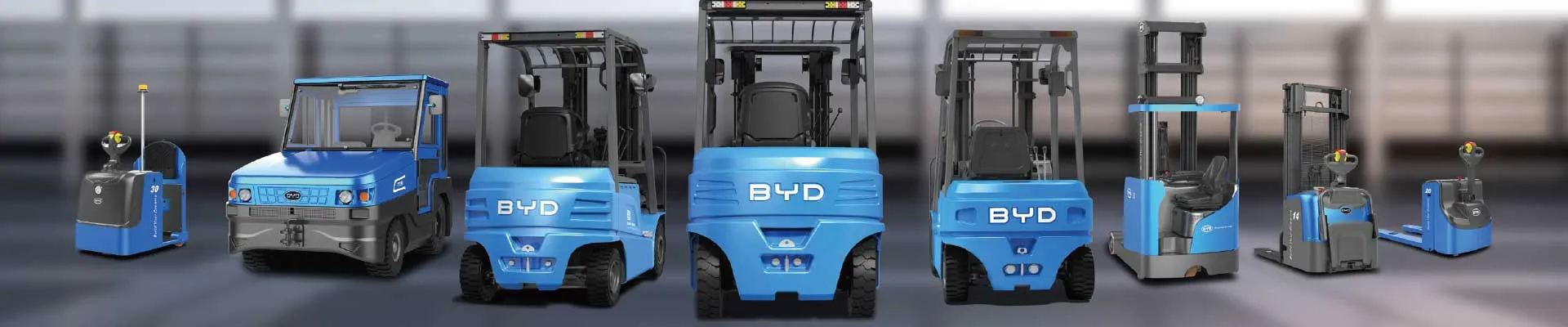

Nowadays, many manufacturing, warehousing, and logistics enterprises are facing the problems of high energy consumption of handling equipment, increasing maintenance costs year by year, and difficulty in adapting to the latest operating requirements. In response to the demand for the renewal of such equipment, BYD Forklift has launched a trade-in policy covering all categories of electric forklift products.
This trade-in policy has a wide range of adaptations. All kinds of compliance under the user name are using industrial handling vehicles, regardless of the original power type, as long as they meet the requirements of basic working conditions, they can participate in replacement. The corresponding old car deduction amount at the time of replacement will be directly verified in the new car transaction payment. There are no issues such as false quotations and invisible deductions. Users who meet the application conditions for local green logistics equipment updates can also superimpose official subsidies in the corresponding area to further reduce the cost of enterprise equipment updates.
In order to facilitate users to clearly handle related business, the brand has also set up a standardized five-step replacement process, and the whole process is open and traceable. The first step is intention registration. Users with replacement needs can submit replacement intentions through the official account of BYD forklift, offline authorized service outlets, and official customer service hotline. Synchronously inform the basic parameters, service life, parking location and other basic information of the old car, and reserve valid contact information to complete the registration.
The second step is door-to-door evaluation. The brand will arrange exclusive evaluation service personnel to make an appointment for a suitable door-to-door time, conduct compliance verification on the actual working conditions and core component status of the old car on the spot, and give an open and transparent old car deduction quotation. All evaluation standards are unified and open, and there is no differentiated random quotation. The third step is the signing of the agreement. After the two parties confirm the consensus on the old car deduction amount, the selected new car configuration, the agreed delivery cycle, and the follow-up service details one by one, they can sign a formal replacement agreement to clarify the rights and responsibilities of both parties and ensure the legal compliance of the replacement process.
The fourth step is the handover of the old and new cars. The two parties complete the towing and recycling of the old cars according to the agreed time, synchronously arrange the distribution, on-site installation and debugging of the new BYD forklift, and provide basic operation specification training for on-site operators to ensure that users can quickly get started with the new equipment. The fifth step is the after-sales connection. After the replacement is completed, users can enjoy a full set of original quality assurance services for the corresponding new car. Follow-up daily maintenance and regular testing needs can be booked at the nearest authorized outlets for door-to-door processing.
When handling replacement business, there are also several relevant precautions that users need to know in advance. Users need to sort out the relevant purchase certificates of old cars in advance to confirm that there is no ownership dispute in old cars. All old cars participating in replacement and recycling will be in accordance with relevant national environmental protection regulations. Do unified compliance dismantling and disposal, will not flow into the market for illegal transformation, and help green and low-carbon upgrades in the field of industrial handling.


