
 简体中文
 Русский
 Français
 Português
 Español
 لالعربية

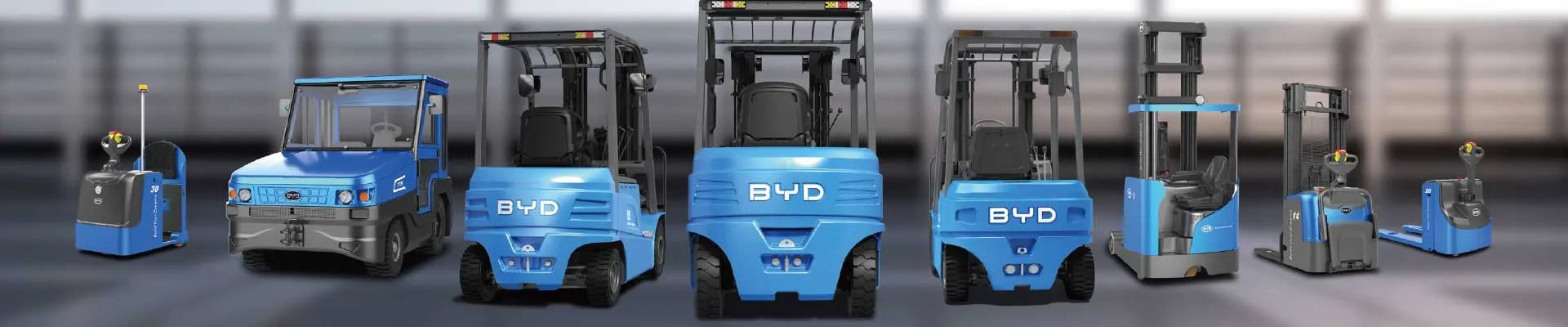

For all kinds of warehousing, short-distance freight, and manufacturing scenarios, economic electric forklifts are the core operating equipment for daily cargo turnover. Doing a good job in long-term and reasonable maintenance can not only ensure the stability of the daily operation of the equipment, but also avoid the loss of work interruption caused by sudden failures, further diluting the overall cost of the equipment.
First of all, a zero-cost daily self-inspection mechanism can be established. This kind of operation does not require the intervention of professional maintenance personnel, and can be completed by the front-line operators who operate the forklift on a daily basis. Before each shift operation, the operator can spend 3 to 5 minutes to check whether the power battery shell is damaged by bumps, whether the power supply interface has oxidized and accumulated ash, and at the same time test the response sensitivity of the brake and braking, whether there are traces of oil leakage on the surface of the lifting hydraulic pipeline, whether the wear degree of the tire surface is within the safe range, and whether the display function of the operating handle and instrument panel is normal. After the operation, clean up the debris and dust scattered on the body surface in time, park the forklift in a flat and dry designated area, and turn off the power supply master switch. This kind of daily small inspection can check most of the initial small hidden dangers in advance, and no additional maintenance costs are required.
Secondly, you can set up a graded regular maintenance plan to adapt to the needs of different scenarios. Among them, the monthly basic maintenance can be completed by internal operation and maintenance personnel who have undergone simple operation training. The work content includes fastening the connecting fasteners of various parts of the body one by one, cleaning up the debris attached to the heat dissipation port of the motor, dredging the heat dissipation channel, adjusting the activity gap of the operating handle, and supplementing the ventilation area around the battery pack. The whole operation does not require the purchase of special accessories, and the overall expenditure is very low. Quarterly-level in-depth maintenance, if the internal operation and maintenance personnel are insufficient, can be completed with a regular local maintenance service provider. The operation content includes testing the hydraulic oil balance and status, calibrating the running motor and the normal operating parameters of the hydraulic motor, and replacing the wearing parts that exceed the standard, such as sealing rubber rings, brake linings, etc., without blindly replacing parts that have not yet reached the wear and tear standard, the potential failure can be eliminated in the embryonic stage.
Finally, maintenance costs can be further controlled through detailed adjustments. Users can establish an exclusive maintenance ledger for each forklift, and make corresponding records of each maintenance time, replacement accessories, and minor hidden dangers. According to the actual operating time of the equipment, daily load-bearing weight, and road conditions of the use scene, the maintenance cycle can be flexibly adjusted. If it is a high-frequency heavy-load operation scenario, the maintenance interval can be appropriately shortened. If it is a light-load intermittent operation scenario, the maintenance interval can be appropriately extended under the premise of ensuring safety to avoid unnecessary maintenance expenses. This maintenance plan for economical electric forklifts takes into account both practicality and cost advantages. Users can adjust it flexibly according to their actual situation, ensuring long-term stable operation of the equipment under the premise of reasonable control of the operation and maintenance budget, and reducing the additional cost of subsequent large-scale maintenance.


