
 简体中文
简体中文 Русский
 Français
 Português
 Español
 لالعربية
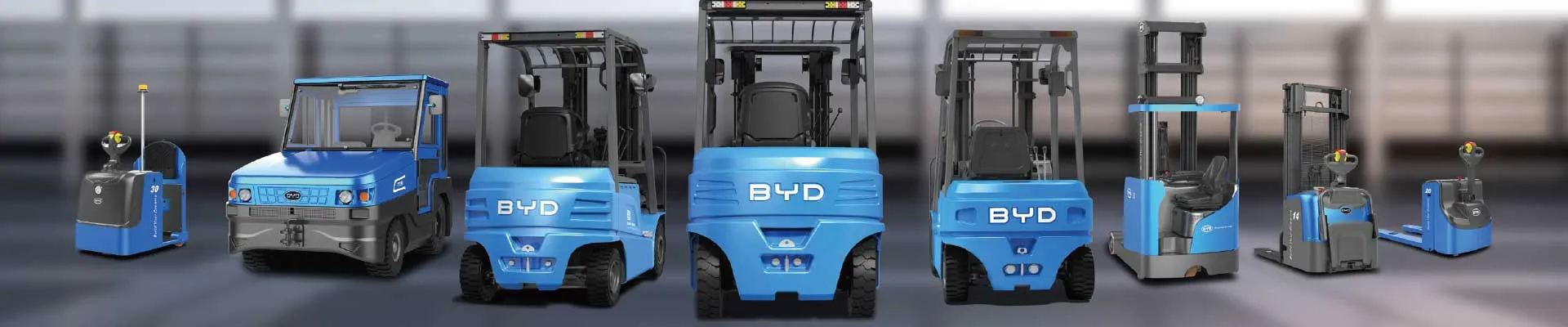
.jpg "Caitang stainless steel kitchen warehouse, BYD standard forklift conventional storage operation reference(figure1)")
The local stainless steel kitchenware industry in Caitang is concentrated, corresponding to the storage scene, there are many types of goods and high storage density. The finished kitchenware is mostly made of sheet metal, which is prone to scratches, pits and other defects after bumping. It requires high stability and accuracy for storage and transshipment. The adaptability operation process of BYD's standard electric forklift can well match the daily needs of such storage scenarios.
The first is the basic verification link before the operation. Before each start of the equipment, the operator should check the battery power, brake system sensitivity, and the operating status of the lifting hydraulic rod one by one to confirm that the fork has no deformation or excessive wear problems. There are no sundries around the driver's seat to block the operation controls. All inspection items meet the requirements for safe start before powering on. Daily operations should strictly control the rated load parameters of the forklift, and plan a single transfer volume in combination with the whole weight of the stainless steel kitchen utensils. Overloading operations are strictly prohibited to avoid the risk of slipping or overturning if the lift is too heavy.
During daily transshipment operations, the width of the internal passage of most Pai Tang stainless steel kitchenware warehouses is about 3 meters. During operation, the speed of the forklift should be controlled within 5 kilometers per hour. When turning and passing through the corner of the warehouse door, the horn should be signaled in advance. Pay attention to the movements of the surrounding workers. When transporting the whole set of kitchenware goods, the fork should be fully inserted into the bottom of the tray. The goods should be lifted 10 to 15 cm above the ground and then drive smoothly. Do not move long distances with the fork raised to avoid the goods shaking and bumping into the surrounding shelves or other stored goods.
During the stacking operation, the shelves of the stainless steel kitchenware warehouse are mostly layered. When the operator adjusts the height of the fork, they should accurately align the shelf laminates, push the tray smoothly to the designated storage location, and then slowly lower the fork and pull it out smoothly. Do not push the tray with brute force to avoid the tray scratching the goods that have been piled up around, causing unnecessary damage to the surface of the kitchen utensils.
After the daily operation, park the forklift in the designated charging and standing area, pull the handbrake to lower the fork, and promptly clean up the remaining packaging paper and metal debris on the body. Regular battery status verification and vulnerable parts inspection can not only prolong the service life of the equipment, but also ensure the continuity of subsequent storage operations and reduce unnecessary operation and maintenance costs.


