
 简体中文
简体中文 Русский
 Français
 Português
 Español
 لالعربية

Shiling is a well-known leather goods industry agglomeration area in China. There are a large number of finished leather goods warehouses serving the whole industry chain, which need to deal with the daily turnover and handling of various goods such as luggage, leather goods, and leather accessories. The surface of such finished leather goods is mostly made of materials that are easy to absorb floating dust. Once contaminated with fine particles of impurities, the subsequent cleaning is difficult, which can easily affect the appearance and appearance of the finished products and bring unnecessary goods loss. Therefore, the dust control of the whole process of warehousing is one of the core concerns of the daily operation and maintenance of various local leather goods warehouses.
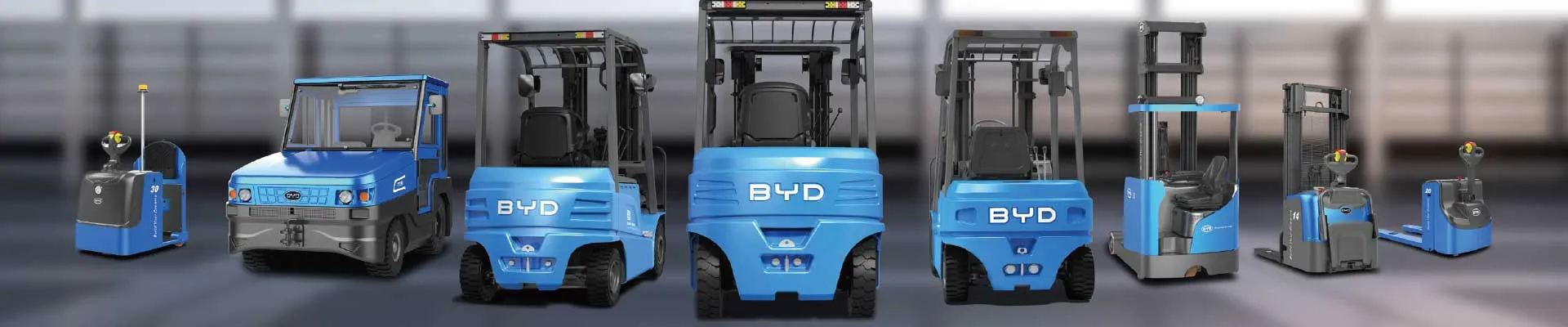
Many local storage operators in Shiling will choose BYD clean forklifts suitable for confined space operations to undertake daily handling tasks. This type of equipment does not have the exhaust emission problem of internal combustion power equipment at its root, and will not generate soot particulate matter pollution in the warehouse with limited ventilation conditions. During operation, it will not disturb too much excess dust. In combination with the existing ground dust removal and space air purification measures in the warehouse, the overall floating dust content in the warehouse area can be effectively reduced, laying a good foundation for dust prevention operations.
In the process of actually carrying out dust-proof storage operations, the first thing to do is to do a good job of the equipment inspection process before the operation. Before starting the forklift to enter the warehouse area for operation, the staff should first do basic dust removal treatment on the outer surface of the body, focusing on cleaning up the gaps in the wheel arches and the outdoor dust that is easily attached to the corners of the chassis. Avoid the forklift from bringing external dust directly into the exclusive area of finished product storage from the entrance and exit. At the same time, confirm that the operation state of the equipment power system is stable, and there will be no abnormal shaking and falling parts debris.
Secondly, it is necessary to standardize the operation details during the operation process. When the forklift enters the operation area where the finished leather goods are stacked centrally, it is necessary to maintain a low speed and uniform operation to avoid the vehicle speed being too fast to bring up the residual dust on the ground. When handling and stacking the pallets of high-value leather goods, it is necessary to control the range of movement of the fork and lift, and do not scratch the dust cover and cargo cover of the surrounding cargo stack to minimize the dust disturbance during the operation.
Finally, make arrangements for the daily operation and maintenance of the equipment. Regularly clean and dust the ventilation and heat dissipation parts and air filter components of the forklift to avoid the dust accumulated in the gaps being blown into the warehouse space by the airflow during the operation of the equipment. After the daily operation, park the forklift in the specially designated equipment parking area of the warehouse, and do not enter and exit the temporary storage area of high-cleanliness finished products at will.
This type of clean forklift dust-proof operation mode adapted to the characteristics of the Shiling leather goods industry has been practiced by many local warehousing operators, which can effectively reduce the probability of dust contamination of finished leather goods without increasing too much operation and maintenance costs, steadily improve the quality control ability of the warehousing process, and further promote the overall operation efficiency of the warehouse.


