
 简体中文
简体中文 Русский
 Français
 Português
 Español
 لالعربية
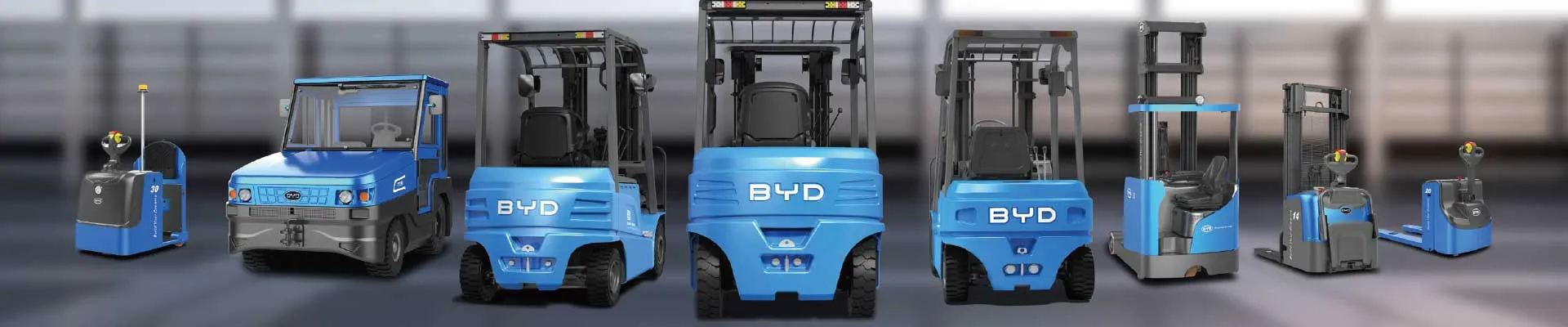

The Zhongluotan area gathers a large number of upstream and downstream supporting entities of equipment manufacturing. Many local equipment parts warehouses generally have the practical problem of large product specifications, ranging from precision electronic components to heavy-duty rack accessories. Under the traditional operation mode, different categories of goods need to be matched with multiple types of operation equipment. The dispatching cost is high, and the site circulation lines are prone to cross-confusion, which indirectly reduces the overall inbound and outbound turnover efficiency. For such scenario characteristics, the hybrid warehousing operation plan adapted to BYD electric forklifts can specifically solve existing pain points. The first step in the implementation of the plan is to divide the existing storage space into three functional modules: room temperature small piece picking area, medium piece stocking area, and heavy large piece storage area according to the access frequency, weight, and size parameters of the goods in the warehouse. Different operation modules match the BYD electric forklift with corresponding functional parameters: the small piece picking area uses a walking electric forklift to complete the picking and replenishment of high-level goods, and the medium piece stocking area uses a counterweight electric forklift to complete the transfer and relocation of the whole goods. The heavy-duty large-piece area uses a high-load electric forklift to complete the stacking and storage of large-weight accessories. On this basis, the warehouse will delineate exclusive traffic paths for different types of electric forklifts, and set up operation prompt signs at key nodes of the warehouse to avoid the intersection of forklifts in different operation scenarios and reduce the mileage of equipment without load as much as possible. Before the operation, all forklift operators in the warehouse will complete the operation specification training for the corresponding scenarios, clarify the loading, unloading and stacking precautions of different categories of goods, and ensure the smooth and orderly progress of daily operations. After the implementation of this plan, the characteristics of zero exhaust emissions of electric forklifts are fully adapted to the environmental protection requirements of closed operations in the warehouse. Long-term use can reasonably control the cost of equipment operation and maintenance, improve the daily average operation turnover of a single forklift, and steadily improve the overall inbound and outbound efficiency of the parts warehouse. At the same time, it can also avoid the accumulation of oil pollution and exhaust gas in the warehouse caused by traditional operating equipment, creating a more comfortable working environment for the operators in the warehouse. The whole package can also be flexibly adjusted according to the actual storage capacity of the parts warehouse and the proportion of goods categories. In the future, it can also be matched with the existing inbound and outbound registration process to further optimize the efficiency of the full-link operation, providing a practical reference direction for the same type of equipment and accessories storage scenarios.


