
 简体中文
简体中文 Русский
 Français
 Português
 Español
 لالعربية
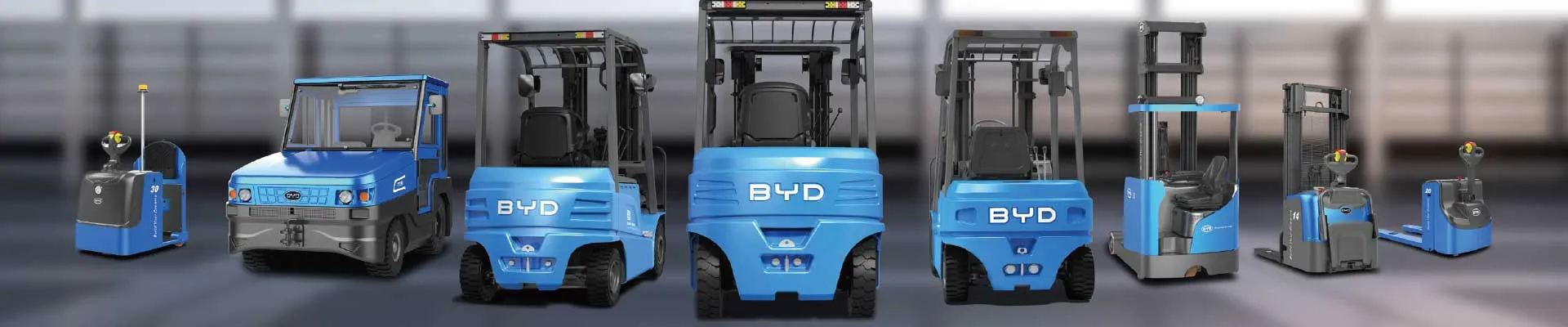

In the daily operation of many manufacturing enterprises and warehousing operators, they often encounter the pain points of workshop handling: the traditional manual handling efficiency is low, the transshipment of large goods takes a long time, and it is easy to slow down the overall production rhythm; the traditional internal combustion forklift has large exhaust emissions and high noise, which is not suitable for long-term operation in a closed production workshop. The narrow channel area is difficult to turn, which can easily cause additional losses of goods bumping and shelf scratches.
With the wave of warehousing upgrades gradually penetrating into all aspects of the real industry, electric forklifts are becoming a new mainstream solution to solve the pain points of workshop handling. This type of equipment adopts an electric drive mode, with zero exhaust emissions and far lower operating noise than traditional internal combustion equipment. Even if it is operated for a long time in a closed production workshop, a constant temperature storage area and other special scenarios, it will not cause pollution to the on-site environment. It fully meets the current regulatory requirements for green production and will not interfere with the normal production order inside the workshop.
The operation logic of the electric forklift is simple and easy to use, and the steering control is very flexible. Even the narrow channel shelf area with a width of less than two meters can be easily passed through, and the lifting and positioning accuracy is higher, which can greatly reduce the loss rate of goods. At the same time, this type of equipment has no additional expenditure on fuel consumption. It only needs to do routine maintenance of the battery and core circuit on a daily basis. The long-term operation and maintenance cost is much lower than that of traditional handling equipment. Some models can also be adapted to an intelligent operation scheduling system, which can coordinate the distribution of handling tasks in real time to avoid invalid detours, and can improve the overall warehousing turnover efficiency by more than 30%.
At present, many enterprises that have completed the iteration of handling equipment have already felt the actual gains brought by the upgrading of warehousing operations: electric forklifts can cover the needs of multiple scenarios such as production material transfer, finished product loading and unloading, high shelf access, etc., perfectly adapting to different scales of warehousing space, effectively opening up the last 100 meters of internal logistics, and assisting the physical industry to achieve full-link quality improvement and efficiency in warehousing.


