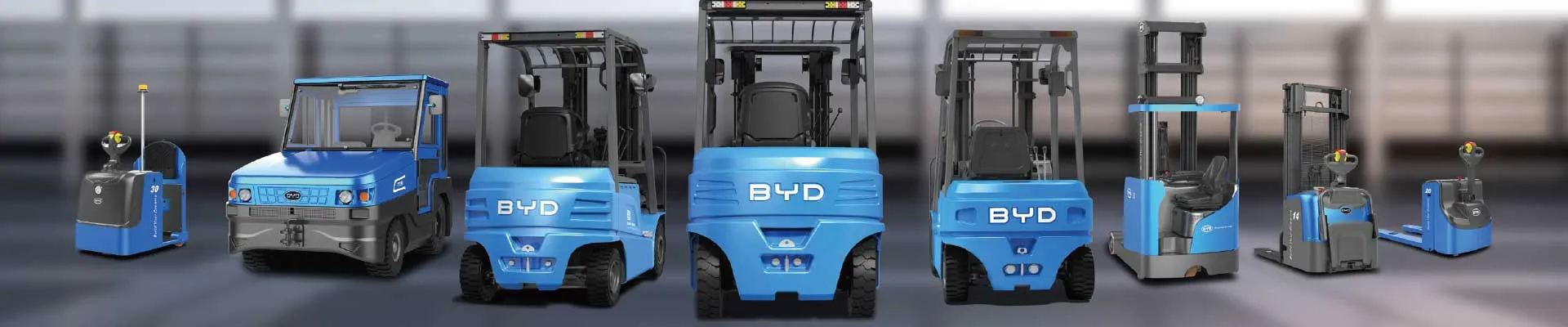
Cambiando la materia prima del hardware almacén terminado, carretilla elevadora eléctrica BYD instrucciones de operación de almacenamiento mixto

2026-08-31

Cambiando la materia prima del hardware almacén terminado, carretilla elevadora eléctrica BYD instrucciones de operación de almacenamiento mixto(Figura1)

Los almacenes de materias primas y productos terminados de muchas empresas de fabricación de hardware en el área de Changping también realizan múltiples funciones, como el almacenamiento temporal de materias primas de hardware, el tránsito del trabajo de proceso en curso, la clasificación y el almacenamiento de productos terminados y la transferencia de pedidos fuera del almacén. Las materias primas de metales pesados, las piezas rugosas de hardware dispersas y los productos terminados empaquetados por paletas estandarizadas se apilan en el espacio de almacenamiento al mismo tiempo. Los requisitos de ancho de tráfico y carga de los diferentes espacios de carga son diferentes, lo que pertenece a un escenario típico de almacenamiento mixto de mercancías de varios tipos. En tales escenarios, el uso de carretillas elevadoras eléctricas para las operaciones diarias requiere una especificación de operación clara que se clasificará en combinación con con características del sitio para garantizar un funcionamiento seguro y sin problemas.

Antes de que comience la operación, el operador debe verificar el orden de trabajo de almacenamiento del día, aclarar el tipo de mercancía a transbordar en el día, la distribución del área de operación y verificar la potencia restante de la carretilla elevadora eléctrica, el estado de respuesta del sistema de frenado y la flexibilidad de operación del pórtico de elevación con anticipación para confirmar que el vehículo no tiene ningún peligro oculto. Luego, el operador debe adaptar las especificaciones de las mercancías a trasladar con anticipación, ajustar el espacio de las horquillas y asegurarse de que las horquillas puedan extenderse completamente a la posición de apoyo en la parte inferior de la paleta de carga para evitar el problema de fuerza desigual durante el proceso de elevación. Al mismo tiempo, planifique la línea de operación con anticipación para evitar el área de operación donde se llevan a cabo el inventario manual y la clasificación manual en el almacén, y reduzca los cruces innecesarios de la línea de movimiento.

Al entrar en el enlace de operación formal, para la operación de transferencia de materia prima de hardware de alta resistencia en el área de materia prima, el operador debe controlar la velocidad de la carretilla elevadora en el rango de baja velocidad requerido por la gestión de almacenamiento, hacer sonar la bocina de antemano en la esquina del canal y la posición donde la línea de visión está bloqueada, y el marco de la puerta debe inclinarse adecuadamente hacia atrás para garantizar la estabilidad de las mercancías pesadas cargadas. Durante el proceso de conducción, la parte inferior de la horquilla debe mantenerse a una altura segura del suelo para evitar rayar los pequeños accesorios de hardware esparcidos por el suelo. Para la operación de apilamiento en el área de productos terminados, el operador debe ajustar la velocidad suavemente al operar el marco de la puerta de elevación, alinear suavemente la posición de las mercancías que se apilarán y evitar golpear el embalaje exterior del producto terminado que se ha colocado alrededor. Después de colocar las mercancías, deben retirarse suavemente de la horquilla y no llevarse las mercancías en el espacio de carga adyacente.

Una vez completada la operación diaria de mezcla interregional, el operador debe estacionar la carretilla elevadora eléctrica en el área de estacionamiento de carga designada por el almacén, colocar la horquilla completamente plana en el suelo, apretar el freno de mano del vehículo y hacer un buen trabajo en el registro de operación del día. Todo el proceso de operación se adapta a las necesidades reales de uso del almacén de productos terminados de materia prima de hardware Changping, que puede optimizar gradualmente la eficiencia de rotación del almacenamiento, reducir el riesgo de daños innecesarios a las mercancías y garantizar el desarrollo ordenado de todo el proceso de operaciones de almacenamiento.

We use cookie to improve your online experience. By continuing to browse this website, you agree to our use of cookie.

Cookies

Please read our Terms and Conditions and this Policy before accessing or using our Services. If you cannot agree with this Policy or the Terms and Conditions, please do not access or use our Services. If you are located in a jurisdiction outside the European Economic Area, by using our Services, you accept the Terms and Conditions and accept our privacy practices described in this Policy.
We may modify this Policy at any time, without prior notice, and changes may apply to any Personal Information we already hold about you, as well as any new Personal Information collected after the Policy is modified. If we make changes, we will notify you by revising the date at the top of this Policy. We will provide you with advanced notice if we make any material changes to how we collect, use or disclose your Personal Information that impact your rights under this Policy. If you are located in a jurisdiction other than the European Economic Area, the United Kingdom or Switzerland (collectively “European Countries”), your continued access or use of our Services after receiving the notice of changes, constitutes your acknowledgement that you accept the updated Policy. In addition, we may provide you with real time disclosures or additional information about the Personal Information handling practices of specific parts of our Services. Such notices may supplement this Policy or provide you with additional choices about how we process your Personal Information.


Cookies

Cookies are small text files stored on your device when you access most Websites on the internet or open certain emails. Among other things, Cookies allow a Website to recognize your device and remember if you've been to the Website before. Examples of information collected by Cookies include your browser type and the address of the Website from which you arrived at our Website as well as IP address and clickstream behavior (that is the pages you view and the links you click).We use the term cookie to refer to Cookies and technologies that perform a similar function to Cookies (e.g., tags, pixels, web beacons, etc.). Cookies can be read by the originating Website on each subsequent visit and by any other Website that recognizes the cookie. The Website uses Cookies in order to make the Website easier to use, to support a better user experience, including the provision of information and functionality to you, as well as to provide us with information about how the Website is used so that we can make sure it is as up to date, relevant, and error free as we can. Cookies on the Website We use Cookies to personalize your experience when you visit the Site, uniquely identify your computer for security purposes, and enable us and our third-party service providers to serve ads on our behalf across the internet.

We classify Cookies in the following categories:
 ●  Strictly Necessary Cookies
 ●  Performance Cookies
 ●  Functional Cookies
 ●  Targeting Cookies


Cookie List
A cookie is a small piece of data (text file) that a website – when visited by a user – asks your browser to store on your device in order to remember information about you, such as your language preference or login information. Those cookies are set by us and called first-party cookies. We also use third-party cookies – which are cookies from a domain different than the domain of the website you are visiting – for our advertising and marketing efforts. More specifically, we use cookies and other tracking technologies for the following purposes:

Strictly Necessary Cookies
These cookies are necessary for the website to function and cannot be switched off in our systems. They are usually only set in response to actions made by you which amount to a request for services, such as setting your privacy preferences, logging in or filling in forms. You can set your browser to block or alert you about these cookies, but some parts of the site will not then work. These cookies do not store any personally identifiable information.

Functional Cookies
These cookies enable the website to provide enhanced functionality and personalisation. They may be set by us or by third party providers whose services we have added to our pages. If you do not allow these cookies then some or all of these services may not function properly.

Performance Cookies
These cookies allow us to count visits and traffic sources so we can measure and improve the performance of our site. They help us to know which pages are the most and least popular and see how visitors move around the site. All information these cookies collect is aggregated and therefore anonymous. If you do not allow these cookies we will not know when you have visited our site, and will not be able to monitor its performance.

Targeting Cookies
These cookies may be set through our site by our advertising partners. They may be used by those companies to build a profile of your interests and show you relevant adverts on other sites. They do not store directly personal information, but are based on uniquely identifying your browser and internet device. If you do not allow these cookies, you will experience less targeted advertising.

How To Turn Off Cookies
You can choose to restrict or block Cookies through your browser settings at any time. Please note that certain Cookies may be set as soon as you visit the Website, but you can remove them using your browser settings. However, please be aware that restricting or blocking Cookies set on the Website may impact the functionality or performance of the Website or prevent you from using certain services provided through the Website. It will also affect our ability to update the Website to cater for user preferences and improve performance. Cookies within Mobile Applications

We only use Strictly Necessary Cookies on our mobile applications. These Cookies are critical to the functionality of our applications, so if you block or delete these Cookies you may not be able to use the application. These Cookies are not shared with any other application on your mobile device. We never use the Cookies from the mobile application to store personal information about you.

If you have questions or concerns regarding any information in this Privacy Policy, please contact us by email at . You can also contact us via our customer service at our Site.