Solução de problemas e métodos básicos de tratamento de falhas comuns em empilhadeiras elétricas

2026-09-01

Solução de problemas e métodos básicos de tratamento de falhas comuns em empilhadeiras elétricas(Figura1)

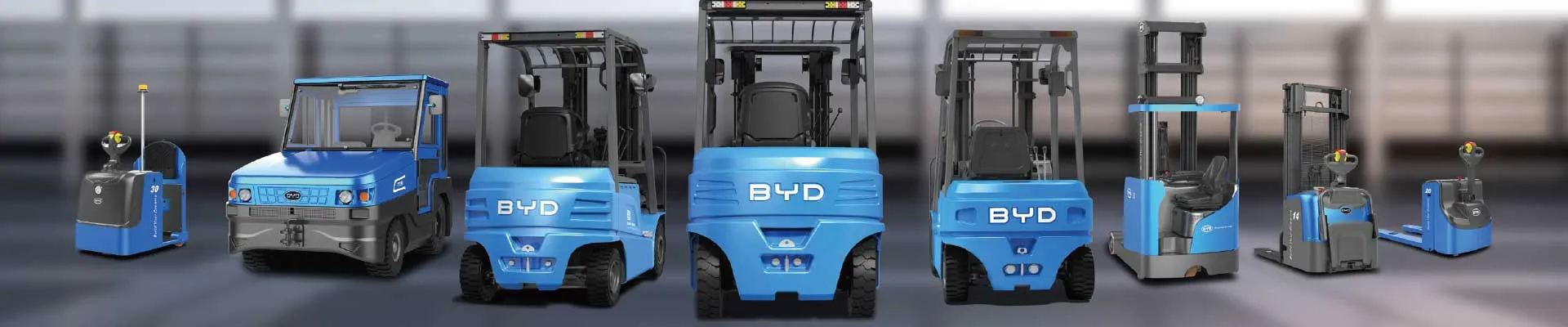
Empilhadeiras elétricas são equipamentos de manuseio amplamente utilizados em cenários atuais de armazenamento logístico e transbordo interno na área da fábrica. Em cenários de operação de alta frequência de longo prazo, várias falhas menores ocorrerão inevitavelmente. Os operadores da linha de frente e o pessoal de operação e manutenção de base dominam os métodos básicos de investigação e tratamento de falhas, o que pode evitar pequenos problemas que se transformam em grandes falhas, reduzir efetivamente o custo do trabalho perdido e prolongar a vida útil do equipamento.

A primeira é solucionar problemas e lidar com as falhas relacionadas ao sistema de caminhada. Se o veículo não puder dar partida após a ligação normal, o primeiro passo é verificar se o botão de desligamento de emergência é acidentalmente tocado e pressionado. Em muitos cenários de operação, é fácil tocar no interruptor quando as pessoas andam ou as mercadorias são arranhadas, e o interruptor pode ser restaurado rapidamente reiniciando. Depois disso, você pode verificar se a potência restante do veículo é inferior ao limite de proteção. No estado de baixa potência, o veículo travará automaticamente a função de caminhada e a restrição pode ser levantada reabastecendo a energia a tempo. Se os dois itens acima forem investigados sem anormalidade, você pode verificar se os contatos de conexão do pedal de aceleração ambulante estão soltos após o desligamento. Depois de limpar o ponto de contato, reconectar pode resolver o problema. Se a falha ainda existir, não desmonte os componentes de controle eletrônico sem permissão e entre em contato com a operação e manutenção profissional

A segunda é a solução de problemas e o manuseio das falhas relacionadas ao sistema hidráulico de elevação. Se o garfo não conseguir levantar e não puder levantar, primeiro verifique se o nível de óleo hidráulico está abaixo da linha de escala marcada pelo equipamento. Durante a operação de longo prazo, o óleo hidráulico terá uma pequena perda normal e a função pode ser restaurada complementando o óleo hidráulico de conformidade da etiqueta correspondente. Depois disso, você pode verificar se a posição de ajuste de pressão da válvula de transbordamento está deslocada. Se houver um pequeno desvio, você pode ajustar os parâmetros marcados no manual do equipamento. Tenha cuidado para não ajustar a pressão para exceder a carga nominal do equipamento sem permissão para evitar danos à bomba hidráulica. Se houver um ruído anormal durante o levantamento do garfo, você pode dar prioridade à verificação se o circuito de óleo está misturado com ar. Levantar repetidamente o garfo sem carga várias vezes para descarregar o ar pode eliminar o ruído anormal. Se houver um problema óbvio de vazamento de óleo, você pode primeiro verificar a posição correspondente das vedações. Um pequeno vazamento de óleo pode limpar a superfície e observar o estado. Quando o vazamento de óleo for grande, substitua as vedações a tempo.

Finalmente, é a solução de problemas e o manuseio de falhas relacionadas ao carregamento. Se o carregador não puder começar a carregar após conectar, primeiro verifique se o ponto de contato de metal da interface de carregamento está oxidado e deslocado. Depois de limpar o ponto de contato, conecte novamente o teste e, em seguida, verifique sincronicamente se a abertura vazia no lado da entrada da rede elétrica foi acionada. Redefinir a abertura vazia pode resolver o problema. Se o dispositivo pular e parar com frequência durante o processo de carregamento, você pode verificar se a temperatura da superfície da bateria está muito alta. Depois que a dissipação de calor insuficiente acionar a proteção contra superaquecimento, mova o veículo para uma área ventilada e fria e deixe-o esfriar e continue a carregar. Tente evitar o carregamento de longo prazo em um ambiente solar de alta temperatura.

Durante o uso diário, desenvolva o hábito de inspeção pré-turno, e muitas possíveis falhas menores podem ser evitadas com antecedência. Ao encontrar falhas que excedam suas próprias capacidades de descarte, não desmonte os componentes principais à vontade e entre em contato com o pessoal profissional pós-venda para processamento porta a porta. Isso pode não apenas garantir a segurança da operação, mas também evitar danos desnecessários ao equipamento.

We use cookie to improve your online experience. By continuing to browse this website, you agree to our use of cookie.

Cookies

Please read our Terms and Conditions and this Policy before accessing or using our Services. If you cannot agree with this Policy or the Terms and Conditions, please do not access or use our Services. If you are located in a jurisdiction outside the European Economic Area, by using our Services, you accept the Terms and Conditions and accept our privacy practices described in this Policy.
We may modify this Policy at any time, without prior notice, and changes may apply to any Personal Information we already hold about you, as well as any new Personal Information collected after the Policy is modified. If we make changes, we will notify you by revising the date at the top of this Policy. We will provide you with advanced notice if we make any material changes to how we collect, use or disclose your Personal Information that impact your rights under this Policy. If you are located in a jurisdiction other than the European Economic Area, the United Kingdom or Switzerland (collectively “European Countries”), your continued access or use of our Services after receiving the notice of changes, constitutes your acknowledgement that you accept the updated Policy. In addition, we may provide you with real time disclosures or additional information about the Personal Information handling practices of specific parts of our Services. Such notices may supplement this Policy or provide you with additional choices about how we process your Personal Information.


Cookies

Cookies are small text files stored on your device when you access most Websites on the internet or open certain emails. Among other things, Cookies allow a Website to recognize your device and remember if you've been to the Website before. Examples of information collected by Cookies include your browser type and the address of the Website from which you arrived at our Website as well as IP address and clickstream behavior (that is the pages you view and the links you click).We use the term cookie to refer to Cookies and technologies that perform a similar function to Cookies (e.g., tags, pixels, web beacons, etc.). Cookies can be read by the originating Website on each subsequent visit and by any other Website that recognizes the cookie. The Website uses Cookies in order to make the Website easier to use, to support a better user experience, including the provision of information and functionality to you, as well as to provide us with information about how the Website is used so that we can make sure it is as up to date, relevant, and error free as we can. Cookies on the Website We use Cookies to personalize your experience when you visit the Site, uniquely identify your computer for security purposes, and enable us and our third-party service providers to serve ads on our behalf across the internet.

We classify Cookies in the following categories:
 ●  Strictly Necessary Cookies
 ●  Performance Cookies
 ●  Functional Cookies
 ●  Targeting Cookies


Cookie List
A cookie is a small piece of data (text file) that a website – when visited by a user – asks your browser to store on your device in order to remember information about you, such as your language preference or login information. Those cookies are set by us and called first-party cookies. We also use third-party cookies – which are cookies from a domain different than the domain of the website you are visiting – for our advertising and marketing efforts. More specifically, we use cookies and other tracking technologies for the following purposes:

Strictly Necessary Cookies
These cookies are necessary for the website to function and cannot be switched off in our systems. They are usually only set in response to actions made by you which amount to a request for services, such as setting your privacy preferences, logging in or filling in forms. You can set your browser to block or alert you about these cookies, but some parts of the site will not then work. These cookies do not store any personally identifiable information.

Functional Cookies
These cookies enable the website to provide enhanced functionality and personalisation. They may be set by us or by third party providers whose services we have added to our pages. If you do not allow these cookies then some or all of these services may not function properly.

Performance Cookies
These cookies allow us to count visits and traffic sources so we can measure and improve the performance of our site. They help us to know which pages are the most and least popular and see how visitors move around the site. All information these cookies collect is aggregated and therefore anonymous. If you do not allow these cookies we will not know when you have visited our site, and will not be able to monitor its performance.

Targeting Cookies
These cookies may be set through our site by our advertising partners. They may be used by those companies to build a profile of your interests and show you relevant adverts on other sites. They do not store directly personal information, but are based on uniquely identifying your browser and internet device. If you do not allow these cookies, you will experience less targeted advertising.

How To Turn Off Cookies
You can choose to restrict or block Cookies through your browser settings at any time. Please note that certain Cookies may be set as soon as you visit the Website, but you can remove them using your browser settings. However, please be aware that restricting or blocking Cookies set on the Website may impact the functionality or performance of the Website or prevent you from using certain services provided through the Website. It will also affect our ability to update the Website to cater for user preferences and improve performance. Cookies within Mobile Applications

We only use Strictly Necessary Cookies on our mobile applications. These Cookies are critical to the functionality of our applications, so if you block or delete these Cookies you may not be able to use the application. These Cookies are not shared with any other application on your mobile device. We never use the Cookies from the mobile application to store personal information about you.

If you have questions or concerns regarding any information in this Privacy Policy, please contact us by email at . You can also contact us via our customer service at our Site.