
 简体中文
简体中文 Русский
 Français
 Português
 Español
 لالعربية
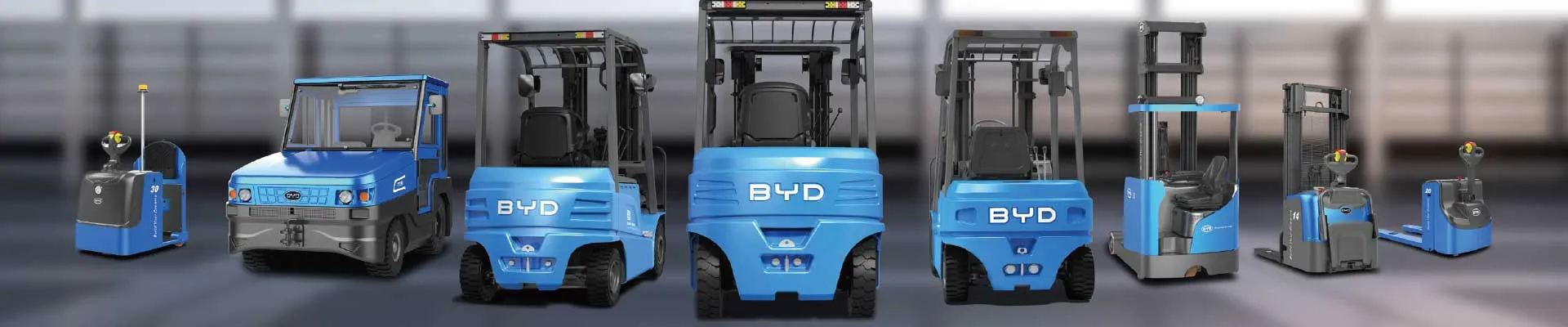

Electric forklifts are widely used handling equipment in current logistics warehousing and internal transshipment scenarios in the factory area. In long-term high-frequency operation scenarios, various minor faults will inevitably occur. Front-line operators and grassroots operation and maintenance personnel master basic fault investigation and treatment methods, which can avoid small problems delaying into major failures, effectively reduce the cost of lost work, and prolong the service life of equipment.
The first is to troubleshoot and deal with the faults related to the walking system. If the vehicle cannot start after normal power on, the first step is to check whether the emergency power-off switch is accidentally touched and pressed. In many operation scenarios, it is easy to touch the switch when people walk or goods are scratched, and the switch can be quickly restored by resetting. After that, you can check whether the remaining power of the vehicle is lower than the protection threshold. In the low power state, the vehicle will automatically lock the walking function, and the restriction can be lifted by replenishing the power in time. If the above two items are investigated without abnormality, you can check whether the connection contacts of the walking acceleration pedal are loose after power off. After cleaning the touchpoint, re-plugging can mostly solve the problem. If the fault still exists, do not disassemble the electronic control components without permission, and contact professional operation and maintenance
The second is the troubleshooting and handling of the related faults of the lifting hydraulic system. If the fork is unable to lift and cannot lift, first check whether the hydraulic oil level is lower than the scale line marked by the equipment. During long-term operation, the hydraulic oil will have a normal small amount of loss, and the function can be restored by supplementing the compliance hydraulic oil of the corresponding label. After that, you can check whether the pressure adjustment position of the overflow valve is offset. If there is a slight deviation, you can fine-tune the parameters marked in the equipment manual. Be careful not to adjust the pressure to exceed the rated load of the equipment without permission to avoid damage to the hydraulic pump. If there is an abnormal noise during the lifting of the fork, you can give priority to checking whether the oil circuit is mixed with air. Repeatedly lifting the fork without load several times to discharge air can eliminate the abnormal noise. If there is an obvious oil leakage problem, you can first check the corresponding position of the seals. Small oil leakage can clean the surface and observe the state. When the oil leakage is large, replace the seals in time.
Finally, it is the troubleshooting and handling of charging-related faults. If the charger cannot start charging after plugging in, first check whether the metal touchpoint of the charging interface is oxidized and displaced. After cleaning the touchpoint, re-plug the test, and then synchronously check whether the empty opening on the mains input side is tripped. Resetting the empty opening can mostly solve the problem. If the device frequently jumps and stops during the charging process, you can check whether the surface temperature of the battery pack is too high. After insufficient heat dissipation triggers overheating protection, move the vehicle to a ventilated and cool area and let it stand to cool down, and then continue to charge. Try to avoid long-term charging in a high-temperature sun environment.
During daily use, develop the habit of pre-shift inspection, and many potential minor faults can be avoided in advance. When encountering failures that exceed your own disposal capabilities, do not disassemble core components at will, and contact professional after-sales personnel for door-to-door processing. This can not only ensure the safety of the operation, but also avoid unnecessary damage to the equipment.


