
 简体中文
简体中文 Русский
 Français
 Português
 Español
 لالعربية

Dalang, as a well-known wool industry agglomeration area in China, has a large number of warehouses of wool raw materials serving the entire industry chain. Such warehouses need to undertake the daily warehousing, stacking, and transit of various types of yarns, tops, knitted accessories, etc. Most of the goods have low single-piece weight, but the overall turnover frequency is extremely high. In order to expand the storage area, many warehouses reserve limited passage widths, and it is difficult for conventional handling equipment to simultaneously consider operational efficiency and space adaptability.
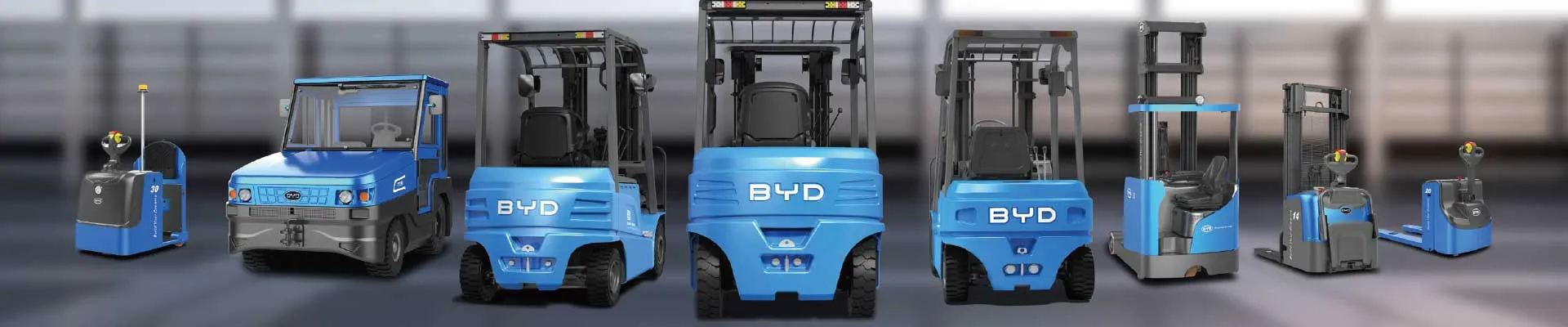
In response to the actual operation pain points of such sub-scenarios, BYD electric forklift has launched an exclusive light-load and efficient storage solution. The related equipment carried in the plan adopts a mature and stable power system, and the daily battery life is stable after full power. It can easily cover the high-frequency operation requirements of the wool raw material warehouse in multiple shifts a day, without frequent replenishment to interrupt the operation rhythm in the middle. The overall body design of the equipment is compact, and the flexibility of steering and control is excellent. It can pass smoothly even in the storage channel with limited width, and can accurately complete various operations such as low-level pickup and high-level stacking. It greatly reduces the probability of scratching, stringing and staining of fine textile goods such as yarn, and reduces unnecessary goods loss.
After the implementation of the whole package, it can effectively reduce the energy consumption expenditure in the warehousing process, the post-maintenance process of the equipment is simple, and there is no need to invest too much maintenance cost. The front-line operators can quickly get started after simple training, reasonably compress the labor learning cost, effectively improve the overall flow efficiency of goods in and out of the warehouse, and adapt to the different storage throughput needs of the local wool industry in the off-peak season of Dalang. Many wool raw material warehouses that have implemented the plan have reported that the smoothness of daily operations has been significantly improved, and the overall warehousing operation cost has also been reasonably controlled. Subsequent related plans will continue to be optimized in detail based on the actual use feedback of the wool warehousing scene, providing reliable electric handling support for more textile warehousing users.


