
 简体中文
简体中文 Русский
 Français
 Português
 Español
 لالعربية
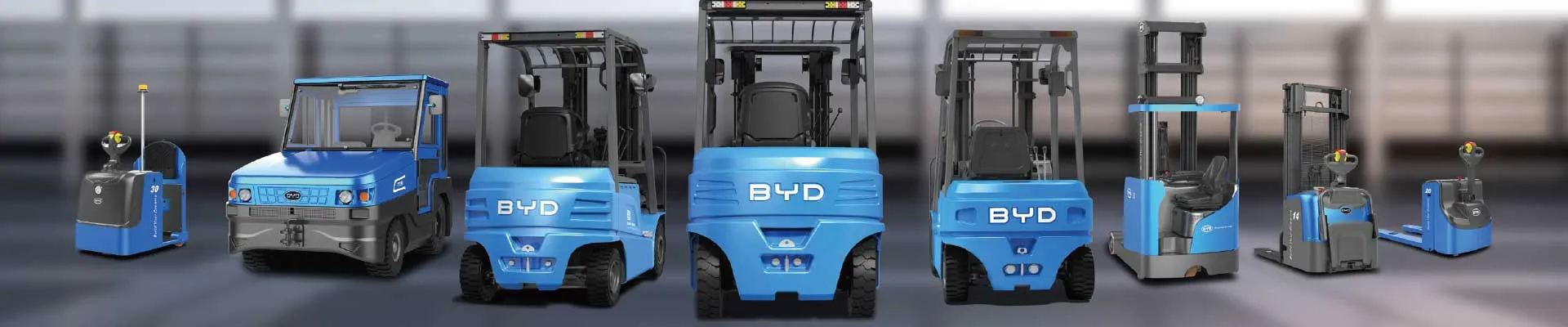
.jpg "Bulk procurement of electric forklifts Price concessions and value-added service reference(figure1)")
Recently, many manufacturing, warehousing and logistics, and large-scale commercial and trade enterprises have the need to purchase electric forklifts in bulk when expanding their operation capacity and updating their on-site handling equipment. Many procurement practitioners tend to focus all their attention on the quotation of single products, neglecting reasonable bargaining space and supporting value-added rights and interests, but invisibly raise the long-term use cost of equipment, and the final procurement experience fails to meet expectations.
Regarding the reasonable direction of price concessions, enterprises can first sort out their actual procurement level, the subsequent 1 to 2 years of equipment re-procurement planning, and communicate with suppliers about the conventional profit policy of the corresponding collection layer. They do not need to deliberately pursue low prices that deviate from the normal market conditions, so as to avoid unnecessary disputes in the supply of accessories and quality assurance rights and interests. In addition to the preferential quotation of the equipment itself, they can also communicate synchronously to strive for the reduction and exemption of additional costs such as door-to-door transportation of bulk equipment and on-site initial installation and commissioning. Some enterprises with old equipment replacement needs can also negotiate a reasonable old equipment replacement deduction plan to further reduce the overall procurement expenditure.
In addition to price concessions, many purchasers tend to ignore various practical value-added services, which can often help enterprises save a lot of hidden costs for subsequent operations. The first is scenario-based adaptation services. For differentiated operation scenarios such as narrow-channel shelf storage areas, low-temperature cold chain storage areas, and special material handling, purchasers can negotiate free adaptation and commissioning services for corresponding attachments, without paying additional modification costs, so that the purchased electric forklift is fully adapted to its own operating environment.
The second is the full-cycle operation and maintenance service, which can be negotiated to appropriately extend the regular quality assurance cycle of the whole vehicle, give a certain number of regular on-site maintenance services for free, and provide exclusive operation and maintenance docking specialists. When the equipment fails, technicians can be prioritized for on-site investigation to reduce the operation shutdown time caused by equipment failure as much as possible. In addition, it can also strive for supporting operator training services, and the supplier will arrange professional technicians to systematically explain standardized operation methods and daily simple maintenance skills for the forklift operation team of the enterprise, reduce the abnormal wear and tear of the equipment caused by improper operation, and prolong the overall service life of the equipment.
Finally, qualified purchasers can also strive for the operation management tool authority corresponding to the batch equipment, and view the operation time and energy consumption data of all electric forklifts in real time through the unified background, which is convenient for enterprises to make unified scheduling of on-site handling equipment and further improve the overall operation efficiency. Enterprises should not only focus on single-point quotation discounts in the process of batch procurement, but also comprehensively calculate the use costs and supporting rights and interests of the whole cycle in order to select the procurement plan that best suits their own operating needs and maximize the actual value of procurement input.


