
 简体中文
 Русский
 Français
 Português
 Español
 لالعربية

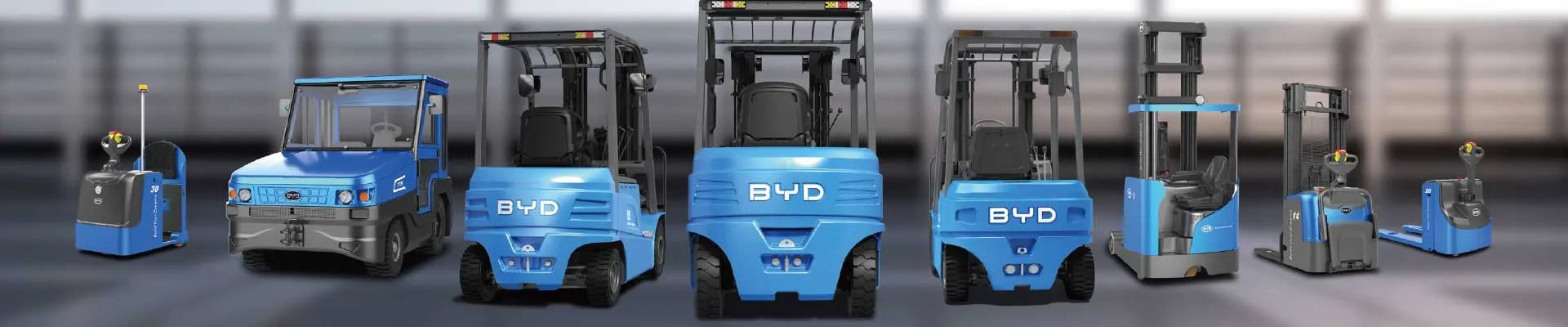

The ancient town area gathers a large number of merchants dealing in merchandise figures, handmade ceramics, glassware and other categories. Electric forklifts suitable for low shaking demand are generally used in daily warehousing and transshipment links. Such vehicles have long-term high-frequency shuttling between the bluestone roadway and the warehousing area. After the loss of core components accumulates, it is easy to have a smooth deviation problem. Regular and standardized maintenance and targeted calibration are the core prerequisites for reducing the damage rate of fragile goods handling.
In the basic investigation of daily maintenance, the staff needs to first confirm the basic state of the core structure of the vehicle, focusing on checking whether there is any abnormal noise in the hydraulic damping system of the fork lift, whether the tire pressure of the four running tires is in a uniform range, and whether there are signs of loosening of the fasteners connected to the chassis. Many operators tend to ignore such basic details, and operate with hidden dangers for a long time. When the vehicle passes through the slate joints and small slope sections, it is easy to experience unexpected bumps and shaking, which directly increases the risk of damage to fragile goods.
When carrying out the stability calibration operation, the vehicle should first be parked on a flat hard horizontal floor, maintained in an unloaded state, and repeated three full-stroke lifting tests. The data of the pause point and shaking amplitude of the whole lifting process of the fork should be recorded in detail. After confirming that there is no abnormality in the reference state, a simulated counterweight of two-thirds of the rated load should be installed to further test the angle threshold of the gantry forward and backward, and the pressure parameters of the hydraulic valve should be fine-tuned as needed to avoid the instantaneous speed tampering problem during the lifting process.
Combined with the local special operation scenarios of the ancient town, the calibration process also needs to adjust the tightness of the body shock absorption and buffer components to ensure that when the vehicle passes through the bumpy roadway at low speed, the goods carried on the fork will not shake beyond the safe range. During daily use, do not change the original preset operating parameters at will. Under normal working conditions, a routine stable re-inspection can be carried out every 300 hours. For models that carry high-value fragile goods at high frequency for a long time, the re-inspection cycle can be appropriately shortened to 200 hours. Once problems such as delay and abnormal shaking are found in the control, the operation should be suspended as soon as possible to arrange professional maintenance to avoid unnecessary loss of goods.
Standardized implementation of the entire maintenance and calibration process can not only effectively control the comprehensive loss of fragile goods transshipment, but also extend the service life of the core components of the electric forklift, and support the smooth and efficient operation of the local storage and transshipment operation in the ancient town.


