
 简体中文
简体中文 Русский
 Français
 Português
 Español
 لالعربية
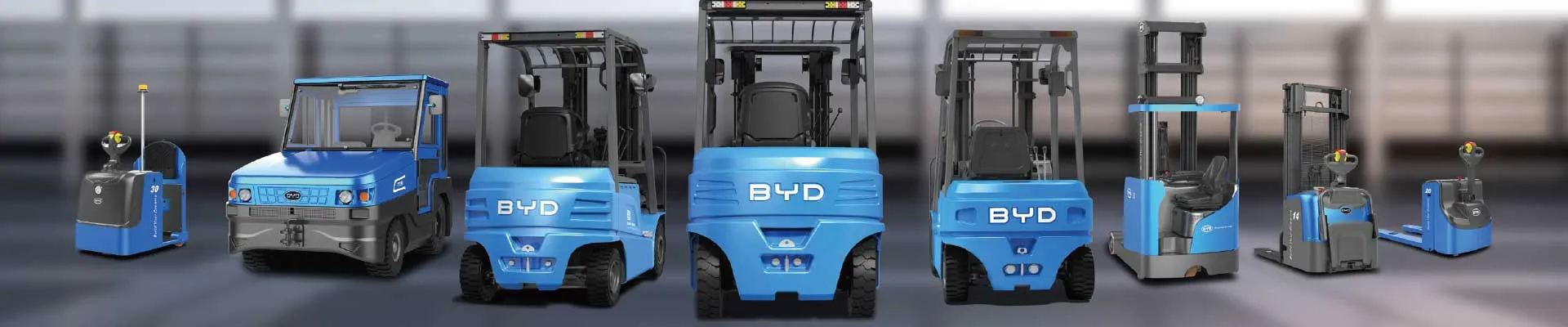
.jpg "Leping new energy plant test vehicle, BYD electric forklift trial rental service(figure1)")
The local new energy industry in Leping has gathered and developed in recent years. Many new energy factories that are newly built and expanding production often have phased forklift use needs in the stages of production line commissioning, project testing, and production capacity climbing. In such scenarios, if you directly purchase new forklifts in full, it will not only occupy a lot of working capital in the factory, but also cause waste of resources if they are idle for a long time. It is difficult to find ordinary operating vehicles temporarily to match the environmental protection and traffic requirements within the factory. BYD electric forklift trial leasing service is a special project service launched for such localized needs.
The trial rental vehicles open to the Leping New Energy Factory this time are all designed with new energy power, with no exhaust emissions, and fully comply with the environmental protection control specifications of the new energy production plant. The noise during operation is low, and it will not interfere with the normal operation of the precision instruments in the testing process. The load parameters and body size of the vehicle have been adjusted to allow smooth passage in the narrow passages and temporary test operation areas of the factory, meeting the daily needs of test samples, small production equipment, and bulk material transfer.
The service has set up a flexible trial mechanism. Factories in need can submit trial applications in combination with their own test cycles to experience whether the vehicle's handling feel and battery life performance match their own operating habits and transshipment needs in actual operation scenarios. After the trial is completed, the rental plan is selected according to the follow-up actual vehicle use planning. The lease period supports short-term rental, long-term rental and other modes. Whether it is equipment entry transfer in the early stage of construction, high-frequency sample turnover in the commissioning stage of the production line, or supplementary vehicles in the incremental stage of temporary orders, a corresponding adaptation plan can be found.
All vehicles put into service have completed the whole process of safety inspection before delivery. Daily maintenance and troubleshooting are arranged by the service party for door-to-door docking. There is no need for the factory to configure additional exclusive forklift operation and maintenance personnel. If there is an abnormal situation in the use of the vehicle, the operation and maintenance personnel will arrive at the factory within the agreed response time to deal with it, so as to reduce the impact on the normal testing and production rhythm of the factory as much as possible. The entire service process is open and transparent, and there are no invisible charges, which can effectively help the factory reduce the cost input of non-core sectors and focus on its core business of R & D and production.


