
 简体中文
简体中文 Русский
 Français
 Português
 Español
 لالعربية
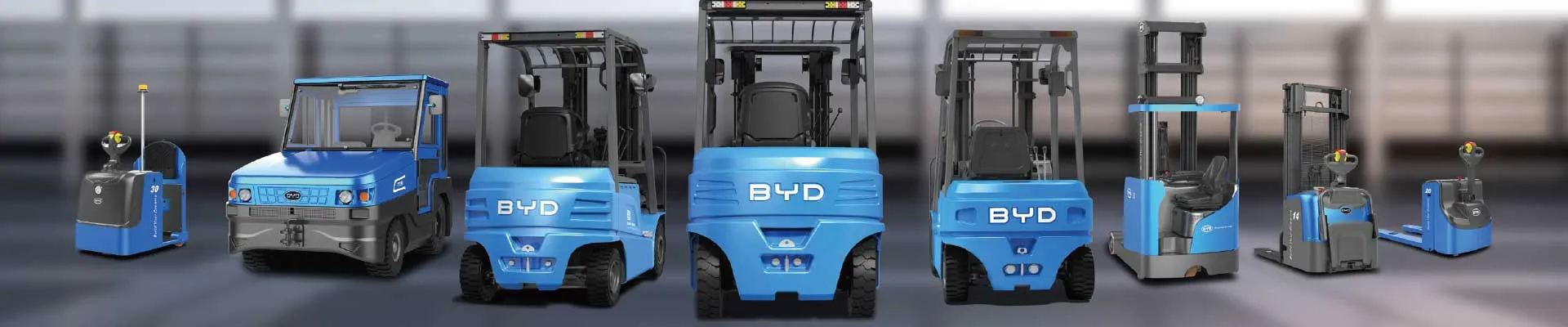

Shiqi Equipment Heavy Parts Warehouse serves as a supporting storage node for the surrounding equipment manufacturing industry chain, mainly storing heavy spare parts corresponding to various types of industrial equipment. The average weight of single-load goods is in a high range. In the daily operation process of warehousing, from the unloading and transshipment of foreign freight vehicles, the short-distance movement of parts storage areas, to the access of high-level cargo spaces, and the loading of orders out of the warehouse, the whole link has clear high requirements for the load capacity, operation stability, and control safety of handling equipment. Previously, the handling equipment used in warehousing was prone to problems such as reduced operating stability and high operation and maintenance costs under long-term high-frequency and heavy-duty scenarios. The exhaust emissions of some fuel-based equipment did not meet the environmental protection operation standards of the confined space in the warehouse, making it difficult to adapt to the increasing warehouse operation management requirements.
Based on the above actual operating pain points, the parts warehouse has introduced BYD large-tonnage forklifts that are suitable for heavy-duty handling needs. Combined with the actual parameters of the warehouse area, cargo space distribution, and channel width, the power parameters and functional configuration of the vehicle are customized to adjust, so that the vehicle is fully adapted to the full scene operation requirements in the warehouse. The power mode of pure electric drive completely avoids the exhaust emission problem of traditional fuel equipment. The warehouse can maintain a clean air environment all day long, and will not cause unnecessary pollution to the stored precision metal parts, rubber seals, and other special material accessories.
In the daily actual operation process, the large-tonnage forklift truck can maintain sufficient stability when it is fully loaded, and the power output will not appear obvious abrupt fluctuations. After the operator has undergone basic operation training, they can quickly familiarize themselves with the operation skills in heavy-duty scenarios, and successfully complete the full-process access operation of several tons of heavy parts from the freight compartment to the transshipment area, and then to the corresponding high-level cargo position. The vehicle's built-in multiple safety protection configurations can also effectively avoid potential bumps and sideslip risks in special operation scenarios such as narrow channel staggered vehicles, high-level lifting, and ramp driving, and build a strong safety line for heavy-duty storage operations.
After a long time of landing operation, the efficiency of the heavy-duty handling operation of the parts warehouse has been steadily improved, and the single-trip access time of the conventional heavy-duty parts is controlled in a reasonable range. At the same time, the daily DevOps flow of electric equipment is simpler, and there is no need to frequently do complex maintenance operations for the power system. The comprehensive cost of long-term operation is within a reasonable range, and it also provides a reference for the logistics handling upgrade of the same type of heavy equipment parts storage.


