
 简体中文
简体中文 Русский
 Français
 Português
 Español
 لالعربية
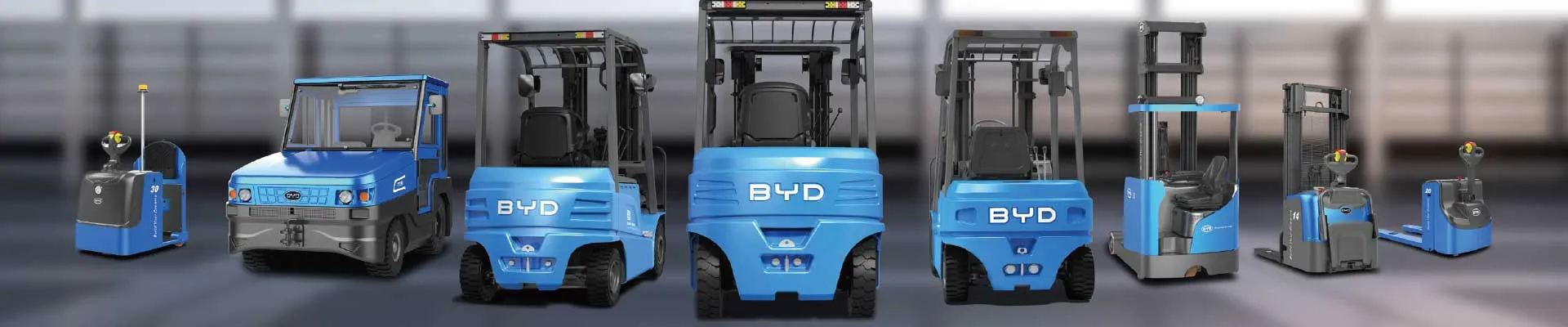
.jpg "Tangxia Smart Factory Project Vehicle, BYD Forklift Customized Rental Service Reference(figure1)")
With the steady development of the intelligent manufacturing industry in Tangxia, Dongguan, a number of new smart factory projects have been put into production one after another. Such projects have put forward more refined requirements for the adaptability, operation and maintenance convenience, and scheduling flexibility of working vehicles in the internal material transfer link of the factory. When many factories planned the vehicle plan in the early stage, they found that the mode of directly purchasing fixed models is prone to insufficient matching of models in different operation scenarios, subsequent maintenance occupies internal manpower, and vehicles are idle and wasted after the project duration is adjusted. It is difficult to fully adapt to the differentiated vehicle needs at different stages such as project construction, pilot running, and full production.
In response to such common car pain points, BYD Forklift launched a customized leasing service for the Tangxia Smart Factory project. All service solutions are tailored around the actual working conditions of the project, and will not apply cookie-cutter standardized packages. The pre-service team will arrange exclusive docking personnel to come to the factory to map out the details of the whole scene operation, including the width of the internal passage, the conventional height of the storage shelves, the average weight of the materials to be transferred, the single-day operation time, and whether it involves special use needs such as clean workshops and special temperature zone storage. Combined with the overall promotion cycle of the project, it will match the most suitable model combination for users to meet the transshipment needs of different scenarios.
In the setting of leasing rules, the service also retains enough flexibility. Enterprises can choose the corresponding lease period according to their own project progress. Whether it is the short-term material handling needs during the construction period of the project, or the medium and long-term fixed transshipment needs during the full production stage, it can be adapted. There is no need for enterprises to invest large sums of money in purchasing operating vehicles at one time, effectively reducing the proportion of fixed assets occupied by enterprises. During the cooperation period, the routine maintenance and fault repair of vehicles are completed by the resident service team, which does not require the factory to allocate full-time forklift maintenance personnel separately, and can also avoid the situation that vehicle failures wait for maintenance for a long time to slow down the production rhythm of the factory to the greatest extent.
In addition, the service can also provide compliance safety operation training for forklift operators according to the actual operation needs of the smart factory, and can also connect with the needs of the digital management system of the factory, regularly synchronize the relevant data of vehicle operations, and help the logistics management side of the factory to further optimize the transshipment scheduling plan. At present, each smart factory project in Tangxia area can connect with the corresponding services in combination with its own actual vehicle use planning. On the premise of ensuring the smooth and orderly transshipment operation of the factory, the comprehensive operating cost of the logistics link can be reasonably reduced.


