
 简体中文
简体中文 Русский
 Français
 Português
 Español
 لالعربية
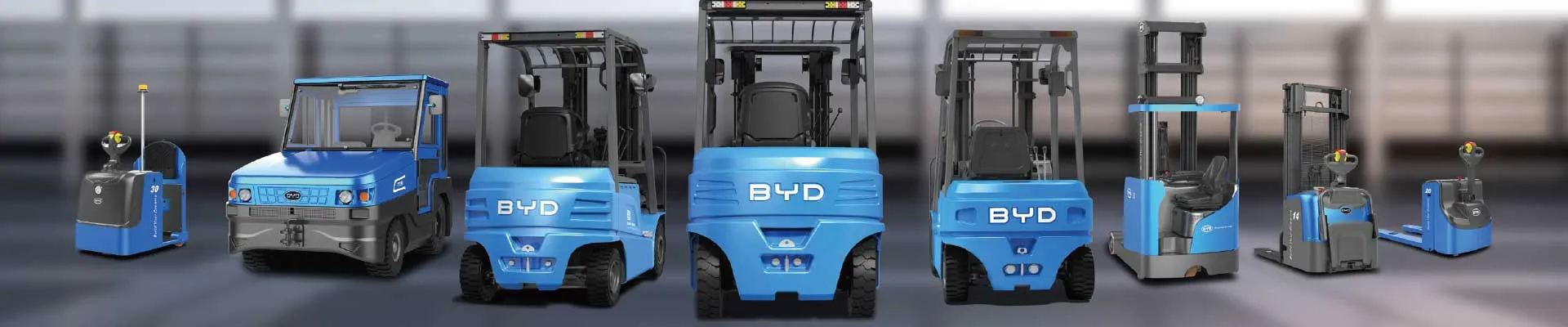

With the continuous advancement of the domestic industrial green transformation process, lithium-ion forklifts, as a substitute for internal combustion forklifts and traditional lead-acid battery forklifts, have continued to increase their market penetration rate in recent years, and the development of industry technology has also entered a new cycle of multi-dimensional collaborative optimization from the early single power replacement stage. Relevant technology iterations have always been advanced around the real needs of actual operation scenarios, and steadily adapted to the use requirements of various working conditions.
The current mainstream development direction of lithium-ion forklift technology in the industry is mainly divided into several dimensions. The first is the continuous optimization of power and energy efficiency. Through the algorithm iteration of the battery management system, the energy recovery efficiency during braking and downhill is improved. The charging and discharging strategy is customized for special scenarios such as high-load continuous operation and outdoor operation in alpine areas. Under the premise of ensuring stable power output, the battery life of a single shift is extended, and the cost of use throughout the life cycle of the equipment is further reduced. Secondly, the upgrade of the whole chain safety management and control system focuses on the integration and optimization of lithium battery thermal state monitoring, abnormal working condition early warning, extreme situation active protection and other modules to improve the operation safety of equipment in complex scenarios such as dust, high humidity, and high impact, covering more previously difficult operation scenarios for traditional lithium battery handling equipment. The third is the popularization of the Internet of Things function. More and more mass-produced lithium forklifts are equipped with standardized data collection modules, which can synchronize data such as operation time, remaining power, and operating status to the background management end point, helping operators optimize personnel scheduling and charging planning, and reduce unnecessary standby waiting losses.
From a long-term development perspective, the follow-up upgrade trend of lithium-ion forklifts will also fit the core needs of industrial carbon reduction and efficiency improvement. The first is the global low-carbon upgrade. In addition to the steady improvement of the energy density of the battery body, the follow-up will continue to make efforts in the direction of lightweight design of the body, dynamic regulation of operating energy consumption, and high proportion of core components to be recyclable, further reducing the power consumption per unit of operation and reducing the carbon emission level of the whole life cycle of the equipment. Secondly, intelligent collaborative upgrade. The follow-up lithium-ion forklifts will gradually be deeply adapted to various warehouse scheduling systems. Whether it is manual operation mode or semi-autonomous operation mode, they can smoothly connect with the existing warehouse management system, reduce the connection loss between different operation links, and improve the overall material turnover efficiency. The third is the customization and upgrade of sub-scenarios. For different sub-scenarios such as cold chain warehousing, special explosion-proof workshops, and heavy-duty bulk material handling, exclusive adaptation solutions for corresponding attributes will be launched in the future to avoid users paying extra costs for redundant functions and further broaden the scene coverage boundaries of lithium-ion forklifts. The technological upgrading of the entire industry has always taken the route of practical landing, and the follow-up will continue to provide more stable and adaptable green power options for various handling operation scenarios.


