
 简体中文
简体中文 Русский
 Français
 Português
 Español
 لالعربية
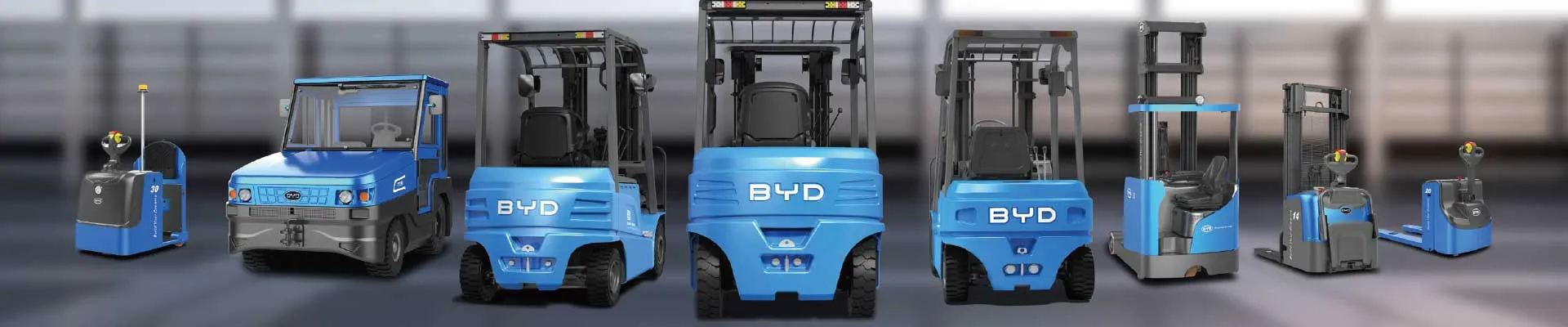

The local hardware industry in Le Liu is concentrated, and a large number of polishing workshops in the jurisdiction will continue to generate a large amount of fine metal suspended dust during the daily production process. This kind of environment places higher requirements on the suitability of on-site transfer forklifts. If conventional forklifts lack the corresponding dust-proof structure design, long-term operation in this type of scene is prone to problems such as filter element clogging, poor circuit dust contact, and abnormal wear of moving parts, which in turn affect the normal material transfer efficiency.
In view of the operating characteristics of such scenarios, when using a BYD dust forklift to carry out material transfer work, the first step is to do a good job in the pre-operation verification process. Before each start of the operation, the operator needs to confirm the fit status of the dust-proof sealing parts of the whole vehicle one by one, check the dust accumulation of the supporting filter elements of the air intake system, and confirm that the sealing rubber rings of all exposed electrical interfaces have not been displaced and fallen off. At the same time, clean up the metal debris embedded in the tire gap to avoid the debris rolling on the floor of the workshop and scratching the transported hardware workpieces during the operation.
During the operation, it is also necessary to adjust the operating habits to match the characteristics of the high dust environment. Hardware blanks, polishing consumables, and finished workpieces that have been processed are usually stacked in an orderly manner on both sides of the channel of the polishing workshop. A small amount of settled polishing dust will also be scattered on the ground. When driving, maintain a stable speed, avoid sudden acceleration and sudden braking operations, and prevent a large amount of dust from increasing the dust burden on the car body. Daily operations should try to maintain a sufficient safe distance from the dust discharge port of the polishing station. Do not stay near the centralized dust discharge area for a long time to reduce the probability of high-concentration dust directly adhering to the surface of the car body. When handling heavy-duty hardware workpieces, confirm the load-bearing adaptation of the fork in advance to avoid accidental falling of the workpiece to produce more fine debris and increase the dust burden of the workshop.
The daily operation and maintenance process also needs to make adaptability adjustments for high-dust scenarios. Compared with ordinary conventional use scenarios, the frequency of vehicle volume dust cleaning should be appropriately increased. After each operation, use a dust-free soft cloth to wipe and clean the exposed gaps in the vehicle body to avoid long-term dust accumulation and agglomeration. Regularly replace the special filter accessories suitable for high-dust scenarios. Do not use high-pressure water flow to directly flush the area of electrical components to avoid dust agglomeration blocking the heat dissipation channel. In non-operating conditions, forklifts should be parked in designated parking areas away from concentrated dust points to reduce unnecessary dust adhesion.
This set of operating specifications that fit the scene can fully adapt to the structural characteristics of BYD's dust-proof forklifts, effectively reduce the probability of abnormal loss of components in high-dust environments, improve the safety and operation stability of material transfer in polishing workshops, and also provide practical reference for the use of electric forklifts in high-dust production and processing scenarios of the same type.


