
 简体中文
简体中文 Русский
 Français
 Português
 Español
 لالعربية
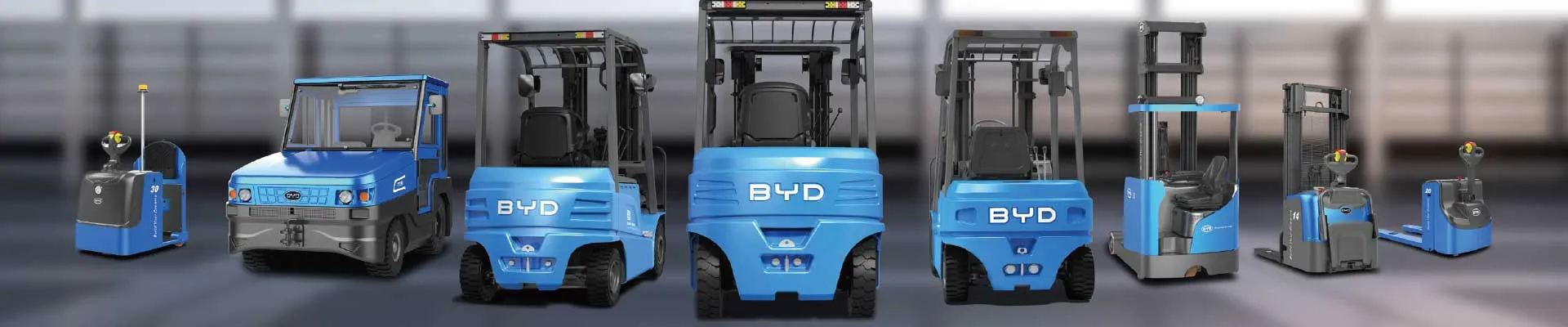

In the current era of refined operation in the warehousing industry, the scene adaptability of handling equipment has become a core factor affecting the overall operating efficiency and long-term cost. As the mainstream handling equipment in the current warehousing field, the core use value of electric forklifts is precisely reflected in the high adaptability to different types of warehousing scenarios, avoiding the pain points of poor versatility of traditional handling equipment and many scene restrictions.
In view of the high shelf storage scenario with a channel width of only 1.8-2 meters, the electric forklift with excellent adaptability has a compact body and a very small turning radius. It can smoothly complete the whole process of stacking, picking up and transshipment without additional widening of the channel for warehousing. It directly helps warehousing enterprises to revitalize more available storage area and greatly improve the storage capacity of goods per unit space.
For low-temperature cold chain storage scenarios, the zero-emission attributes of electric forklifts fully meet the cleanliness requirements of the cold chain space, and the power battery pack suitable for low-temperature working conditions can also output power stably in an environment of minus tens of degrees Celsius, avoiding the problems of traditional internal combustion vehicles starting at low temperatures and polluting goods with exhaust gas. There is no need to install additional exhaust treatment facilities.
For high-frequency short-distance operation of e-commerce turnover warehouses, the energy consumption cost of electric forklifts is only about one-third of that of traditional internal combustion equipment, and there is no complex maintenance demand of oil circuit system, so the long-term operation and maintenance cost is extremely low. Many warehousing enterprises only refer to load parameters when purchasing equipment, ignoring the core role of scene adaptation, and choose electric forklifts that adapt to their own operating attributes, which can release hidden value from multiple dimensions such as operation efficiency, space utilization, and long-term operation and maintenance costs, bringing real benefits to warehousing operations.


