
 简体中文
简体中文 Русский
 Français
 Português
 Español
 لالعربية
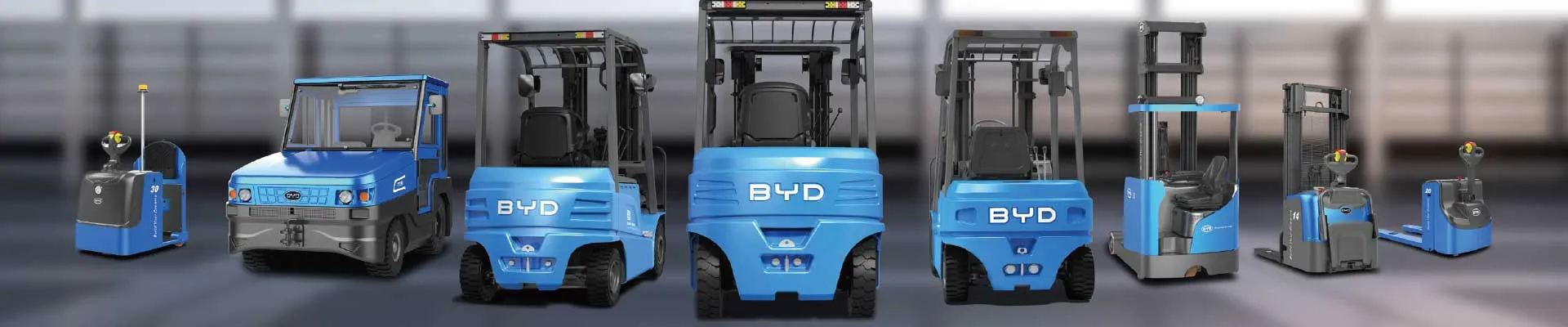

In recent years, the overall scale of the domestic logistics industry has continued to expand, and the pace of industry transformation has been accelerating. Many large, medium and small logistics enterprises have successively entered the centralized update cycle of handling equipment. Previously, the traditional internal combustion handling equipment commonly used in logistics warehousing and park short barge scenes generally had high energy consumption, large exhaust emissions, and high daily operation and maintenance costs. It was difficult to adapt to the green logistics control requirements introduced in various places, and it did not meet the long-term operating goals of enterprises to reduce costs and improve efficiency.
In this round of equipment update, electric forklifts have received extensive attention from the market due to their multiple core advantages such as zero exhaust emissions, low operating noise, high operation flexibility, and convenient post-maintenance. From the actual landing scene, electric forklifts are fully suitable for most logistics handling scenarios such as indoor warehousing operations and park short-haul transshipment. The large-capacity power unit can support long-term continuous operation. Many new models are also equipped with intelligent power monitoring and fault warning functions. The threshold for first-line operators to get started is lower, and the safety factor of handling operations has also been significantly improved.
Many logistics companies that took the lead in completing the replacement of electric forklifts have reported that after the equipment update is completed, the annual energy consumption and operating cost of a single handling equipment is reduced by nearly 60% compared with the previous traditional internal combustion equipment, and a large number of high-frequency maintenance and repair manpower investment is also saved. At the same time, it fully complies with the environmental protection and control requirements of various places. Daily operations will not be subject to emission-related operational restrictions, and the overall operating efficiency has been significantly improved. With the continuous implementation of subsequent green logistics-related support policies, the demand for equipment update in the logistics industry will be further released, and the market penetration rate of electric forklifts will continue to rise, becoming the core equipment to promote the low-carbonization and high-efficiency upgrade of the entire logistics handling link.


