
 简体中文
简体中文 Русский
 Français
 Português
 Español
 لالعربية
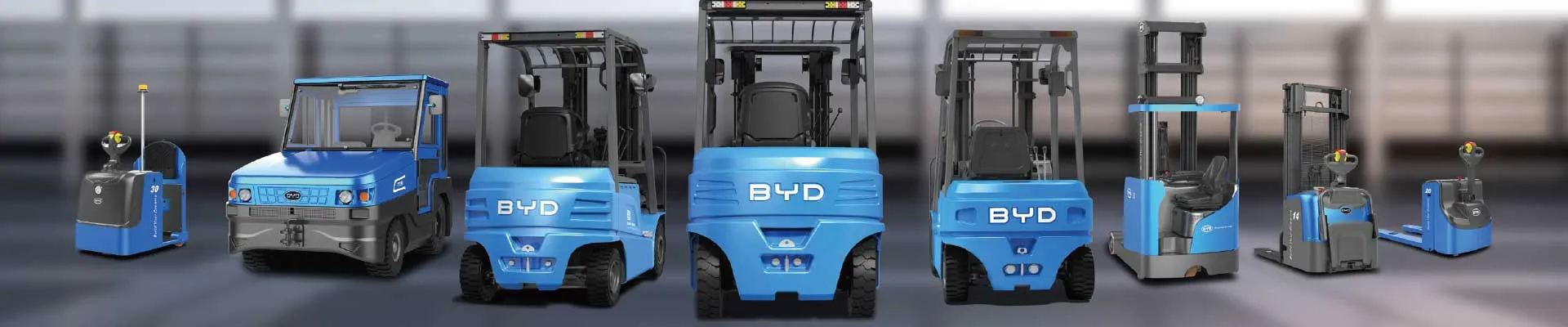

Shishan is one of the regions with a high degree of concentration of the domestic aluminum industry. There are a large number of aluminum production and processing enterprises of different scales in the local area. In daily production and operation, the transfer and stacking of aluminum profile bundles, aluminum coils, finished goods, and processed raw materials are all high-frequency operation scenarios. Many companies will focus on BYD's electric forklifts in the 3-5 ton range when updating their on-site handling equipment. They will also often choose the tonnage of the equipment to better adapt to their actual production rhythm.
In the process of tonnage selection, first of all, you can refer to the daily handling of conventional cargo weight as the core judgment basis. Most small and medium-sized aluminum plants operate daily with bulk aluminum profile transshipment, and the weight of single-load conventional cargo is mostly concentrated in the 2-ton to 3-ton range. If the enterprise's operation scenario is mainly short-distance transshipment and low-level storage in the workshop, with sufficient operating channel width and warehouse stacking height not exceeding 3 meters, then a 3-ton BYD electric forklift is sufficient to cover the vast majority of daily operation needs. The body size of this type of equipment is relatively compact, the turning radius is smaller, and the flexibility of traveling through narrow passages in the workshop is better. The energy consumption performance for long-term use is also more friendly.
If the daily operation of an enterprise involves the transshipment of large-sized aluminum coils, the weight of a single roll of goods is generally in the range of 3.5 tons to 4 tons, and special attachments are also required to complete the high-level stacking operation, then a 4-ton electric forklift can be preferred. During the selection process, the remaining load parameters after the gantry is fully raised should be confirmed synchronously to avoid the actual usable load after the high-level lift falling short of the operation requirements, and it is fully adapted to the high-level inventory and truck loading and unloading scenarios of aluminum factories.
For large-scale aluminum plants, if they need to frequently transfer heavy-duty aluminum processing raw materials, the conventional load of a single operation is close to 5 tons, and the operation scenarios cover high-frequency heavy-load conditions such as outdoor transshipment in the factory area and large truck loading and unloading, they can choose 5-ton electric forklifts. The chassis structure of this type of equipment is more stable, and the performance of long-term continuous operation is more suitable for high-load production rhythm.
In addition to referring to conventional operating loads, the selection should also be based on comprehensive considerations such as the width of the working channel in the factory area, the reserved turning space in the warehouse, and the average daily operating hours. It is not necessary to blindly choose large-tonnage equipment to cause unnecessary cost waste, nor should the insufficient load allowance be reserved to affect the smoothness of daily handling operations, which is in line with the actual needs of long-term production and operation of enterprises.


