Hygienic standard selection guide for electric forklifts in food processing plants

2026-08-31

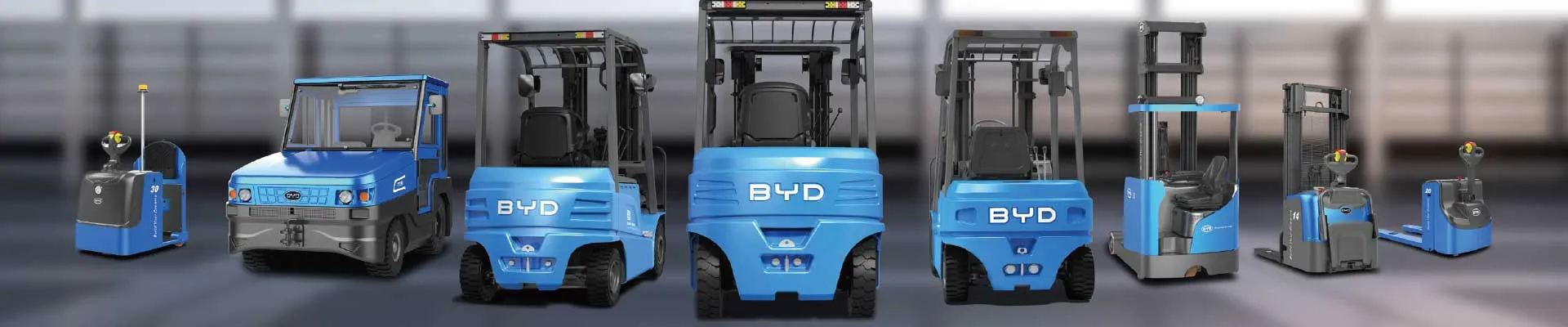
Hygienic standard selection guide for electric forklifts in food processing plants(figure1)

The operation scenario of food processing plants involves the whole chain circulation of fresh raw materials, work in progress, and pre-packaged finished products. The hygiene attributes of handling equipment are directly related to food production safety. Electric forklifts have become the first choice for most food processing scenarios due to zero exhaust emissions and low operating noise. Handling equipment, many enterprises often only pay attention to conventional parameters such as load, battery life, and channel adaptability when selecting models. It is easy to ignore the core requirements related to hygiene compliance, and finally bury the hidden dangers of cross-contamination in food production.

First of all, it is necessary to confirm the material compliance of exposed parts. If the forklift needs to enter the operation area that is directly in contact with ready-to-eat food raw materials and exposed to work in progress, all exposed parts that may come into contact with the working environment and the outer packaging of the goods should be made of materials that meet the relevant specifications for food contact. Try to avoid using ordinary carbon steel materials that are easy to rust and chip. The surface treatment process should meet the requirements of non-toxicity and resistance to repeated disinfection and sterilization. It can be adapted to the chlorine-containing disinfectants and food-grade cleaners used in food factories. Repeated wiping and short-term soaking will not cause the coating to fall off and harmful ingredients to precipitate.

Secondly, it is necessary to focus on checking the hygiene and friendliness of the body structure. When selecting a model, give priority to choosing an integrated and smooth design of the body structure, and minimize the common sanitary dead ends of traditional forklifts such as exposed gaps and open grooves. Such gaps are prone to food debris and water accumulation, which will breed pathogenic microorganisms after long-term accumulation, greatly increasing the probability of cross-contamination. Try to do arc transition treatment at the corners of the body to reduce the probability of debris adhesion. All circuit pipelines should be closed and embedded to avoid dirt and dirt in the gaps of exposed wires. It is best to use a modular design that is easy to disassemble and assemble for high-frequency contact parts such as handrails and pedals, which is convenient for daily disassembly and complete all aspects of cleaning and disinfection.

Finally, it is necessary to combine the sub-division operation scenarios for functional adaptation. If the forklift needs to enter the internal transportation of the production workshop with clear cleanliness level requirements, it is necessary to confirm that the vehicle will not emit particulate matter throughout the operation, and do not choose models equipped with easy-to-fall fiber seals and interior parts. During operation, hair and debris impurities will not fall off. For the operation scenarios that require frequent entry and exit of low-temperature refrigerators, it is necessary to confirm that the vehicle structure design can be adapted to low-temperature and high-humidity environments. In the case of alternating temperature differences between the normal temperature reservoir area and the low-temperature reservoir area, there will be no problem of large amounts of condensate accumulating in the structural gaps, so as to avoid the growth of microorganisms in long-term humid environments.

After completing the selection and verification of the above hygiene dimensions, the enterprise will comprehensively match the actual needs of its own routine handling load, operation channel width, and daily average operation time, and at the same time establish corresponding forklift daily disinfection and sterilization maintenance standards, so that the handling equipment can fully meet the hygiene requirements of the whole chain of food production, and safely avoid unnecessary food safety risks.

We use cookie to improve your online experience. By continuing to browse this website, you agree to our use of cookie.

Cookies

Please read our Terms and Conditions and this Policy before accessing or using our Services. If you cannot agree with this Policy or the Terms and Conditions, please do not access or use our Services. If you are located in a jurisdiction outside the European Economic Area, by using our Services, you accept the Terms and Conditions and accept our privacy practices described in this Policy.
We may modify this Policy at any time, without prior notice, and changes may apply to any Personal Information we already hold about you, as well as any new Personal Information collected after the Policy is modified. If we make changes, we will notify you by revising the date at the top of this Policy. We will provide you with advanced notice if we make any material changes to how we collect, use or disclose your Personal Information that impact your rights under this Policy. If you are located in a jurisdiction other than the European Economic Area, the United Kingdom or Switzerland (collectively “European Countries”), your continued access or use of our Services after receiving the notice of changes, constitutes your acknowledgement that you accept the updated Policy. In addition, we may provide you with real time disclosures or additional information about the Personal Information handling practices of specific parts of our Services. Such notices may supplement this Policy or provide you with additional choices about how we process your Personal Information.


Cookies

Cookies are small text files stored on your device when you access most Websites on the internet or open certain emails. Among other things, Cookies allow a Website to recognize your device and remember if you've been to the Website before. Examples of information collected by Cookies include your browser type and the address of the Website from which you arrived at our Website as well as IP address and clickstream behavior (that is the pages you view and the links you click).We use the term cookie to refer to Cookies and technologies that perform a similar function to Cookies (e.g., tags, pixels, web beacons, etc.). Cookies can be read by the originating Website on each subsequent visit and by any other Website that recognizes the cookie. The Website uses Cookies in order to make the Website easier to use, to support a better user experience, including the provision of information and functionality to you, as well as to provide us with information about how the Website is used so that we can make sure it is as up to date, relevant, and error free as we can. Cookies on the Website We use Cookies to personalize your experience when you visit the Site, uniquely identify your computer for security purposes, and enable us and our third-party service providers to serve ads on our behalf across the internet.

We classify Cookies in the following categories:
 ●  Strictly Necessary Cookies
 ●  Performance Cookies
 ●  Functional Cookies
 ●  Targeting Cookies


Cookie List
A cookie is a small piece of data (text file) that a website – when visited by a user – asks your browser to store on your device in order to remember information about you, such as your language preference or login information. Those cookies are set by us and called first-party cookies. We also use third-party cookies – which are cookies from a domain different than the domain of the website you are visiting – for our advertising and marketing efforts. More specifically, we use cookies and other tracking technologies for the following purposes:

Strictly Necessary Cookies
These cookies are necessary for the website to function and cannot be switched off in our systems. They are usually only set in response to actions made by you which amount to a request for services, such as setting your privacy preferences, logging in or filling in forms. You can set your browser to block or alert you about these cookies, but some parts of the site will not then work. These cookies do not store any personally identifiable information.

Functional Cookies
These cookies enable the website to provide enhanced functionality and personalisation. They may be set by us or by third party providers whose services we have added to our pages. If you do not allow these cookies then some or all of these services may not function properly.

Performance Cookies
These cookies allow us to count visits and traffic sources so we can measure and improve the performance of our site. They help us to know which pages are the most and least popular and see how visitors move around the site. All information these cookies collect is aggregated and therefore anonymous. If you do not allow these cookies we will not know when you have visited our site, and will not be able to monitor its performance.

Targeting Cookies
These cookies may be set through our site by our advertising partners. They may be used by those companies to build a profile of your interests and show you relevant adverts on other sites. They do not store directly personal information, but are based on uniquely identifying your browser and internet device. If you do not allow these cookies, you will experience less targeted advertising.

How To Turn Off Cookies
You can choose to restrict or block Cookies through your browser settings at any time. Please note that certain Cookies may be set as soon as you visit the Website, but you can remove them using your browser settings. However, please be aware that restricting or blocking Cookies set on the Website may impact the functionality or performance of the Website or prevent you from using certain services provided through the Website. It will also affect our ability to update the Website to cater for user preferences and improve performance. Cookies within Mobile Applications

We only use Strictly Necessary Cookies on our mobile applications. These Cookies are critical to the functionality of our applications, so if you block or delete these Cookies you may not be able to use the application. These Cookies are not shared with any other application on your mobile device. We never use the Cookies from the mobile application to store personal information about you.

If you have questions or concerns regarding any information in this Privacy Policy, please contact us by email at . You can also contact us via our customer service at our Site.