
 简体中文
简体中文 Русский
 Français
 Português
 Español
 لالعربية
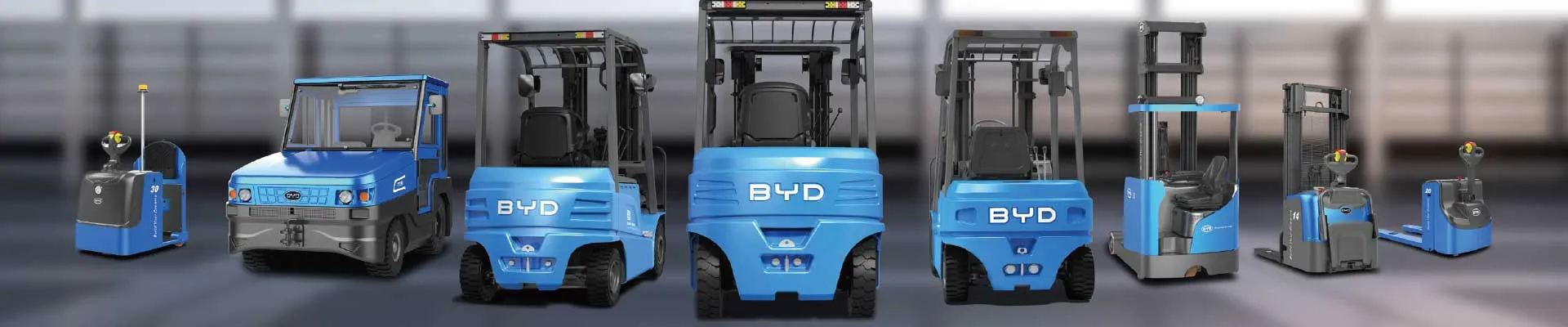
.jpg "Intelligent Direction of Electric Forklift under the Development of Intelligent Warehousing(figure1)")
At present, the digital transformation of the domestic warehousing and logistics industry is advancing steadily, and the coverage of intelligent warehousing is expanding year by year. In the past, a large number of material handling scenarios that relied on manual operation were increasing with the increase in the scale of operations, which put forward higher requirements for the adaptability and synergy of transfer equipment. Electric forklifts, as the core handling equipment that is frequently used in warehousing scenarios, have become an inevitable trend of industrial development, and will further optimize the operation efficiency of the intelligent warehousing system.
Environmental awareness and autonomous navigation capability upgrades are the core basic directions for the intelligence of electric forklifts. The new generation of intelligent electric forklifts no longer relies entirely on manual operation handles to complete action commands, but is equipped with multiple types of environmental awareness sensors, which can independently identify the channel boundaries, personnel dynamics, pallet positions and obstacle distribution inside the warehouse. It does not require a large number of ground signs to be laid in advance to adapt to the dynamically adjusted storage line. Even if the stacking layout of goods in the warehouse is temporarily adjusted, the vehicle can quickly and autonomously complete the route re-planning, avoid the problem of stagnation and misalignment, and greatly reduce the probability of omission of manual operation.
Multi-device collaboration and storage system interconnection are the core extension direction of the intelligent upgrade of electric forklifts. Intelligent electric forklifts can directly connect with various existing management systems of warehousing, automatically match the optimal operation path after receiving the transfer instructions issued by the system, and can also be seamlessly coordinated with on-site sorting equipment, stacking devices, and automatic conveyor lines. There is no need to manually centralize the transmission of operation information, and the whole process realizes automatic synchronization of operation data. Warehouse managers can directly view the core data such as operation time, transportation volume, and remaining power of each forklift in the background, which is convenient for dynamically adjusting the scheduling plan and optimizing the scheduling efficiency of the overall warehouse.
The intelligentization of safety control and energy-saving management is the direction of people's livelihood protection for the intelligent upgrade of electric forklifts. The safety protection of traditional electric forklifts mostly relies on the driver's on-the-spot judgment. The intelligently upgraded products are equipped with a full-scene active safety protection mechanism, which can automatically identify the surrounding personnel intrusion, channel speed limit requirements, corner blind spot risks, and independently complete response actions such as deceleration and docking, reducing the safety hazards of handling operations from the source. At the same time, the supporting intelligent energy management system can dynamically allocate the energy consumption output of the vehicle, adjust the power supply according to different operation loads, extend the battery life of a single group of batteries under the premise of ensuring operation efficiency, and automatically generate a charging reminder to guide the vehicle to the idle charging point to replenish energy, so as to avoid sudden power outages in the middle of the operation affecting the overall storage scheduling rhythm.
Smart warehouses of different sizes can choose electric forklift products that are suitable for different intelligent levels according to their own operating scenario characteristics, and gradually complete the automated upgrade of the handling process, further releasing the actual operation value of the intelligent warehousing system.


