
 简体中文
简体中文 Русский
 Français
 Português
 Español
 لالعربية
.jpg "Ceramic industry heavy-duty handling electric forklift selection guide(figure1)")
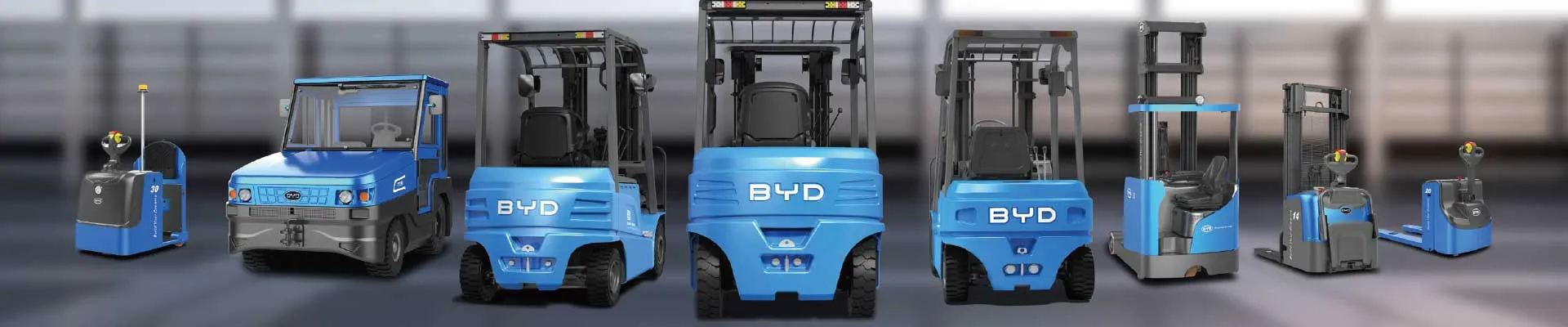
The production and handling process of the ceramic industry has distinct industry characteristics, from the front-end bulk ceramic raw material ton package transfer, to the middle-end production process between the residual material, blank body transfer, and then to the back-end of the whole support tiles, sanitary ware and other finished products warehouse loading, there are generally high single load handling, operation continuity requirements, the traditional internal combustion handling equipment exhaust emissions do not meet the requirements of clean production workshop, heavy-duty electric forklift has become the mainstream handling configuration of many ceramic enterprises. Many practitioners in the selection stage are prone to fall into the misunderstanding of only looking at the rated load parameters, ignoring the special requirements of their own working conditions, and eventually the problem of insufficient equipment adaptation and reduced operating efficiency.
First of all, we must do a good job of matching the working conditions of the basic parameters. Before selecting the model, we must first sort out the most high-frequency handling scene parameters, such as the weight of the daily maximum handling goods and the maximum lifting height of the fork required by conventional operations. Special attention should be paid to the remaining load-bearing parameters when the fork is lifted to the highest height to avoid the problem of insufficient actual load-bearing due to high lifting operations. At the same time, measure the minimum turning space of the internal passage of the workshop and the storage area in advance, compare the traffic requirements of forklifts with different body weight structures, and choose a model with a body size that fits the existing working space to avoid the problem that the channel is too narrow to turn smoothly.
Secondly, it is necessary to pay attention to the adaptability of the equipment to the special working conditions of the ceramic industry. Ceramic powder is generally floating in the ceramic production workshop, and there will be glaze splashing and water accumulation on the ground in some process areas. When selecting models, it is necessary to confirm that the protection level of core components such as motors, batteries, and electronic controls meets the requirements to avoid dust and liquid infiltration into the components and prolong the stable operation cycle of the equipment. For the operation scenarios of many ceramic enterprises covering indoor workshops and open-air yards at the same time, it is also necessary to confirm the adaptability of the power system temperature control of the equipment, which can also maintain stable battery life performance in low temperature environments. In addition, ceramic bodies and finished tiles are all categories that are prone to bumping and loss. When selecting models, you can experience the braking smoothness and steering operation accuracy of the vehicle on the spot, reducing the damage of goods caused by sudden braking and operation errors.
Finally, it is necessary to comprehensively consider the full-cycle use cost. In the selection stage, do not only compare the initial purchase price, but also combine the single-shift operation time to confirm whether the battery life of the equipment at full power matches the daily operation needs, and whether it supports the function of short-term power replenishment. At the same time, understand the convenience of follow-up daily maintenance, the cost of replacement of wearing parts, and calculate the comprehensive investment of the whole life cycle of the equipment. Qualified enterprises can also arrange short-term field trials to verify the equipment adaptability, and finally choose a heavy-duty handling electric forklift that fits their own production rhythm to help improve the efficiency of full-link handling.


