
 简体中文
简体中文 Русский
 Français
 Português
 Español
 لالعربية
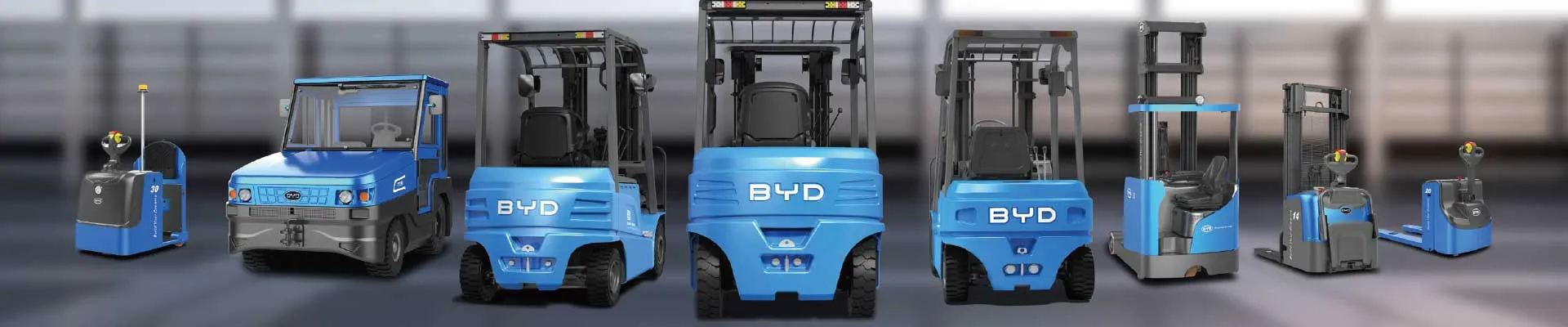
.jpg "Siqian stainless steel finished product warehouse, BYD protective forklift surface protection storage reference(figure1)")
As an important concentration area of the stainless steel industry, there are a large number of stainless steel finished warehouses of different sizes in front of the company. Most of the warehouses are high-value-added stainless steel finished products that have been polished, brushed, and mirror treated. Such finished products have high requirements for surface integrity. Once scratches and bumps appear during the transshipment process, it may affect the grade of the finished products and cause unnecessary operating losses. Therefore, the surface protection and control of the warehousing and transshipment process has always been the core focus of the operation of the local stainless steel finished products warehouse.
In the past, many conventional transshipment operations of stainless steel finished warehouses were prone to various problems affecting the surface quality of stainless steel finished products: for example, the inertial shaking caused by uneven power output when the forklift starts and stops, which is easy to cause slight displacement and friction between the stacked stainless steel plates, scratching the surface treatment layer; when the forktooth feed control is not in place, the tip of the forkteeth can easily scratch the outer packaging of the goods or even directly touch the workpiece body, leaving irreversible marks; in some narrow warehouse areas, the forklift body occasionally scratches the goods placed on the edge of the shelf, which will also bring additional losses.
In response to this type of operation pain point, many local stainless steel finished warehouses have introduced suitable BYD protective forklifts to carry out customized operation adaptation based on the actual layout of their own warehouse area. First, the power output parameters of the forklift will be debugged in advance according to the channel width, shelf height, and conventional weight of the goods in the warehouse, so that the whole process of starting, shifting, and braking of the vehicle can be kept flat without setbacks, and the shaking of the goods caused by inertia can be minimized. The edge guard of the forklift body has been soft coated, so that even if there is slight contact between the body and the edge of the shelf during the operation, it will not scratch the outer packaging of the stainless steel finished goods stored next to the shelf, further reducing the probability of accidental scratches.
On this basis, many warehousing operators have also adjusted the corresponding operation specifications: for stainless steel coil and plate finished products of different specifications, adjust the spacing of forklift fork teeth in advance to ensure that the bottom of the goods is evenly stressed during lifting operations, and the fork teeth are fully supported by the whole goods before starting the lifting process. Keep the door frame moderately reclining throughout the operation to avoid the workpiece slipping forward and bumping. For goods with higher protection requirements such as mirror stainless steel, a special low-speed limit operation area is designated. The speed of the forklift in this area is controlled within 3 kilometers per hour. The driving path is clearly marked in advance to avoid the raised seam area on the ground, further reducing the shaking range of the goods.
After a period of adaptation operation, this type of surface protection storage scheme combined with protective electric forklift adjustment effectively reduces the surface damage probability of stainless steel finished products in the storage and transfer process, and the work intensity of front-line forklift operators has also decreased. The overall benefits of warehousing operations have been steadily improved, and relevant adaptation experience can also provide practical reference ideas for the warehousing and operation of high-value-added metal finished products of the same type.


