
 简体中文
简体中文 Русский
 Français
 Português
 Español
 لالعربية
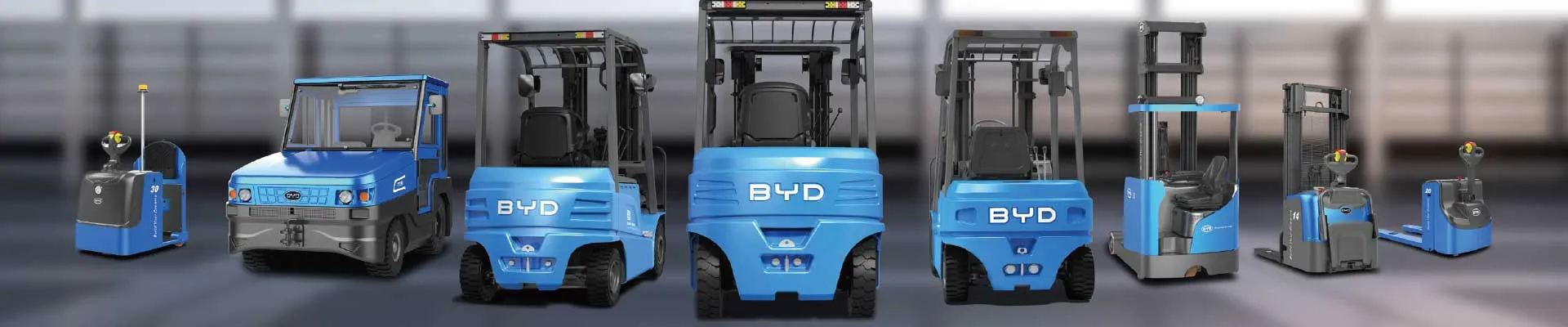

The daily operation of equipment structural parts warehousing often has to face the actual needs of large-size and high-weight component handling. The stacking density, access and circulation requirements of such goods are obviously different from those of ordinary civilian warehousing scenarios, and it is also a difficult task that many industrial warehousing operators urgently need to solve. Republic Equipment's structural parts warehouses have long faced the problem of insufficient adaptability of heavy-duty handling equipment: traditional equipment either has insufficient load allowance, and there are hidden dangers when handling large-weight structural parts, or the turning radius of the body is too large, and the narrow channel reserved in the warehouse cannot pass smoothly, which occupies the storage space that could have been used to stack goods. At the same time, the exhaust emissions of internal combustion equipment do not meet the environmental protection requirements of closed warehouses, and additional costs are required for exhaust gas treatment.
In response to the actual operation pain points of such scenarios, the customized heavy-duty storage solution created by BYD's large-tonnage forklift adapts to the full-process operation requirements of the structural parts warehouse from multiple dimensions. First of all, at the level of heavy-load adaptation, the large-tonnage electric forklift selected in the plan has a linear and stable power output, and the heavy-duty structural parts carrying the rated weight will not experience power interruption or load drop when driving. Even if the micro-ramp and old anti-skid floor in the warehouse are operated, the driving state can be maintained stable, and there will be no abnormal situations of slippery slope and side slip.
At the level of optimizing the utilization rate of space in the warehouse, the large-tonnage forklift carried in this scheme has made exclusive adjustments to the steering system, and the turning radius is reasonably controlled. Even the 1.8-meter narrow channel reserved in the structural parts warehouse can be successfully completed by the vehicle. The steering and traffic operations do not require additional dismantling of the original shelves to widen the channel, directly releasing nearly 10% of the usable stacking space in the warehouse, effectively improving the storage utilization rate per unit area. At the level of operation safety, the whole scheme is equipped with a full-scene visualization auxiliary system. When the operator completes the stacking and pickup operation of the high-level shelves up to 8 meters, he can grasp the dynamic information of the fork alignment status, surrounding pedestrians and obstacles in real time, which greatly reduces the probability of the fork bumping the structural parts and the vehicle scratching the shelves.
The pure electric power structure also allows the whole package to adapt to the operation requirements of the closed warehouse. There is no exhaust emission throughout the operation, no additional exhaust gas purification device is required, and the daily DevOps flow is relatively simple, and the comprehensive cost of long-term use is controllable. After the long-term actual operation verification of the whole package in the Republic equipment structure warehouse, the overall access and circulation efficiency of the goods has been significantly improved, and the whole process operation performance is adapted to the various needs of heavy-duty storage scenarios. It also provides a feasible reference direction for the same type of industrial heavy-duty storage upgrade.


