
 简体中文
简体中文 Русский
 Français
 Português
 Español
 لالعربية
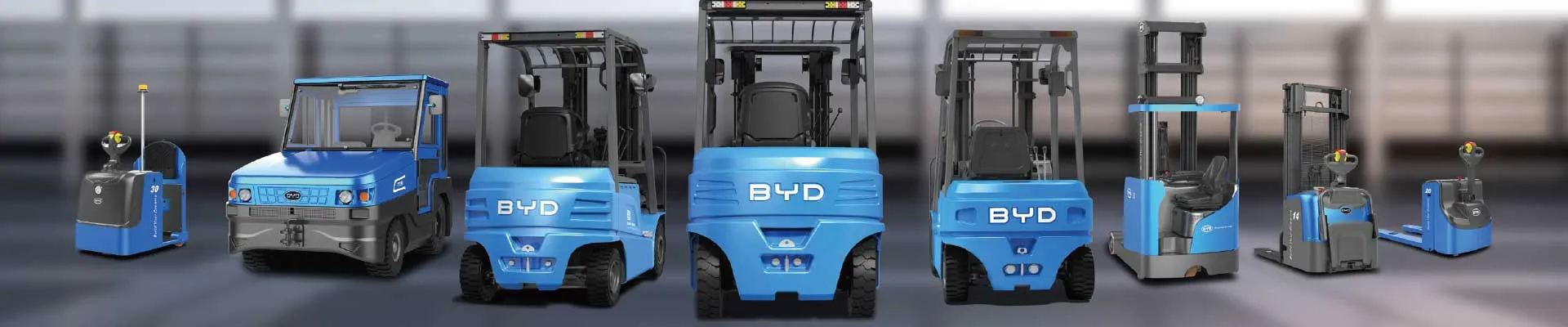

As the cost of warehousing land continues to rise, many enterprises in order to expand storage capacity, choose to compress the width of the channel in the warehouse area, add high shelves, the traditional handling equipment has a large turning radius, and it is difficult to adapt to the narrow channel operation scene of 1.8-2 meters. Frequent problems such as scratching shelves, bumping goods, and operation cards slow down the overall warehousing efficiency and also push up the operation loss.
The forward-moving electric forklift designed for this type of scenario can just fill the capacity gap of traditional handling equipment. Its body structure has been specifically optimized, eliminating the need for additional counterweights to occupy space. The turning radius of the vehicle has been greatly compressed, allowing the operator to smoothly complete a full set of operations such as steering, alignment, and stacking in a narrow channel of about two meters, without the need to reserve extra turning redundant space.
From the actual landing value point of view, first of all, it can greatly improve the space utilization rate of the warehouse area: originally, more than 3 meters of channels need to be reserved to pass through the warehouse area of traditional forklifts. After replacing the forward-moving electric forklift, only about 2 meters of channel width needs to be retained. Nearly 30% more shelf space can be arranged in the same warehouse area, and nearly 30% of the storage capacity can be expanded without renting a new warehouse area. For the high-rent urban core storage area, it can save a considerable amount of space cost every year.
Secondly, it can fully optimize the operation efficiency. The forward-moving electric forklift is powered by electric energy, and the control is smooth and accurate. The lifting height can reach more than ten meters. The high-level stacking stage can also maintain the stability of the body, and there will be no shaking and rolling problems. In the past, the low-level handling and high-level stacking operations that required the cooperation of two types of equipment could be fully undertaken by a single forward-moving electric forklift. The throughput of a single shift operation can be increased by about 40%, and the additional investment in multi-equipment procurement can also be reduced.
At present, the front-moving electric forklift has been widely adapted to various intensive storage scenarios such as high-level three-dimensional warehouses, fresh cold chain warehouses, and spare parts raw material warehouses. Most operators have found that after introducing the equipment, they can recover their procurement costs by saving site costs and improving operating efficiency. It is a cost-effective choice for handling equipment in narrow-channel storage scenarios.


