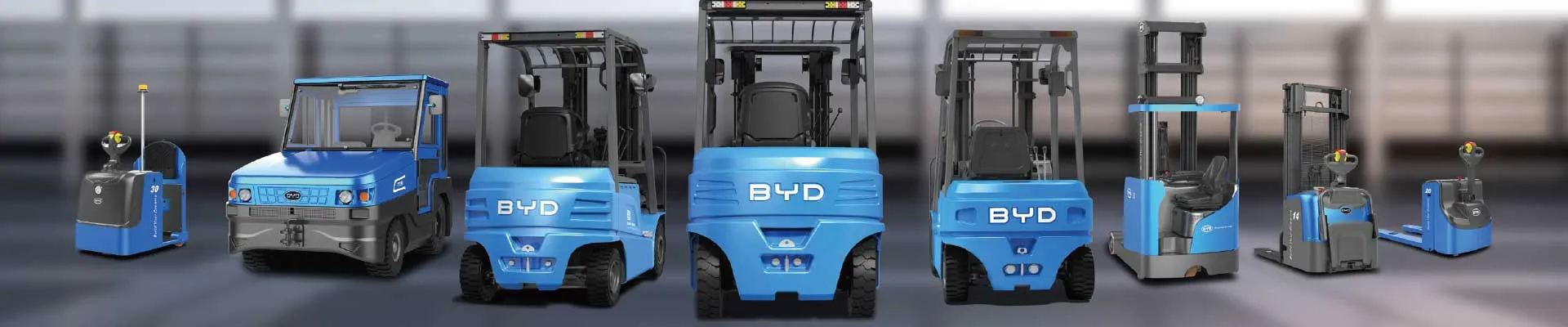
Аналитический справочник по базовой структуре и принципу работы нового энергетического электрического вилочного погрузчика

2026-09-02

Аналитический справочник по базовой структуре и принципу работы нового энергетического электрического вилочного погрузчика(фигура1)

В качестве низкоуглеродного погрузочно-разгрузочного оборудования, широко используемого в текущих сценариях складирования, логистики и промышленного производства на короткие расстояния, новые энергетические электрические вилочные погрузчики подходят для большинства закрытых и полузакрытых сценариев эксплуатации благодаря их малошумным и низким выбросам. Эксплуатационные характеристики. Уточняя их базовую структуру и принцип работы, они имеют большое значение для операторов, чтобы стандартизировать их использование, а также для эксплуатационного и технического персонала для устранения неполадок.

Во-первых, основная структура новых электрических вилочных погрузчиков энергии

Из функционального размера структуру нового энергетического электрического погрузчика можно разделить на пять основных модулей. Первый - это модуль питания, который в основном включает в себя блок питания и поддерживающую систему управления батареей. Первый отвечает за хранение энергии, необходимой для работы, а второй контролирует мощность батареи, температуру, напряжение и другие основные параметры в режиме реального времени, чтобы обеспечить стабильность и безопасность процесса питания. Во-вторых, центральный электронный модуль управления, как центр управления транспортного средства, берет на себя функции приема, расчета и распределения всех инструкций по эксплуатации и может динамически регулировать стратегию выходной мощности в соответствии с условиями нагрузки в различных условиях работы, чтобы избежать неэффективного потребления энергии. Третий - модуль выполнения ходьбы, который включает в себя приводной двигатель, трансмиссионный механизм и группу шагающих колес. Он отвечает за преобразование электрической энергии, передаваемой электронной системой управления, в механическую энергию для выполнения различных действий при ходьбе, таких как движение автомобиля вперед, назад, рулевое управление и регулирование скорости. Четвертым является подъемный модуль, который включает в себя гидравлическую насосную станцию, козловой механизм, вилку и поддерживающие компоненты ограничения хода. Он может поддерживать подъем, посадку, наклоны спереди и сзади и другие действия по эксплуатации товаров, а также обеспечивать приземление основных функций погрузочно-разгрузочной работы. Наконец, есть вспомогательный модуль кузова, который включает в себя несущую раму, рабочую кабину, устройство предупреждения безопасности, систему освещения и другие компоненты. Он не только обеспечивает оператору относительно безопасное рабочее пространство, но и передает предупреждающие сигналы наружу во время процесса эксплуатации, чтобы избежать опасностей для безопасности на месте.

Во-вторых, принцип работы нового электрического погрузчика

При запуске автомобиля система управления аккумуляторной батареей сначала завершит самопроверку различных параметров силового аккумуляторного блока, а после подтверждения того, что все показатели находятся в нормальном диапазоне, отправит сигнал подтверждения готовности оборудования в центральный электронный модуль управления. После того, как оператор вводит соответствующую команду действия через рукоятку управления и механизм рулевого управления, соответствующий сигнал будет передан в центральный электронный блок управления синхронно.

Электронный блок управления объединит данные измерения нагрузки в реальном времени текущего оборудования и данные мониторинга окружающей среды для расчета и оптимизации команды и отправит сигнал регулирования в соответствующий исполнительный блок. Если вход представляет собой команду ходьбы, электронная система управления отрегулирует выходную мощность приводного двигателя, приведет колесную группу через трансмиссионный механизм для выполнения соответствующего действия ходьбы и автоматически отрегулирует разность скоростей ведущих колес с обеих сторон в соответствии с данными измерения угла поворота рулевого управления для обеспечения плавного и безкарточного рулевого процесса. Если вход является командой подъема, электронная система управления активирует соответствующую гидравлическую насосную станцию, приводит в действие гидравлическое масло, чтобы толкнуть козловой цилиндр для выполнения соответствующих действий подъема и наклона, а датчик давления, поддерживающий весь процесс, будет контролировать рабочее давление гидравлической системы в режиме реального времени. Как только нагрузка превысит номинальный порог, он будет активно ограничивать выходную мощность, запускать звуковые и световые предупреждения и избегать различных рисков, вызванных перегрузкой.

Во время ежедневного использования оператор может выполнять обычные проверки в сочетании с конструкцией и логикой работы и следовать спецификациям для выполнения операций, что может дать полную игру эксплуатационным преимуществам новых электрических вилочных погрузчиков и продлить общий срок службы оборудования.

We use cookie to improve your online experience. By continuing to browse this website, you agree to our use of cookie.

Cookies

Please read our Terms and Conditions and this Policy before accessing or using our Services. If you cannot agree with this Policy or the Terms and Conditions, please do not access or use our Services. If you are located in a jurisdiction outside the European Economic Area, by using our Services, you accept the Terms and Conditions and accept our privacy practices described in this Policy.
We may modify this Policy at any time, without prior notice, and changes may apply to any Personal Information we already hold about you, as well as any new Personal Information collected after the Policy is modified. If we make changes, we will notify you by revising the date at the top of this Policy. We will provide you with advanced notice if we make any material changes to how we collect, use or disclose your Personal Information that impact your rights under this Policy. If you are located in a jurisdiction other than the European Economic Area, the United Kingdom or Switzerland (collectively “European Countries”), your continued access or use of our Services after receiving the notice of changes, constitutes your acknowledgement that you accept the updated Policy. In addition, we may provide you with real time disclosures or additional information about the Personal Information handling practices of specific parts of our Services. Such notices may supplement this Policy or provide you with additional choices about how we process your Personal Information.


Cookies

Cookies are small text files stored on your device when you access most Websites on the internet or open certain emails. Among other things, Cookies allow a Website to recognize your device and remember if you've been to the Website before. Examples of information collected by Cookies include your browser type and the address of the Website from which you arrived at our Website as well as IP address and clickstream behavior (that is the pages you view and the links you click).We use the term cookie to refer to Cookies and technologies that perform a similar function to Cookies (e.g., tags, pixels, web beacons, etc.). Cookies can be read by the originating Website on each subsequent visit and by any other Website that recognizes the cookie. The Website uses Cookies in order to make the Website easier to use, to support a better user experience, including the provision of information and functionality to you, as well as to provide us with information about how the Website is used so that we can make sure it is as up to date, relevant, and error free as we can. Cookies on the Website We use Cookies to personalize your experience when you visit the Site, uniquely identify your computer for security purposes, and enable us and our third-party service providers to serve ads on our behalf across the internet.

We classify Cookies in the following categories:
 ●  Strictly Necessary Cookies
 ●  Performance Cookies
 ●  Functional Cookies
 ●  Targeting Cookies


Cookie List
A cookie is a small piece of data (text file) that a website – when visited by a user – asks your browser to store on your device in order to remember information about you, such as your language preference or login information. Those cookies are set by us and called first-party cookies. We also use third-party cookies – which are cookies from a domain different than the domain of the website you are visiting – for our advertising and marketing efforts. More specifically, we use cookies and other tracking technologies for the following purposes:

Strictly Necessary Cookies
These cookies are necessary for the website to function and cannot be switched off in our systems. They are usually only set in response to actions made by you which amount to a request for services, such as setting your privacy preferences, logging in or filling in forms. You can set your browser to block or alert you about these cookies, but some parts of the site will not then work. These cookies do not store any personally identifiable information.

Functional Cookies
These cookies enable the website to provide enhanced functionality and personalisation. They may be set by us or by third party providers whose services we have added to our pages. If you do not allow these cookies then some or all of these services may not function properly.

Performance Cookies
These cookies allow us to count visits and traffic sources so we can measure and improve the performance of our site. They help us to know which pages are the most and least popular and see how visitors move around the site. All information these cookies collect is aggregated and therefore anonymous. If you do not allow these cookies we will not know when you have visited our site, and will not be able to monitor its performance.

Targeting Cookies
These cookies may be set through our site by our advertising partners. They may be used by those companies to build a profile of your interests and show you relevant adverts on other sites. They do not store directly personal information, but are based on uniquely identifying your browser and internet device. If you do not allow these cookies, you will experience less targeted advertising.

How To Turn Off Cookies
You can choose to restrict or block Cookies through your browser settings at any time. Please note that certain Cookies may be set as soon as you visit the Website, but you can remove them using your browser settings. However, please be aware that restricting or blocking Cookies set on the Website may impact the functionality or performance of the Website or prevent you from using certain services provided through the Website. It will also affect our ability to update the Website to cater for user preferences and improve performance. Cookies within Mobile Applications

We only use Strictly Necessary Cookies on our mobile applications. These Cookies are critical to the functionality of our applications, so if you block or delete these Cookies you may not be able to use the application. These Cookies are not shared with any other application on your mobile device. We never use the Cookies from the mobile application to store personal information about you.

If you have questions or concerns regarding any information in this Privacy Policy, please contact us by email at . You can also contact us via our customer service at our Site.