
 简体中文
简体中文 Русский
 Français
 Português
 Español
 لالعربية
.jpg "Dali aluminum plant phased handling demand, BYD forklift monthly lease plan reference(figure1)")
As an important concentration area of the domestic aluminum industry, Dali is home to a large number of aluminum production, processing and distribution plants of various scales. The daily handling operations of such plants usually have stability characteristics, but in many special periods, there will be phased handling needs that exceed the conventional capacity.
The triggering scenarios for this type of phased demand are very diverse, including the peak shipment caused by centralized procurement in downstream industries, the relocation of equipment and materials after the new production workshop is put into operation, the adjustment of large quantities of goods caused by the regularization of the warehouse area in the factory, and the turnover demand driven by the delivery cycle of temporary large-value orders. The duration of such demand is usually in the range of 1 to 6 months, and there is no need for long-term increments, which brings new challenges to the capacity allocation of many factories.
In the past, when many aluminum factories encountered such phased capacity gaps, they often encountered different pain points: the one-time investment in directly purchasing new handling equipment was high, and the equipment was idle for a long time after the phased demand ended, and additional maintenance, depreciation, and storage costs were also borne. Choosing scattered short-term rental resources often failed to ensure the stability of the equipment. Failures in the middle of the operation could easily delay the handling of goods such as aluminum profiles, and even cause additional losses due to the loss of profile scratches.
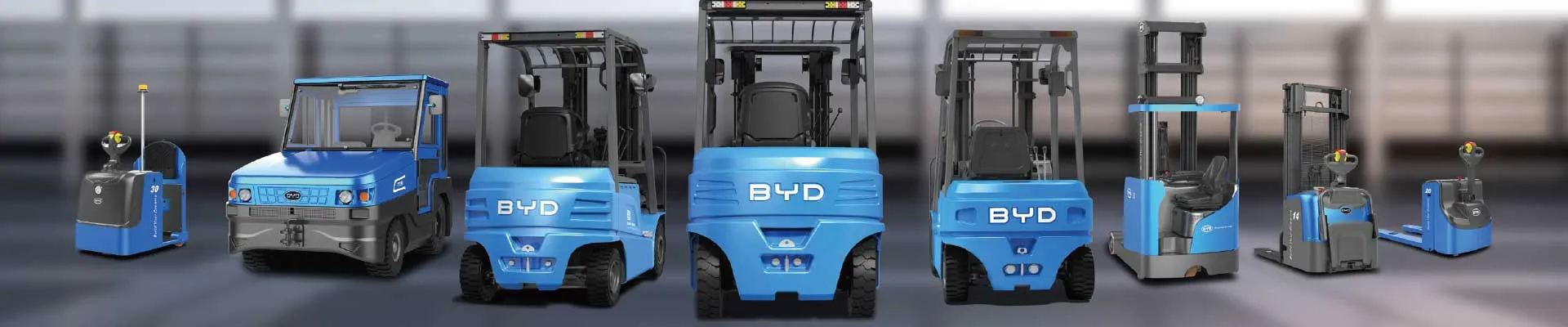
In response to such widespread demand for phased handling, the monthly leasing plan launched by BYD forklifts is highly adaptable. First of all, there is no long-term contract binding requirement for the plan. Enterprises can independently choose the corresponding lease period according to the estimated duration of their own phased needs, and fully match the temporary capacity gap of different lengths. At the level of equipment configuration, the lessor can adjust the load-bearing parameters and door frame lifting height of the corresponding forklift according to the handling cargo attributes of the aluminum factory in advance to meet the handling requirements of different specifications of aluminum coils, long profiles, and finished plates. The battery life performance of the whole vehicle can also be adapted to the continuous operation needs of the factory area for 8 to 10 hours a day, ensuring the handling efficiency during peak hours.
At the same time, within the scope of monthly leasing services, the supporting rights and interests of regular door-to-door vehicle condition inspections and quick response to faults are already included. The factory does not need to be equipped with exclusive forklift maintenance personnel, nor does it have to bear various additional costs such as subsequent annual inspections, component updates, and depreciation disposal of equipment. It only needs to pay the rental fee for the corresponding cycle as needed.
Before launching such a monthly leasing plan, enterprises can sort out the core information such as the estimated cycle of their staged handling, the average daily operation volume, the maximum handling weight of the goods, and the maximum lifting height in advance, and confirm the details of the service coverage with the service provider in advance. This will enable the leased forklift resources to accurately adapt to their own operating scenarios and smoothly survive the temporary transportation peak. It will also enable the working capital of the factory to be more tilted towards the core business links such as production raw material procurement and order fulfillment, and optimize the overall operating cost structure.


