
 简体中文
简体中文 Русский
 Français
 Português
 Español
 لالعربية
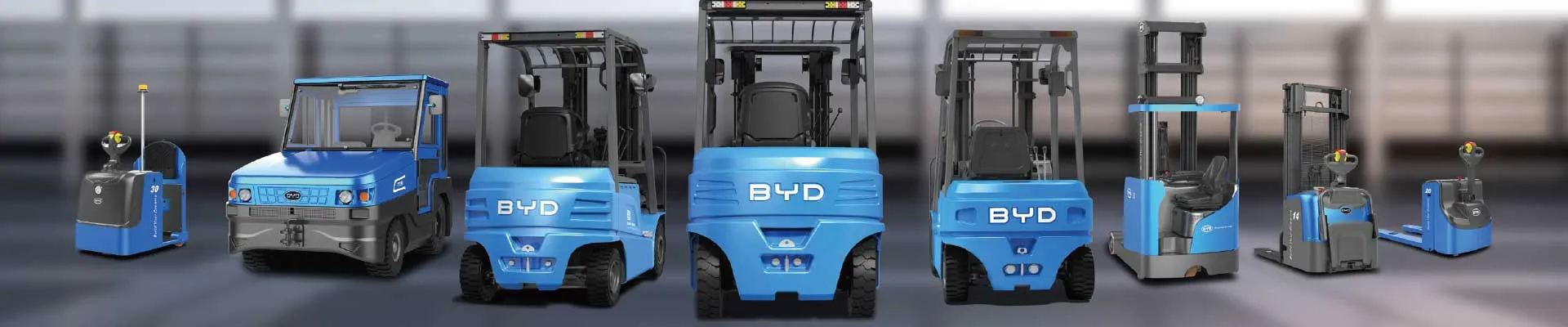

In the local stainless steel polishing workshop in front of the company, a large amount of fine metal polishing dust will be generated during daily operation. This kind of dust has high hardness and strong adhesion. If it adheres to the surface of the forklift body for a long time, it will not only wear the protective paint surface of the original car, but also seep into the dust-proof structure along the gap, affecting the normal operation of the components. For this kind of special high-dust operation scenario, the BYD dust-proof forklift in use needs to perform standardized surface protection operations in order to better adapt to the transshipment needs of the workshop.
The first is the pre-inspection process of the basic surface before the shift. Before each forklift starts operation, the operator needs to go around the car for a week to check the overall state of the outer surface of the body, focusing on the splicing gap of the shield, the connection of the operating handle, and the areas around the wheel arch that are prone to dust accumulation. Confirm that there is no agglomerated polishing dust attached. When dust is found on the surface, you can use a clean anti-static soft rag to gently wipe it in the same direction. Do not use hard tools such as hard brushes and steel balls to directly scratch the body paint surface to avoid leaving small scratches that are difficult to repair and damage the original surface protection layer.
The second is the deep cleaning operation after the shift. After the daily work, the forklift should be parked in the designated special maintenance area to clean the surface of the vehicle. During the cleaning process, the low-pressure clean air can be used to slowly blow away the residual metal dust in the gap of the vehicle body. Pay attention to controlling the air pressure to avoid excessive pressure blowing the sealing strip on the surface of the vehicle body. After the dust cleaning is completed, use a soft rag dipped in a neutral special cleaner to fully wipe the outer surface of the vehicle. For the bright metal surface where the polishing dust is easy to adhere, a special surface maintenance film can be evenly applied after the wiping is completed to reduce the adhesion of subsequent dust adhesion.
If the workshop carries out a large-scale centralized polishing operation on the same day, the dust concentration on site far exceeds the daily level. After finishing the work, an additional special project inspection of the surface seals should be added to check whether the surface of the dust-proof tape at each position of the body is embedded with fine metal chips one by one. Do cleaning operations in time to avoid the metal chips staying and wearing the tape for a long time, resulting in sealing failure. Do not directly spray the surface of the forklift body with a high-pressure water gun during daily operations to prevent the water flow of metal dust from infiltrating the circuit area inside the body and causing unnecessary equipment failure.
Finally, it is necessary to implement regular surface maintenance inspections, and arrange for exclusive operation and maintenance personnel to conduct a systematic investigation of the entire body surface of the forklift, complete the protective coating at the wear position, and confirm that all surface dust-proof structures are in good condition to ensure that the forklift can continue to maintain a stable operation in the high-dust polishing workshop scene, providing reliable equipment support for the transfer of stainless steel workpieces in the workshop.


