
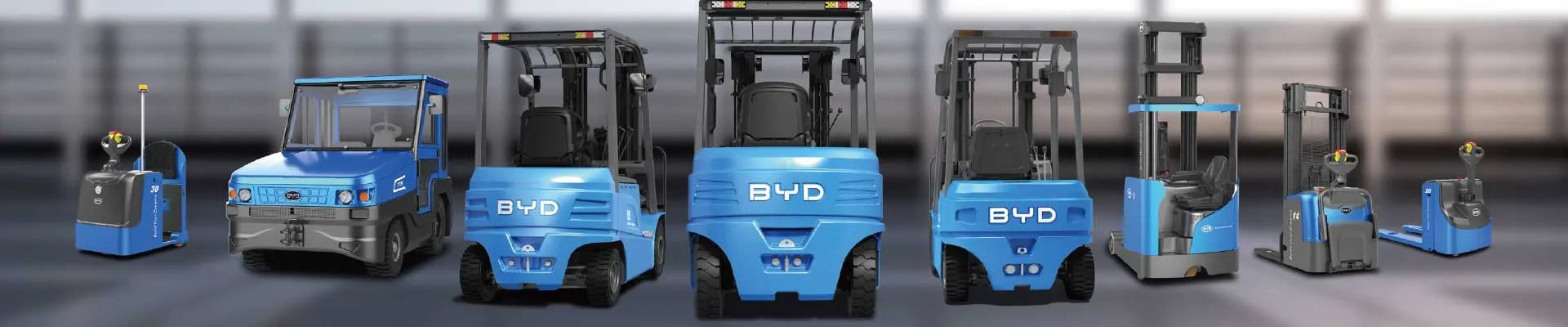

The welding workshop is the core link in the whole production link of equipment manufacturing. All kinds of racks and large workpiece structural parts circulated in the workshop generally have the characteristics of large weight span, irregular volume and high surface accuracy. The traditional transfer mode is prone to the problems of workpiece bumping and deformation, and subsequent welding accuracy is affected. Unreasonable moving line planning is also easy to occupy production space and slow down the overall production beat. This set of electric forklift transfer operation plan adapted to the needs of the scene has been standardized and sorted out from the preliminary preparation to the daily operation and maintenance of the whole link, and has strong landing ability.
In the early stage of the operation, it is necessary to complete the scene adaptation preparation. First, a special person should be arranged to survey the channel width, minimum turning radius, ground load-bearing upper limit, and the maximum height of the workstation lifting operation inside the workshop, match the corresponding load parameters of the electric forklift, and sort out all the structural parts to be transferred in advance. According to different weights, sizes, and the distribution of subsequent processing stations, an exclusive temporary storage area to be transferred should be delineated to avoid the mixing of different types of workpieces to occupy the main traffic space. At the same time, the operator should be trained on scene orientation, familiar with the fire points inside the workshop, personnel moving line avoidance rules, and the key points of workpiece corner protection, so as to avoid operation risks from the source.
The daily transfer operation should follow the standardized process. Before the operation, the operator should first check the electric power, braking system, and fork arm tightening of the electric forklift to confirm that there is no scattered welding slag around the structural parts to be transferred, and the sharp corners of the raised parts may scratch the protective layer of the workpiece. When picking up the goods, ensure that the fork arm is fully inserted under the workpiece tray, and then slowly lift it after uniform force. The lift height is controlled within the range that will not block the line of sight ahead. During the driving process, strictly abide by the speed limit requirements of the workshop, avoid passing welding teams in advance, small work in progress stacking area, encounter turns, honk in advance at the entrance and exit of the workshop, and smoothly drop the fork after reaching the designated station. After confirming that the workpiece is placed stably, slowly pull out the fork arm, and return to the designated waiting area in time after completing the single transfer operation. Do not occupy the main channel at will.
The long-term operation and maintenance stage can gradually carry out optimization and adjustment, regularly count the distribution of transshipment demand at different times, flexibly adjust the forklift shift line, avoid the peak congestion period when the welding team centrally replaces the workpiece, and establish a daily inspection ledger for electric forklifts. The minor faults found before and after each operation are checked in time to avoid the shutdown in the middle of the operation affecting the production rhythm. In the future, the layout of the transshipment temporary storage area can be gradually adjusted in combination with the production capacity upgrade needs of the workshop, and the invalid transshipment distance can be further compressed. Under the premise of ensuring the safety of the operation, the overall logistics turnover efficiency can be steadily improved, providing stable support for the smooth production of the whole link of the welding workshop


