

The daily operation of hardware auto parts warehouses generally has the characteristics of miscellaneous product specifications, large weight of metal parts single cargo, and high frequency of inbound and outbound scheduling. Many practitioners are exploring optimization solutions for handling operations that adapt to their own site conditions, reduce unnecessary labor consumption, and improve overall operation fluency.
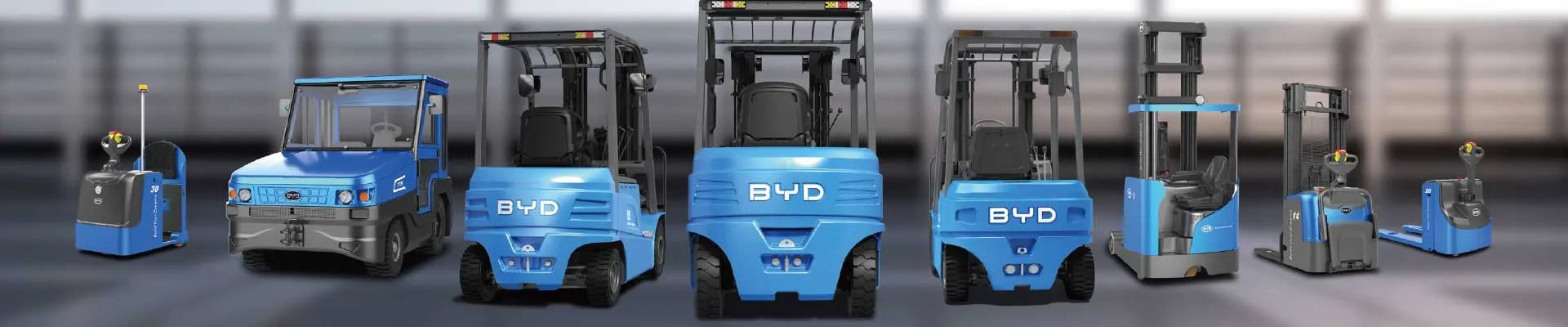
Jinli Hardware Auto Parts Warehouse, as a medium-sized storage site mainly engaged in various types of auto parts and hardware consumables in the region, has previously used manual and manual truck mode to complete daily goods storage. With the gradual increase in the throughput of goods in recent times, the original operation mode has been difficult to match the current operating rhythm. After multiple rounds of site adaptation research, the warehouse has introduced BYD's economical forklift as the core on-site handling equipment. After adjusting the operation process according to the actual situation of the site, it has explored a set of efficient operation experience that suits its own needs, which can be used for reference by the same type of warehousing.
From the perspective of site adaptation, the width of the on-site channel of Jinli Hardware Auto Parts Warehouse is generally about two meters, and the height of the heavy-duty shelves for placing goods is about four meters. The body size and lifting height of BYD's economical forklift are fully adapted to the existing site conditions, and can be directly put into use without additional site modification. The operation logic of this forklift is simple and clear. After several hours of special project training, the original warehouse operators can independently complete the regular pickup, release, and point transfer operations. The learning threshold is low, and there will be no problem that personnel cannot quickly adapt after the equipment is in place.
In the actual operation process optimization, the warehouse combined the operation characteristics of forklifts to re-plan the exclusive forklift operation line in the field, and staggered the movement lines of goods warehousing, inventory, shelves, picking and outbound to avoid congestion between different operators at the same time. At the same time, the warehouse operator adjusted the shelf storage points according to the frequency of different categories of goods, and placed the commonly used hardware and auto parts with high turnover frequency closer to the entrance and exit, and the forklift operation was more convenient in the low-level shelf area. Bulk goods with low turnover frequency were stored in the high-level shelf area, further shortening the driving path of the forklift single operation.
At the level of daily operation and maintenance, the warehouse has established a routine inspection mechanism for forklifts. After each operation shift, the staff will simply check the power status of the vehicle, the operation of key components, and complete charging and minor problem troubleshooting in a timely manner to minimize the probability of sudden equipment failure affecting normal operation. At present, after the operation of this adaptation plan, the smooth handling of goods in the warehouse has been significantly improved. Relevant experience can also provide practical reference directions for other hardware auto parts warehouses with similar needs.


