Puntos clave y problemas comunes del mantenimiento del sistema hidráulico de carretillas elevadoras eléctricas

2026-09-01

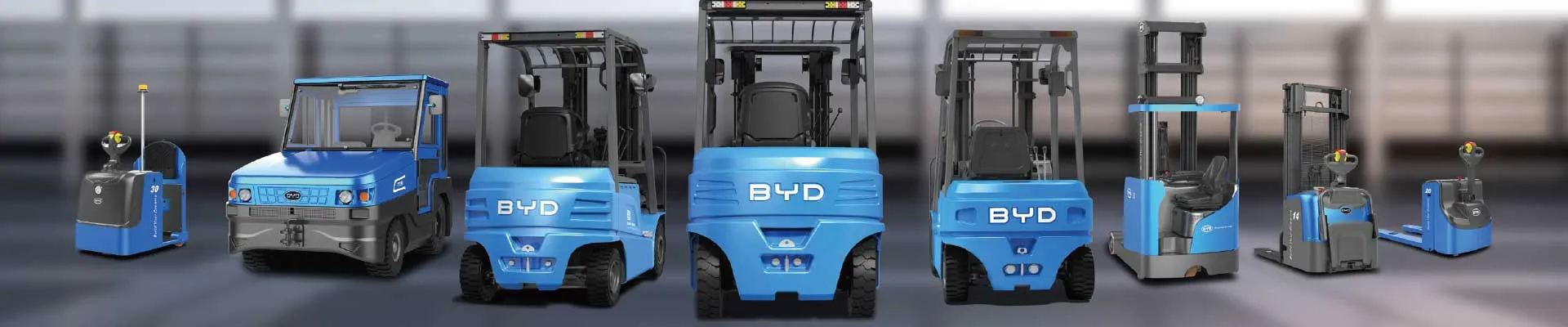
Puntos clave y problemas comunes del mantenimiento del sistema hidráulico de carretillas elevadoras eléctricas(Figura1)

El sistema hidráulico es la estructura central de ejecución de la carretilla elevadora eléctrica, que lleva las operaciones principales, como la elevación de la horquilla y la inclinación del pórtico. El estado de funcionamiento del sistema afecta directamente la estabilidad y la vida útil general del equipo. Muchos empleados de operación y mantenimiento de primera línea ignoran fácilmente los detalles del mantenimiento del sistema hidráulico, lo que provoca fallos innecesarios y tiempo de inactividad, e incluso riesgos para la seguridad laboral.

Desde la perspectiva de los puntos de mantenimiento diario, en primer lugar, es necesario hacer un buen trabajo en el control normal del aceite hidráulico. Revise el nivel de aceite hidráulico antes y después de cada operación para asegurarse de que la altura del aceite se mantenga dentro del rango de escala marcado por el equipo. Si el nivel del líquido es demasiado bajo, es fácil que el sistema aspire aire. Durante las operaciones posteriores, habrá ruidos de movimiento anormales y tarjetas de elevación. Si el nivel del líquido es demasiado alto, provocará un desbordamiento de la presión del aceite y una mala disipación de calor. Al mismo tiempo, es necesario observar regularmente la calidad del aceite hidráulico. Una vez que se comprueba que el aceite emulsiona, ennegrece y precipita las impurezas, es necesario comprobar los incentivos y reemplazar el aceite nuevo a tiempo. Durante el proceso de cambio de aceite, el elemento del filtro de aceite hidráulico correspondiente debe reemplazarse sincrónicamente para evitar que las impurezas entren en la tubería y desgasten el sellado.

En segundo lugar, es necesario hacer un buen trabajo en la inspección diaria de los componentes de conexión hidráulica. Cada inspección debe verificar la posición de la junta de la tubería hidráulica una por una en busca de signos de fuga o aflojamiento de aceite, y si la manguera de goma exterior tiene signos de grietas, abultamientos o envejecimiento. Si se encuentra algún peligro oculto menor, deben resolverse con a tiempo. No espere a que los componentes fallen por completo antes de realizar el mantenimiento. Durante las operaciones diarias, también se debe prestar atención a evitar objetos afilados para evitar que la fuerza externa raye y dañe la tubería hidráulica.

Finalmente, es necesario lograr un mantenimiento indirecto a través de un funcionamiento estandarizado. No empuje y tire con frecuencia de la varilla de operación hidráulica durante el funcionamiento diario para evitar que la presión de aceite del sistema golpee instantáneamente los componentes de sellado. Durante la etapa de reinicio después de un apagado prolongado del equipo, la horquilla debe levantarse y bajarse repetidamente varias veces sin carga, y el aire residual de la tubería debe drenarse antes de entrar en funcionamiento normal.

Desde la perspectiva de la lógica de manejo de problemas comunes, cuando se encuentre con la situación de la tarjeta de carretilla elevadora, dé prioridad a verificar si el elemento del filtro de aceite hidráulico está bloqueado por impurezas y si el aire está mezclado en la tubería. Se puede restaurar completando el reemplazo del elemento filtrante y la operación de descarga de aire. No aumente los parámetros de presión de la válvula de desbordamiento sin permiso para evitar daños irreversibles en los componentes causados por sobrecarga del sistema. Al encontrar fugas de aceite en el sistema hidráulico, la mayoría de ellas son causadas por el envejecimiento y el desgaste de los sellos después de un uso prolongado. El reemplazo oportuno de los sellos de la misma especificación puede resolver el problema. No opere con fallas durante mucho tiempo para evitar la expansión continua de los problemas de fugas, lo que provocará una presión de aceite insuficiente e incluso el peligro de seguridad de que la horquilla se resbale accidentalmente. Cuando se encuentre con una situación en la que la acción de inclinación del pórtico sea débil, dé prioridad a comprobar si el nivel de aceite hidráulico está a la altura y si el elemento filtrante está bloqueado. No compruebe directamente que los componentes hidráulicos del núcleo están dañados y reemplace las piezas a ciegas, reduciendo así los costos innecesarios de operación y mantenimiento.

Un buen mantenimiento del sistema hidráulico puede reducir significativamente la probabilidad de fallas de las carretillas elevadoras eléctricas, prolongar la vida útil general del equipo y garantizar el desarrollo suave y ordenado de las operaciones de almacenamiento, carga y descarga.

We use cookie to improve your online experience. By continuing to browse this website, you agree to our use of cookie.

Cookies

Please read our Terms and Conditions and this Policy before accessing or using our Services. If you cannot agree with this Policy or the Terms and Conditions, please do not access or use our Services. If you are located in a jurisdiction outside the European Economic Area, by using our Services, you accept the Terms and Conditions and accept our privacy practices described in this Policy.
We may modify this Policy at any time, without prior notice, and changes may apply to any Personal Information we already hold about you, as well as any new Personal Information collected after the Policy is modified. If we make changes, we will notify you by revising the date at the top of this Policy. We will provide you with advanced notice if we make any material changes to how we collect, use or disclose your Personal Information that impact your rights under this Policy. If you are located in a jurisdiction other than the European Economic Area, the United Kingdom or Switzerland (collectively “European Countries”), your continued access or use of our Services after receiving the notice of changes, constitutes your acknowledgement that you accept the updated Policy. In addition, we may provide you with real time disclosures or additional information about the Personal Information handling practices of specific parts of our Services. Such notices may supplement this Policy or provide you with additional choices about how we process your Personal Information.


Cookies

Cookies are small text files stored on your device when you access most Websites on the internet or open certain emails. Among other things, Cookies allow a Website to recognize your device and remember if you've been to the Website before. Examples of information collected by Cookies include your browser type and the address of the Website from which you arrived at our Website as well as IP address and clickstream behavior (that is the pages you view and the links you click).We use the term cookie to refer to Cookies and technologies that perform a similar function to Cookies (e.g., tags, pixels, web beacons, etc.). Cookies can be read by the originating Website on each subsequent visit and by any other Website that recognizes the cookie. The Website uses Cookies in order to make the Website easier to use, to support a better user experience, including the provision of information and functionality to you, as well as to provide us with information about how the Website is used so that we can make sure it is as up to date, relevant, and error free as we can. Cookies on the Website We use Cookies to personalize your experience when you visit the Site, uniquely identify your computer for security purposes, and enable us and our third-party service providers to serve ads on our behalf across the internet.

We classify Cookies in the following categories:
 ●  Strictly Necessary Cookies
 ●  Performance Cookies
 ●  Functional Cookies
 ●  Targeting Cookies


Cookie List
A cookie is a small piece of data (text file) that a website – when visited by a user – asks your browser to store on your device in order to remember information about you, such as your language preference or login information. Those cookies are set by us and called first-party cookies. We also use third-party cookies – which are cookies from a domain different than the domain of the website you are visiting – for our advertising and marketing efforts. More specifically, we use cookies and other tracking technologies for the following purposes:

Strictly Necessary Cookies
These cookies are necessary for the website to function and cannot be switched off in our systems. They are usually only set in response to actions made by you which amount to a request for services, such as setting your privacy preferences, logging in or filling in forms. You can set your browser to block or alert you about these cookies, but some parts of the site will not then work. These cookies do not store any personally identifiable information.

Functional Cookies
These cookies enable the website to provide enhanced functionality and personalisation. They may be set by us or by third party providers whose services we have added to our pages. If you do not allow these cookies then some or all of these services may not function properly.

Performance Cookies
These cookies allow us to count visits and traffic sources so we can measure and improve the performance of our site. They help us to know which pages are the most and least popular and see how visitors move around the site. All information these cookies collect is aggregated and therefore anonymous. If you do not allow these cookies we will not know when you have visited our site, and will not be able to monitor its performance.

Targeting Cookies
These cookies may be set through our site by our advertising partners. They may be used by those companies to build a profile of your interests and show you relevant adverts on other sites. They do not store directly personal information, but are based on uniquely identifying your browser and internet device. If you do not allow these cookies, you will experience less targeted advertising.

How To Turn Off Cookies
You can choose to restrict or block Cookies through your browser settings at any time. Please note that certain Cookies may be set as soon as you visit the Website, but you can remove them using your browser settings. However, please be aware that restricting or blocking Cookies set on the Website may impact the functionality or performance of the Website or prevent you from using certain services provided through the Website. It will also affect our ability to update the Website to cater for user preferences and improve performance. Cookies within Mobile Applications

We only use Strictly Necessary Cookies on our mobile applications. These Cookies are critical to the functionality of our applications, so if you block or delete these Cookies you may not be able to use the application. These Cookies are not shared with any other application on your mobile device. We never use the Cookies from the mobile application to store personal information about you.

If you have questions or concerns regarding any information in this Privacy Policy, please contact us by email at . You can also contact us via our customer service at our Site.