
 简体中文
简体中文 Русский
 Français
 Português
 Español
 لالعربية
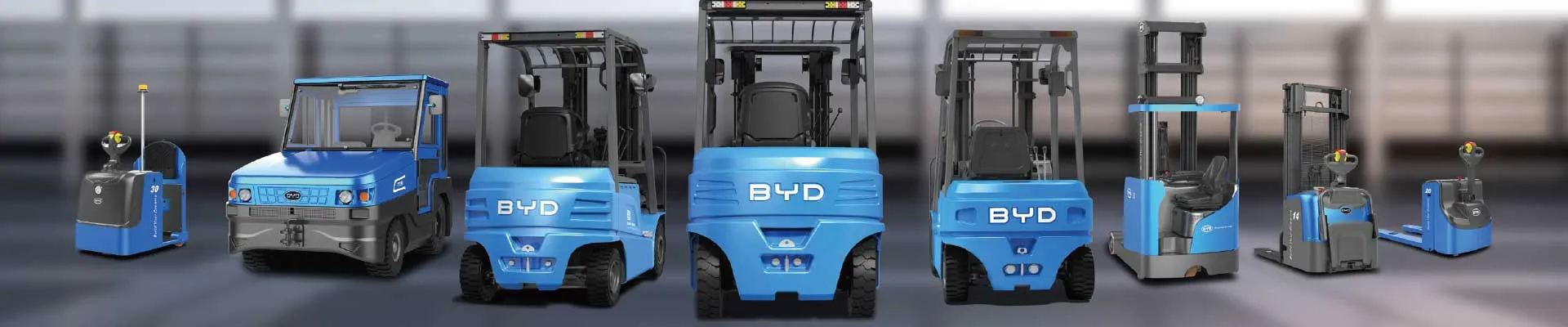
.jpg "Jinli hardware auto parts workshop, BYD economic forklift process transfer operation instructions(figure1)")
In the daily production process of Jinli hardware auto parts workshop, all kinds of hardware parts, auto parts work in progress, and the cross-station circulation demand of supporting packaging materials is high. In the past, scattered manual transfer methods often have the problem of chaotic movement and high material collision loss rate. The introduction of BYD economic electric forklift to carry out standardized process transfer operations can better adapt to the existing layout of the workshop and the regular production rhythm, and gradually straighten out the material circulation order of the whole workshop.
Before the operation is officially launched, the operator needs to complete the corresponding safety operation training, confirm that the remaining power of the forklift can cover all the transshipment needs on duty, and check the braking system, steering structure, and fork lift transmission components in normal condition one by one. At the same time, check the material category, departure station, and destination station information marked on the transshipment work order in advance. Combined with the real-time production line of the workshop, plan the traffic route, and actively avoid the high-frequency traffic area of personnel and the placement area of precision processing equipment. Check in advance for possible hidden dangers of stacking debris on the route.
After entering the operation execution link, the vehicle needs to switch the low-speed driving mode when approaching the material stacking area to be transferred, adjust the fork to a height that matches the reserved jack of the tray, insert it smoothly into the bottom of the tray, and confirm that the center of gravity of the tray is completely within the support range of the fork. After there is no risk of tilting and sliding, gently lift the fork to a suitable traffic height. Keep a stable speed during driving, and whistle in advance through turns and workshop entrances and exits to avoid operations such as sudden braking and sharp steering that can easily lead to material slipping. After transferring the material to the corresponding process station, the vehicle should be parked in the designated unloading area, and the fork should be placed smoothly to the ground support position. After confirming that the material is placed in place and the team at the station completes the handover, the fork should be slowly withdrawn. After completing the single transfer process, the corresponding records should be made on the transfer registration ledger, and the actual situation of the material handover should be reported synchronously.
In view of the sharp edges and corners of hardware auto parts and the easily scratched surface of some auto parts work in progress, it is necessary to confirm in advance that there are no raised burrs on the edge of the tray to be carried before transshipment, and if necessary, a buffer cushion can be installed at the contact position of the fork to further reduce the probability of scratching materials during transshipment. After all transshipment operations on duty, the BYD economic forklift should be parked in the special charging parking area designated by the workshop, and the fire escape and the main road of production should not be occupied. Regular inspections of body cleaning and vulnerable parts should be done to ensure that each subsequent process transfer operation can be carried out smoothly. After the entire operation process is implemented, the waiting time between processes can be compressed in an orderly manner, reducing unnecessary losses in the material transfer process, and adapting to the daily operation requirements of small and medium-sized hardware auto parts production workshops.


