
 简体中文
简体中文 Русский
 Français
 Português
 Español
 لالعربية
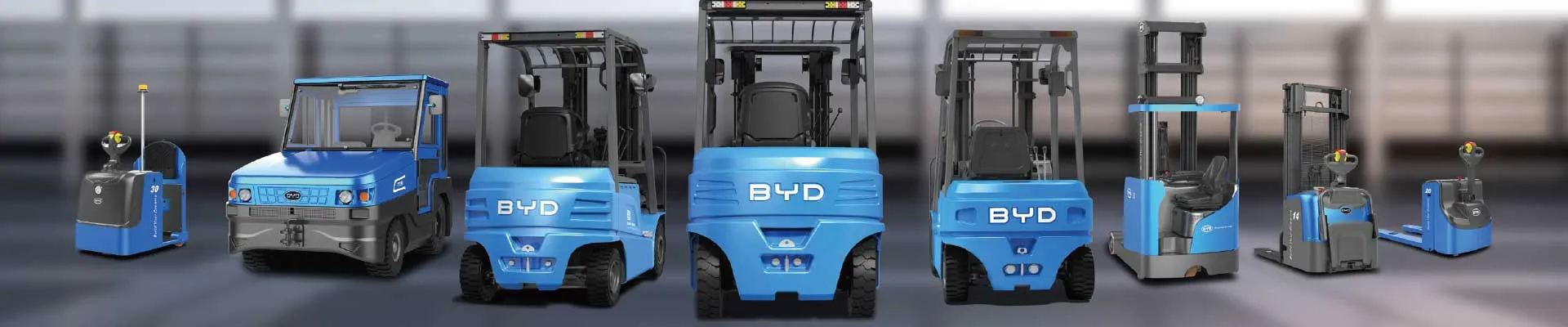
.jpg "Leping New Energy Plant has high cleanliness requirements, and BYD lithium battery forklift has a dust-free operation plan(figure1)")
The core production process of the new energy manufacturing industry has extremely high requirements for environmental cleanliness. Many new energy factories in Leping have set strict cleanliness control standards in core areas such as battery cell production and material storage. If the handling process is not properly controlled, impurities such as dust and debris may directly affect the production yield of the final product. The dust-free adaptability of on-site handling equipment has become an important part of the clean production control system that cannot be ignored.
In the past, many factories used ordinary handling equipment, but there were many pain points that did not meet the high cleanliness requirements: for example, non-electric power equipment would emit exhaust gas to pollute the air in confined spaces, ordinary structures of electric forklifts were prone to accumulate dust, dust accumulation and falling during operation would pollute surrounding materials, and ordinary gear train operation was prone to generate debris and leave traces that were difficult to clean on the ground. These problems posed a significant challenge to the cleanliness control of the factory.
For high-clean operation scenarios such as the Leping New Energy Plant, BYD has launched a dust-free operation plan for lithium-ion forklifts, which has formed a complete adaptation system from vehicle hardware customization to supporting operation specifications. First of all, at the hardware level of the vehicle, the whole vehicle adopts a smooth integrated sheet metal structure to reduce excess gaps as much as possible, and reduce the space for floating dust accumulation from the structure. The surface of the vehicle is specially coated with dust that is not easy to adhere to. Daily cleaning and wiping is convenient, and there will be no problem of dust accumulation falling and polluting the working environment. The vehicle adopts a zero-emission lithium electric power system, and the whole operation is free of any exhaust gas and oil fume pollutants, which is fully adapted to the air cleanliness control requirements of a closed and clean workshop. The wheel group is made of special non-marking wear-resistant material, which will not wear and produce debris during operation, nor will it leave wheel marks that are difficult to clean on the floor of the clean workshop, and will not cause additional pollution to the ground environment of the factory area. The motor and hydraulic system of the whole vehicle are all fully sealed and protected, and there will be no oil leakage or debris during operation, which avoids the possibility of pollution sources generated by the equipment itself from the root.
In addition to the adaptation of the hardware level, the whole set of dust-free operation plan is also equipped with standardized vehicle operation and maintenance management specifications, requiring all lithium-ion forklifts that are put into clean area operations to be fully dusted and wiped by a special person on the body surface, wheel group, fork and other exposed parts before entering the core clean area. The daily maintenance work of all vehicles is uniformly arranged in the exclusive maintenance space outside the clean area to completely avoid metal debris and oil pollutants generated during maintenance. At present, this dust-free operation plan has been applied in many new energy factories in Leping, which not only meets the high cleanliness control standards of the factory area, but also adapts to the high-frequency material transfer requirements in the workshop by virtue of the long battery life and smooth operation of lithium-ion forklifts, providing reliable handling end support for enterprises to improve the clean production control system.


