
 简体中文
简体中文 Русский
 Français
 Português
 Español
 لالعربية
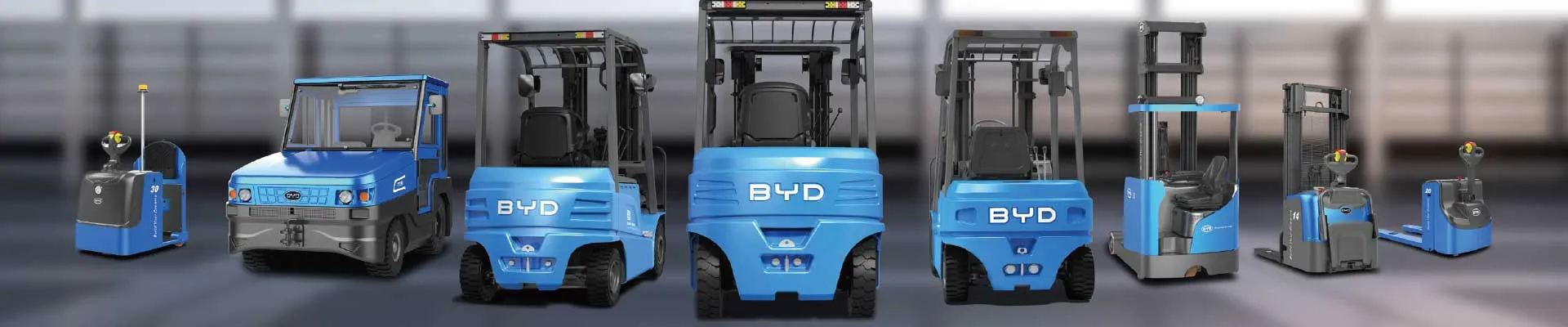

As the core area of the domestic aluminum industry, the core transshipment demand of most local aluminum extrusion workshops is to transfer the raw materials such as aluminum ingots and pretreated embryos into storage in an orderly manner from the centralized raw material warehouse to the feeding stations of each extrusion production line. Under the traditional transshipment mode, it is easy to have the problems of residual exhaust gas in the workshop and insufficient accuracy of transshipment alignment, while the aluminum extrusion operation requires continuous and stable supply of raw materials. Once the transshipment link is stuck, it is easy to affect the production rhythm of the entire production line, and there may also be surface damage to the embryo material caused by raw material collision, which will increase unnecessary production losses.
Based on the transshipment operation plan built by BYD electric forklift, first of all, it will combine the channel width and common raw material single weight of the corresponding extrusion workshop to adapt the matching forklift operation parameters, and plan a fixed special transshipment line in advance to avoid the high temperature operation area of the extrusion machine and the temporary stacking area of work in progress. Obvious warning signs are set at the points where the moving line turns and personnel intersect at high frequencies. Before the daily operation starts, the operator will conduct routine inspections on the remaining power of the forklift, the braking system, and the wear degree of the fork to confirm that the equipment is in a stable and usable state. All on-duty personnel need to go through scene-based operation training and be familiar with the protection points of aluminum transshipment before they can take up their posts.
During the reloading stage of the raw material warehouse, the operator will adjust the spacing of the forks in advance, so that the forks are accurately aligned with the reserved holes of the aluminum ingot tray. The lifting height of the forks is controlled in the range of 10 to 15 cm from the ground. After confirming that the pallets are placed completely smoothly, the transfer operation will be started. The whole journey is passed at a low speed according to the preset moving line. When passing through the cross-working area of the workshop, the horn will be honked in advance to indicate avoidance. After arriving at the material station on the extrusion line, slowly adjust the alignment of the forks and put down the pallets smoothly to avoid surface scratches caused by bumps between the aluminum ingots. After the single transfer is completed, register the transfer account synchronously. When confirming that the raw material reserve of the production
During daily use, a dedicated charging station can be set up in the idle corner area of the workshop, avoiding the centralized stacking area of aluminum to do a good job of supporting fire protection, and regularly perform routine maintenance on the battery pack to ensure battery life. During the operation process, the transfer scheduling can be flexibly adjusted according to the feeding needs of the production line at different times, avoiding the peak traffic hours of the workshop to reduce channel congestion. After long-term operation, this operation mode can effectively reduce the material loss in the transfer process, reduce the internal exhaust emissions of the workshop, improve the overall operating environment, and adapt to the current green production and operation requirements of the aluminum industry.


