
 简体中文
简体中文 Русский
 Français
 Português
 Español
 لالعربية
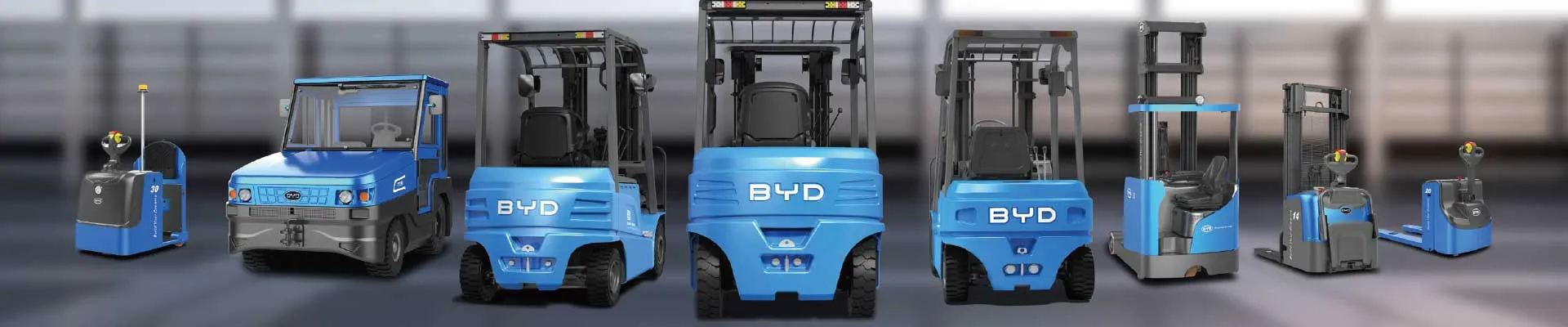
.jpg "Reference to the development trend of the domestic new energy industrial vehicle industry(figure1)")
In recent years, with the continuous advancement of the domestic dual-carbon strategy, the demand for low-carbon operations in downstream manufacturing, logistics, warehousing, and other fields has continued to increase. New energy industrial vehicles, represented by electric forklifts, have gradually completed the market-based replacement of traditional internal combustion industrial vehicles, becoming the mainstream development direction of the industrial handling track.
From a policy perspective, various regions in China have successively introduced emission control requirements for non-road mobile machinery in the field, and access restrictions for high-emission internal combustion vehicles in the core operation area have continued to tighten. Many places have explicitly encouraged industrial operation scenarios to prioritize the use of zero-emission new energy handling equipment. Relevant supporting industrial support policies have also been continuously implemented, providing a clear direction for the standardized development of the new energy industrial vehicle industry.
From the perspective of the development direction of technological iteration, the relevant production entities in the current industry generally do technical polishing around the direction of use experience optimization, battery temperature control systems adapted to different temperature scenarios are gradually popularized, and high-efficiency energy recovery systems greatly reduce the energy consumption cost of unit operations. Many new devices are equipped with digital control end points, which can help operators view the operating status, remaining power, and operation time of the equipment in real time, and further optimize the overall efficiency of on-site handling scheduling. The relevant technologies for subsequent adaptation of unmanned operation scenarios will also gradually land, and continue to expand the application boundaries of new energy industrial vehicles.
From the perspective of the evolution direction of market demand, the adaptation scenarios of new energy industrial vehicles have gradually extended from ordinary flat warehouse handling in the early years to more sub-sectors such as cold chain operations, heavy-duty handling, and special working conditions. In the past, the proportion of new energy in large-tonnage industrial vehicles was relatively low. With the steady improvement of the performance of supporting power systems, the adaptability of current large-tonnage new energy industrial vehicles has continued to increase, which can meet the needs of many heavy-duty operation scenarios and further open up the market growth space of the industry.
From the perspective of the long-term development pattern of the industry, there were certain differences in the product performance and after-sales service system of different production entities in the past. With the continuous improvement of relevant industry standards, the full life cycle service system covering equipment procurement, daily operation and maintenance, and power battery cascade recycling will become an important supporting support for the development of the industry, helping end users to further reduce the comprehensive use cost of new energy industrial vehicles, and promoting the entire industry to move forward steadily in the direction of low carbon and high quality.


